


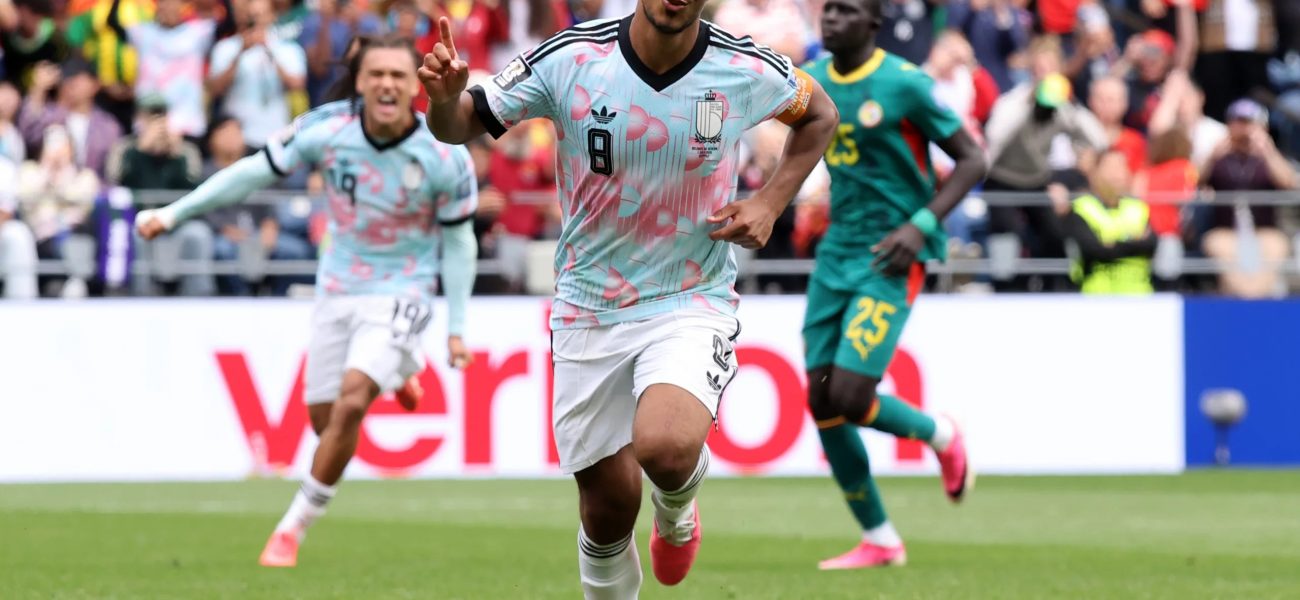
Belgium Stuns Senegal: 125-Min Penalty Fury
Belgium's controversial 125th-minute penalty against Senegal sparks global debate. Was it fair play or an injustice? Unpack the VAR controversy & its impact.

POLICY WIRE — Doha, Qatar — The final whistle often heralds the end of a contest. Sometimes, though, it’s merely a suggestion, an arbitrary line in a shifting sandscape of sporting theatre. Such was the case in Sunday’s gripping knockout clash, where Belgium, the European heavyweights, found themselves gifted passage to the next round, not by sheer dominance, but by a sprawling, seemingly endless game and a penalty call stretched past belief, leaving Senegal—and a good many global observers—nursing a profound sense of injustice. You simply don’t see games decided this late.
It wasn’t a clinic in footballing prowess that secured the Red Devils’ 3-2 victory; it was a marathon, an odyssey through 125 minutes of high-stakes play, capped by a controversial spot-kick that saw Youri Tielemans convert from twelve yards, long after most clocks had declared time up. From two goals down, Belgium clawed its way back, a testament to their renowned resilience, sure, but also a stark, grinding question mark against the modern game’s relationship with elapsed time and the ever-present specter of VAR. Many fans are wondering, where exactly do you draw the line?
Senegal had, for long stretches, looked like the team of destiny. Habib Diarra opened their account, capitalizing on a rebounding header just before the half-hour. Ismaïlla Sarr doubled the lead early in the second half with a fierce volley. Their celebrations felt deserved, earned through vibrant, attacking football. Belgian faces were ashen; their tournament lifeline seemed to be slipping through their grasp. But Romelu Lukaku, a man often defined by his brute force, provided a crucial late goal, before Tielemans—the eventual villain (or hero, depending on your colours)—nodded home a last-gasp equalizer to drag the game into extra time. They weren’t done, not by a long shot.
The extra periods became a testament to endurance, a battle of wills as much as skill. Bodies were flagging, minds fraying. And then, the 116th minute. A mad scramble in the Senegalese box, Lukébakio hitting the crossbar, and after what felt like an eternity, the referee pointed to the spot. VAR confirmed a foul on Tielemans, a call that immediately polarized pundits — and supporters alike. Senegalese manager Karim Ndour didn’t mince words after the devastating loss. “To play 125 minutes, to be so close, — and then to have a game decided like that… it’s a bitter pill. You question the very essence of fair play when minutes are stretched past breaking point, and decisions are interpreted so harshly against you in the final breath,” he lamented, his voice heavy with barely concealed frustration. Belgian coach Patrick Dubois, on the other hand, preferred to focus on the grit. “Look, the whistle blew, we played until the very end. That’s what top-tier football demands. We won’t apologize for our fighting spirit; my boys showed true character today.”
This isn’t just about one game, though. It’s a microcosm of where global football finds itself. The average stoppage time across professional leagues hovers around seven minutes per match, according to recent FIFA data, but this — this was an outlier, a testament to how subjective interpretations of delays, and indeed, time itself, can alter destinies. Because when a match goes beyond the 120-minute mark and then adds another five for a contentious VAR decision, you’re not playing football anymore; you’re navigating a judicial hearing in real-time, with livelihoods and national pride on the line.
📄 POLICY WIRE WHITEPAPER PUBLISHED: PAKISTAN'S NATIONAL SECURITY POLICY PRIORITIES
👉 READ BY CLICKING HEREWhat This Means
Beyond the immediate heartbreak for Senegal and the contentious relief for Belgium, this dramatic encounter has wider reverberations. For many footballing nations in the Muslim world, particularly in South Asia—where support for African teams often runs deep—this loss will sting harder due to the nature of its finish. Senegal, a Muslim-majority nation, carried the hopes of millions beyond its borders, representing a dynamic, emergent force in global sport. A perceived injustice, however subtle, resonates more profoundly when it affects a nation symbolizing such aspirations.
Economically, advancement in such tournaments can translate into substantial boosts: increased tourism, foreign investment, and critical exposure. Senegal’s dream of reaching the quarter-finals, and the tangible economic benefits that accompany it, were dashed by a few extra ticks of a subjective clock and a referee’s pixelated review. But, conversely, Belgium’s progression means more airtime for their national sponsors and a further projection of their national brand on the global stage. This is a cold, hard fact of international sports. And it highlights a growing disparity in resources—VAR systems are expensive, as are the sophisticated analytical tools now commonplace in European football—which smaller, less affluent federations often struggle to match. The perception of unfairness in these moments, exacerbated by endless delays and microscopic analysis, isn’t just a sporting complaint; it’s a commentary on an uneven playing field that extends far beyond the touchlines. This kind of dispute, with its lingering bitterness, isn’t helping the game’s integrity, either. You can read more about similar issues of justice and sovereignty in The Indus Waters Treaty Battle, which touches on resource allocation and international relations.
The outcome fuels the ongoing debate about VAR’s impact: does it genuinely foster fairness, or does it simply trade one set of human errors for another, less palatable brand of digital exactitude that drains the very lifeblood out of the game? For Senegal, for countless fans watching from Dhaka to Dakar, it’s not just a loss; it’s a reminder that even in sports, the lines of justice are often drawn by those with the most influence.