


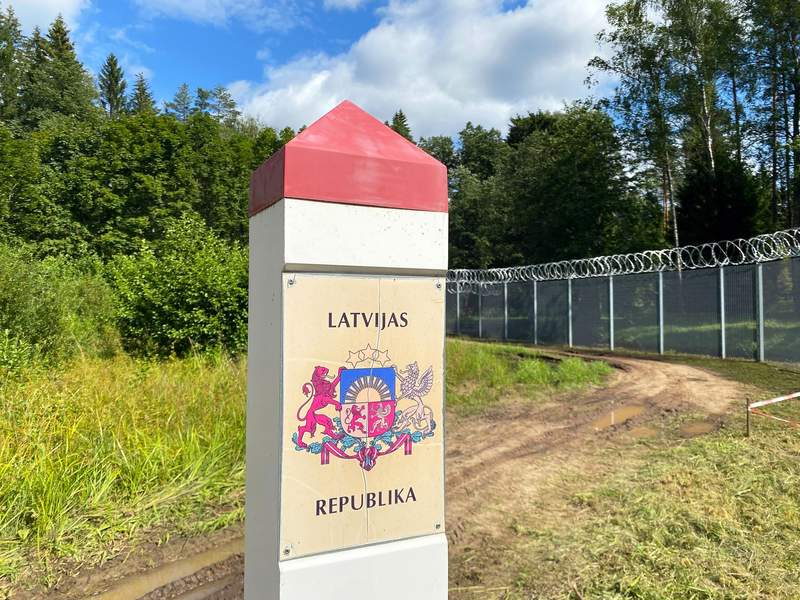
Silent Sentinels: Drones Over Latvia Stir Ancient Anxieties on Europe’s Eastern Flank
POLICY WIRE — Riga, Latvia — It wasn’t the roar of jets or the clash of tanks that lately put folks in the Baltics on edge. No, this time, it was a subtle hum—the tell-tale buzz of drones...

POLICY WIRE — Riga, Latvia — It wasn’t the roar of jets or the clash of tanks that lately put folks in the Baltics on edge. No, this time, it was a subtle hum—the tell-tale buzz of drones crashing unceremoniously on Latvian soil, perilously close to the Russian border. Small events, you might think, barely a ripple in the vast ocean of global unrest. But sometimes, it’s the quiet drops of water that wear away the stone, aren’t they?
For weeks now, reports have trickled in, then solidified: unmanned aerial vehicles, of questionable origin but highly suggestive trajectory, have ended their brief flights abruptly near Latvia’s frontier with its eastern neighbor. It’s not quite an invasion; it’s more like a particularly aggressive form of littering, a persistent probing of a nation’s air defenses, a test of nerves that harkens back to an era many had hoped was relegated to history books.
Latvia, a proud member of NATO since 2004, views these incursions with a sobriety born of experience. They’ve known what it means to be on the geopolitical fault line. And these aren’t random mishaps. They’re part of a pattern, a slow, deliberate ratcheting up of pressure that has become characteristic of the grey zone between conventional warfare and outright peace. They’ve seen this playbook before, just with shinier, buzzing toys.
But how do you react to a discarded drone, an obvious provocation without a clear signature? It’s the kind of headache modern security analysts weren’t necessarily trained for in the Cold War. There’s no explicit declaration, no smoking gun, just another piece of technology hitting the ground and raising a dozen uncomfortable questions about intent and escalation.
“We’re not naive here,” asserted Latvian Foreign Minister Krišjānis Kariņš in a recent public statement. “These aren’t hobbyists losing control of their devices. This is a deliberate campaign of harassment, a test of our vigilance, — and a subtle message from across the border. We see it, we log it, and our allies understand its implications.” And understanding is one thing; deterring is another altogether.
Meanwhile, across the fence, the rhetoric flows predictably. A spokesperson for Russia’s Foreign Ministry, Maria Zakharova, dismissed the Latvian claims as “histrionic posturing” during a Moscow briefing. “Frankly, it’s rich to hear lectures on sovereignty from states that eagerly host foreign military bases and aircraft capable of delivering any payload imaginable,” Zakharova sniffed. “Perhaps they should look within at who benefits from fabricating these minor incidents for geopolitical gain.” It’s the classic deflection—a blame game that sows confusion and distracts from inconvenient truths.
This subtle, almost psychological warfare isn’t unique to the Baltic states. We’ve seen similar gamesmanship across other disputed lines, from the Indian subcontinent where the India-Pakistan border witnesses its own deadly dance of skirmishes and aerial transgressions, to proxy conflicts in the Middle East where the identities of perpetrators are often deliberately obscured. The challenge, everywhere, remains the same: how do you respond to aggression that doesn’t quite cross the line?
The economic implications, though not immediately obvious from a few downed drones, are certainly there. Sustained tension costs. It diverts defense spending from other priorities. Latvia, for instance, has committed to spending 2.3% of its GDP on defense in 2024, according to NATO’s official figures—a figure consistently above the alliance’s 2% target, reflecting its serious approach to perceived threats.
It’s not just about military hardware, though. It’s about investor confidence. It’s about the peace of mind of citizens. No one’s canceling their summer holidays because of a downed drone, not yet anyway. But a simmering, unpredictable environment — an undercurrent of low-grade hostility — can affect everything from long-term capital investment to tourism. Nobody’s keen on building factories or starting businesses in a potential hot zone, no matter how cool the cafes are in Riga.
What This Means
The seemingly minor drone incidents around Latvia’s border with Russia are far more than isolated technical failures; they’re tell-tale signs of a deepening geopolitical chill. Politically, they serve as a constant reminder to NATO of the ever-present threat on its eastern flank, pushing member states to reaffirm their commitment to collective defense. This isn’t just about Latvia; it’s about the credibility of the entire alliance, prompting discussions on rapid deployment capabilities and intelligence sharing, much like the broader European reckoning with new forms of state-sponsored destabilization. Each incident, regardless of its explicit severity, adds another layer to the strategic calculus that informs alliance postures.
Economically, this protracted period of uncertainty is a slow drain. While not an immediate crisis, it funnels national resources into defense and border security that could otherwise be allocated to economic development or social programs. For Latvia, Estonia, — and Lithuania, this isn’t a theoretical cost; it’s an ongoing, tangible reallocation of funds. Investment, especially foreign direct investment, typically shies away from areas perceived as unstable. Businesses prioritize predictability. When you’ve got drones occasionally dropping out of the sky, sometimes unpredictability becomes the only predictable thing. The insurance premiums go up, the supply chains demand contingency plans, and the overall ‘risk profile’ of the region hardens. It’s a costly, exhausting, — and deliberately ambiguous game Russia appears quite content to keep playing.
These incidents aren’t just technical glitches; they’re chess moves. They force reactions. They consume attention. And they subtly redefine the terms of engagement, moving the goalposts in a contest that’s already got more than its fair share of unknowns. It’s never just about the drone, is it? It’s what the drone represents.