

Trump’s Dallas Roll Call: A Grand Stand Amidst GOP’s Midterm Anxieties
POLICY WIRE — Washington, D.C. — They’re calling it a convention, but it’s less about consensus and more about a calculated show of force—a singular act of political will meant to re-center a...

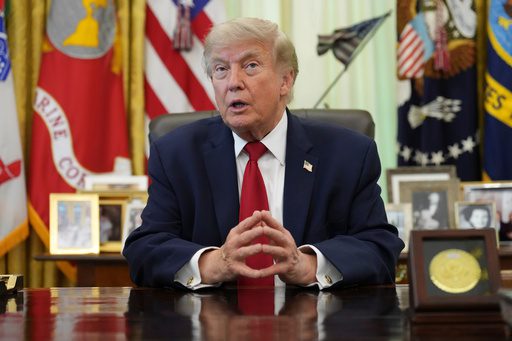
POLICY WIRE — Washington, D.C. — They’re calling it a convention, but it’s less about consensus and more about a calculated show of force—a singular act of political will meant to re-center a party often struggling to find its footing without its marquee figure at the helm. Donald Trump, never one to cede the spotlight gracefully, has announced Republicans will convene their first-ever national event dedicated exclusively to the midterm elections this September in Dallas. It’s an unprecedented gamble, aiming to ignite a base increasingly prone to inertia when the former President isn’t personally on the ballot.
For decades, these colossal gatherings were reserved for the pomp — and circumstance of presidential nominations. They were spectacles designed to launch a White House campaign, not to rally the troops for the often-gritty, door-to-door battles of congressional races. But this isn’t politics as usual, is it? Not in the Trump era. He’s been quietly, or not so quietly, lobbying for this idea for months, envisioning a mid-term extravaganza to prevent what many strategists—both Republican and Democrat—see as the almost inevitable: a drubbing for the party in power.
Republicans currently cling to perilously thin majorities in both chambers of Congress. Historical precedent, an inconvenient truth for any sitting administration, suggests an uphill battle. Since the end of World War II, the President’s party has, on average, shed 26 House seats during its first midterm. That’s a statistic often whispered nervously in backrooms, particularly when considering the potential investigations and legislative roadblocks that a Democrat-controlled Congress could unleash on Trump’s remaining term. They’d gut his agenda, pure and simple. And they’d make his life a living hell. That’s what’s truly at stake.
Dallas, the chosen venue, isn’t some accidental pin-drop on the electoral map. It thrusts Texas’s contentious Senate race squarely into the national conversation—a race that pits the scandal-plagued Republican incumbent, Ken Paxton, against Democrat James Talarico. Paxton, despite his myriad legal troubles, including a securities fraud indictment, an extramarital affair that became public spectacle, and even an impeachment that mercifully stalled, remains a Trump loyalist. He successfully unseated a long-serving GOP Senator with the former president’s endorsement, and that’s a power play Trump certainly won’t let go unremarked.
Many in the traditional Republican establishment view Paxton with a mixture of dread — and strategic frustration. “Honestly, it’s a tightrope walk,” admitted a veteran GOP strategist, requesting anonymity to speak freely. “We can’t afford to waste resources defending the indefensible, but you also can’t abandon a strong conservative with the President’s backing. It’s a lose-lose dynamic for party unity.”
And unity, or the often-fragile illusion of it, is what Trump’s really after. He wants to project a united front, to paper over the internecine skirmishes, and to reassert his singular command over the Republican messaging machine. “We’re going to Dallas because it’s time to remind everyone just how much we’ve accomplished since the last election,” Trump proclaimed on a recent talk radio show, his voice booming with signature confidence. “The radical left, they hate America, — and they’re trying to destroy everything good. We won’t let them. This convention—it’s going to show the world that we’re fighting for common sense, for true American values, for strength.” He sounded less like a party leader and more like a campaigning kingmaker.
The Republican National Committee, never shy about adapting to Trump’s whims, laid the procedural groundwork earlier this year. They amended their own rulebook, effectively clearing the path for this non-quadrennial gathering. It’s a testament to the iron grip Trump still holds on the party’s levers of power, irrespective of whether his name appears on the top of any particular ballot.
📄 POLICY WIRE WHITEPAPER PUBLISHED: PAKISTAN'S NATIONAL SECURITY POLICY PRIORITIES
👉 READ BY CLICKING HEREWhat This Means
Economically, this Dallas spectacle isn’t just about galvanizing voters; it’s a massive fundraising and branding exercise. It projects an image of unwavering momentum and financial muscle, attracting donors who gravitate towards perceived winners and unified movements. But it’s also an enormous financial outlay at a time when grassroots organizations often need funding most. The former president, ever the showman, likely believes the optics will translate into more tangible results than dozens of local chicken dinners ever could.
Politically, the move further solidifies the Trump wing’s dominance. It pushes any moderate or dissenting voices even further to the fringes. What we’re witnessing is the continued personalization of American party politics, with traditional structures bending—or breaking—to accommodate a singular figure. This could either backfire spectacularly, further alienating independent voters weary of the drama, or it could brilliantly consolidate the base, especially given the backdrop of aggressive post-election redistricting in Texas, an effort primarily spearheaded by Trump allies to lock in Republican advantages for years to come. But make no mistake, it’s also a deeply centralized effort, bypassing some of the traditional party infrastructure that relies on decentralized messaging. That can be efficient, yes, but it’s also incredibly risky. Because if it doesn’t work, well, there’ll be no one else to blame.
And the geopolitical implications of a destabilized American Congress shouldn’t be underestimated. In an increasingly fractious world, nations from Pakistan to the Pacific Rim meticulously observe American domestic squabbles. They assess the strength — and predictability of U.S. leadership. A deeply divided Congress, especially one that obstructs presidential foreign policy initiatives or engages in endless infighting, presents vulnerabilities. It signals wavering resolve, potentially emboldening adversaries or shaking the confidence of allies who depend on American steadfastness. A spectacle like Dallas might thrill the base, but outside observers will be weighing it against the tangible outputs of governance, or the lack thereof. If anything, they’ll see a party grappling with itself. Which, let’s be honest, they wouldn’t be wrong. Global markets certainly watch U.S. political stability. It’s never just about who sits in the White House; it’s also about the noisy, complicated mess that unfolds on Capitol Hill.