

Trump’s Ambiguous Response to Hegseth’s 2028 Ambitions May Displease Vance
POLICY WIRE — Washington, D.C. — President Donald Trump recently addressed speculation about Secretary of Defense Pete Hegseth’s possible presidential bid in 2028, offering a response that may...

POLICY WIRE — Washington, D.C. — President Donald Trump recently addressed speculation about Secretary of Defense Pete Hegseth’s possible presidential bid in 2028, offering a response that may not sit well with supporters of Vice President J.D. Vance.
Vance is widely seen as the leading Republican contender for Trump’s support in the 2028 race, due to his current position, historical trends, and the strong backing he has received since joining the ticket in 2024.
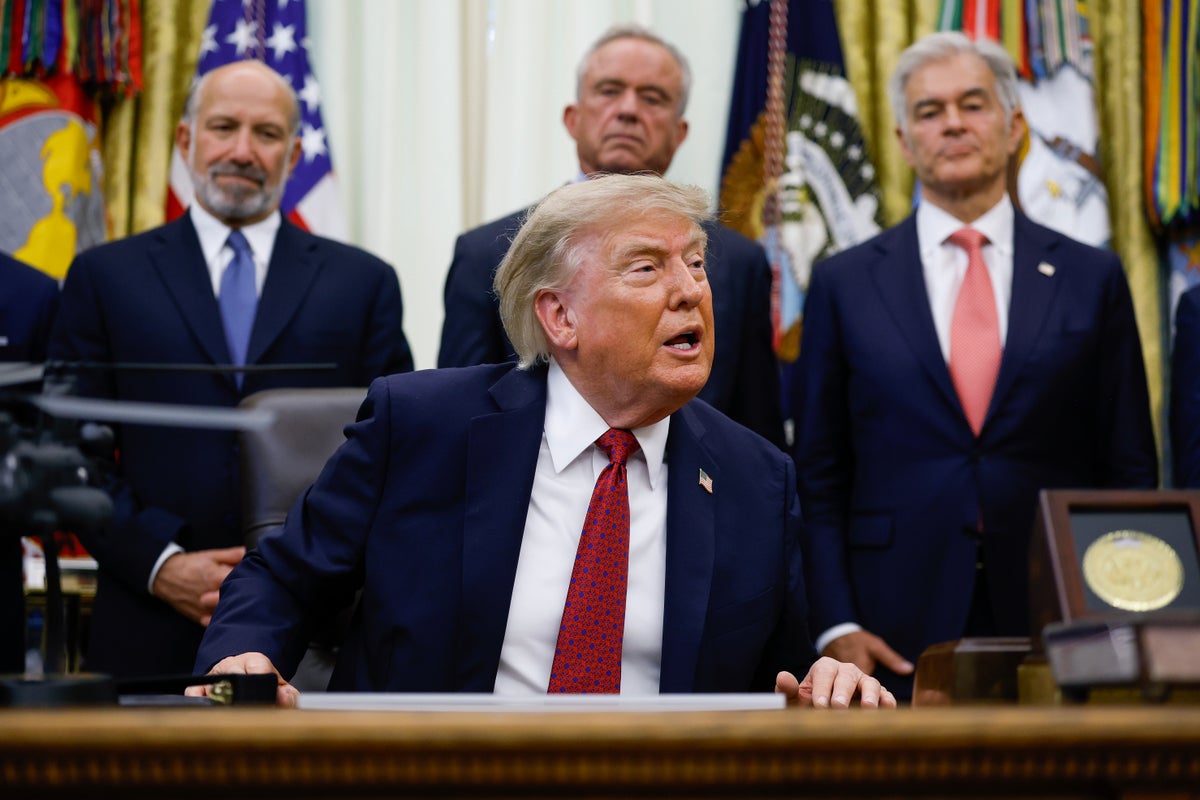
However, when questioned by a reporter in the Oval Office, Trump did not indicate a preferred candidate to succeed him, suggesting that numerous individuals could potentially take up the MAGA banner.
I bet there is a lot of people considering it, that you do not know about, Trump remarked.
Regarding Hegseth, Trump commented, I think he’s doing a fantastic job, but it is very early to talk about that.
Vance has emerged victorious in straw polls for the 2028 nomination at both the 2025 and 2026 Conservative Political Action Conference (CPAC) gatherings, organized by pro-Trump figures Matt and Mercedes Schlapp. He also consistently leads in polls of the prospective GOP field, occasionally surpassed by another potential rival within the president’s Cabinet, Secretary of State Marco Rubio.
Both Vance and Rubio have assumed active, public-facing roles within the second Trump administration and have vied for attention at times. Rubio took on the role of acting national security adviser after his predecessor, Mike Waltz, was appointed as U.N. ambassador.
Hegseth has recently fueled rumors of his own political aspirations by campaigning for Republican House and Senate candidates in Iowa at the Iowa State Fair, a traditional hotspot for presidential hopefuls. As a former Fox News host, Hegseth is already a more prominent political figure than most of his predecessors.
Trump has often been questioned about his preferred successor and has kept his thoughts on the matter vague in public. However, the Washington Post reported in early August that Trump privately favors both Vance and Rubio, even telling a group of donors “we need to elect J.D.” at a recent gathering, though the exact context of those remarks remains unclear.
The Post also revealed that Trump polled his staff aboard Marine One in July to determine their preferred candidate for the 2028 nomination, with Vance and Rubio as the only options. He has also reportedly suggested that the two could run as a ticket, without indicating a clear favorite.
Trump’s comments on Monday suggest he is considering a broader range of candidates as he seeks a Republican capable of maintaining GOP control of the White House and advancing his political doctrine.
While his choice for 2028 remains uncertain, Trump’s focus on controlling the Republican Party is evident. This cycle, he has continued to endorse candidates in key races to ensure his loyalists remain influential within the party. Most recently, he backed Darline Graham Nordone, sister of the late Sen. Lindsey Graham, for the primary election in South Carolina, against a key ally of his former rival Nikki Haley and the House Freedom Caucus, Rep. Ralph Norman.
Trump’s endorsement record this cycle is mixed, as it was insufficient to secure victory for some candidates, including Cory Mills of Florida, who faced calls for his resignation or expulsion before his primary defeat. Nevertheless, Trump-endorsed candidates remain favorites in most GOP races, even in traditionally bluer states like Maryland.
His endorsement played a significant role in the Florida gubernatorial race, propelling Rep. Byron Donalds to victory in the Republican primary over Jay Collins, an ally of the incumbent Gov. Ron DeSantis, another former Trump rival. DeSantis chose not to endorse a candidate in the primary.
Vance’s strong support from the president could be a decisive factor in the upcoming Republican race for the White House. As a former senator from Ohio and author of Hillbilly Elegy, Vance formed an early alliance with the president’s eldest son, Donald Trump Jr., who supported him for Congress and lobbied against Washington establishment figures to have Vance added to the 2024 ticket alongside his father.
The vice president remains popular among younger Republicans, like Trump Jr., due to his skepticism about America’s involvement in foreign conflicts and his preference for an isolationist foreign policy. In 2024, the New York Times reported that he and Trump Jr. still communicated almost daily.
Reporting by Policy-Wire (PW)