

Trump Meets Syria’s New Leader in Riyadh
In May 2025, U.S. President Donald Trump made a surprising and dramatic diplomatic move by meeting Syrian interim President Ahmed al-Sharaa in Riyadh, Saudi Arabia, after concluding several...
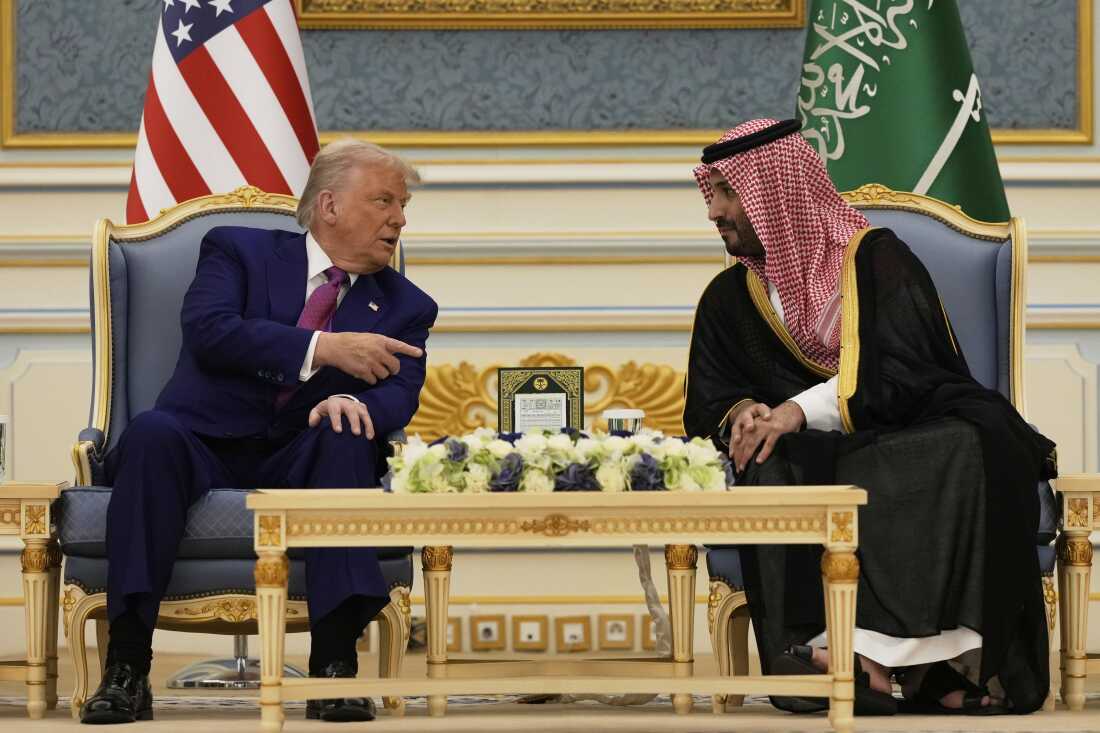
In May 2025, U.S. President Donald Trump made a surprising and dramatic diplomatic move by meeting Syrian interim President Ahmed al-Sharaa in Riyadh, Saudi Arabia, after concluding several multibillion-dollar energy and weaponry deals with King Salman and Crown Prince Mohammed bin Salman. It was the first time in more than 20 years that a U.S. president had held a face-to-face meeting with a Syrian leader, this time on neutral ground in Riyadh. The meeting, which is a component of Trump’s larger Middle East tour, has sparked a heated international discussion about its potential effects on regional security and the future course of American foreign policy. A high-profile meeting with Syria’s interim president, Ahmed al-Sharaa, held on the sidelines of the GCC summit in Riyadh, was the focal point of the engagement.
Al-Sharaa, a highly controversial figure, assumed leadership after the ousting of long-time Syrian president Bashar al-Assad in December 2024. Once allegedly affiliated with Islamist militant groups and previously carrying a $10 million U.S. bounty, al-Sharaa has recently rebranded himself as a reform-oriented nationalist seeking global legitimacy. Trump’s remarks about him stirred both praise and criticism. Describing him as a “young, tough and attractive guy” with a “strong past—very strong past. Fighter,” Trump drew sharp reactions from lawmakers both in Washington and abroad.
In a region defined by volatility and unpredictability, Trump’s unexpected outreach to Syria’s transitional leadership from Riyadh could mark either a historic breakthrough or a risky miscalculation. The decision came as a shock to many, including officials in the U.S. Treasury and State Departments, who reportedly were not consulted beforehand. As per Reuters, the reversal is intended to support Syria’s reconstruction and reintegration into the global economic and diplomatic community. However, critics argue the move may inadvertently legitimize a still-fragile regime with an uncertain future.
Trump’s meeting with Syria’s interim president in Riyadh was just one leg of a larger regional mission, which also included strategic engagements in Saudi Arabia and Qatar. Before he arrived in Doha, where he finalized a massive $96 billion aerospace agreement with Qatar Airways for up to 210 Boeing jets, Trump held closed-door talks with Gulf leaders in Riyadh. He also hinted at increased U.S. support for air defense systems and infrastructure upgrades at Qatar’s Al Udeid Airbase, a crucial hub for American military operations in the region.
Despite the scale of economic deals and diplomatic activity, it was the Syria-related meeting in Riyadh that stole the global spotlight. The international response has been sharply divided. Gulf states such as Saudi Arabia and the United Arab Emirates cautiously welcomed the move, interpreting it as a step towards regional normalization. Turkey offered mild approval, stating that “constructive engagement with Syria’s new leadership is necessary.” In contrast, Israel voiced serious concern, warning that premature recognition of al-Sharaa could destabilize regional security cooperation due to his militant past.
In a post on X (formerly Twitter), White House Press Secretary Karoline Leavitt noted that al-Sharaa expressed hope Syria could serve as a vital trade bridge between East and West, and showed openness to American investment in the country’s oil and gas industries.
Human rights organizations, however, expressed reservations. Amnesty International’s Middle East director emphasized that Syria’s future must be rooted in diplomacy, cautioning that U.S. engagement must not lead to injustice or impunity.
Trump defended his controversial outreach as part of a broader realignment of U.S. policy in the region. “Putting America first doesn’t mean isolating America,” he declared during a press briefing in Doha. “We’re turning enemies into partners, and partners into economic allies.” He further expressed optimism that Syria might soon join the Abraham Accords, alongside other Muslim-majority nations, signaling a potential shift in Syria-Israel relations.
📄 POLICY WIRE WHITEPAPER PUBLISHED: PAKISTAN'S NATIONAL SECURITY POLICY PRIORITIES
👉 READ BY CLICKING HEREGlobal analysts remain divided over the long-term impact. Supporters argue the initiative is a bold, pragmatic move aimed at curbing Iranian and Russian influence in Damascus. Detractors see it as a reckless gamble that could undermine the UN-led peace process and alienate traditional allies.
According to The Times (UK), al-Sharaa is preparing for his first foreign visit to Moscow next month, a move that may further complicate the geopolitical dynamics of the region. Whether Washington’s embrace of Syria’s transitional leadership will endure remains uncertain, especially as Trump’s Middle East tour wraps up in the United Arab Emirates, where discussions on regional counterterrorism coordination are reaching their final stages.
In a region defined by its volatility and unpredictability, Trump’s surprise meeting with Syria’s interim leader in Riyadh could either prove to be a historic diplomatic breakthrough or a dangerous miscalculation. But one fact is undeniable: the landscape of Middle Eastern diplomacy is undergoing a rapid and dramatic transformation.
Author