


Trump Administration Urges Supreme Court to Lift Big Bend Border Wall Injunction
Trump administration asks the Supreme Court to lift a lower court injunction allowing border wall construction in West Texas and Big Bend region.

POLICY WIRE — Washington, D.C. — The Trump administration filed an emergency request with the Supreme Court on Wednesday, asking justices to permit the immediate resumption of border wall construction and related infrastructure across a remote West Texas territory that encompasses Big Bend National Park.
Department of Justice officials petitioned the high court to overturn a lower court injunction that currently halts the Department of Homeland Security from erecting barriers throughout the Big Bend Sector. This expansive operational zone spans over 500 miles of the international border and covers 77 Texas counties.
In the emergency filing, Solicitor General D. John Sauer argued that the district court order severely hinders federal efforts to curb the illicit movement of drugs and unauthorized migrants across the southern boundary. Sauer noted that the targeted zones were specifically designated due to persistent high volumes of illegal entries and narcotics trafficking recorded over recent years.
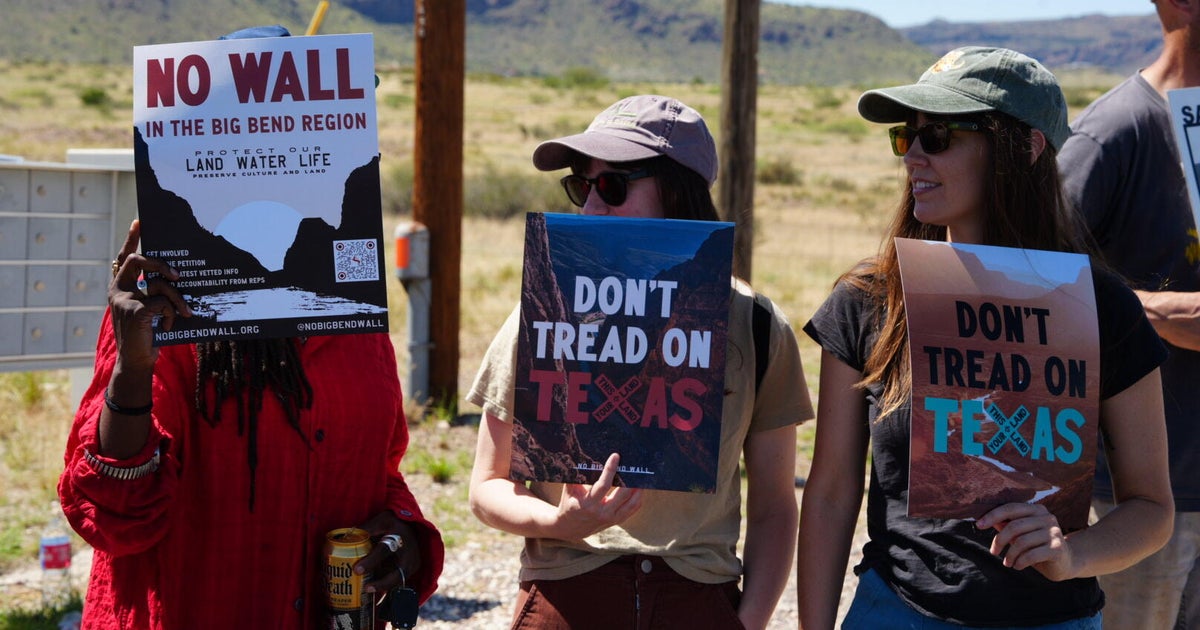
President Trump’s signature pledge to construct a southern border barrier has remained a cornerstone of his administration’s platform for the past decade. However, plans drew sharp opposition earlier this year from bipartisan lawmakers, local cattle ranchers, and Texas law enforcement after social media footage revealed heavy machinery arriving at Big Bend National Park.
Reacting to the public outcry, Customs and Border Protection Commissioner Rodney Scott temporarily suspended park construction through the end of September. Officials clarified that while the primary wall would bypass the national park itself, auxiliary infrastructure—including patrol roads, electronic surveillance technology, and roughly 17 miles of vehicle barriers—was planned for the area.
CBP records indicate that crews initiated work on a 47-mile wall segment within the Big Bend territory last month. The Justice Department confirmed that the federal government has finalized contracts for five distinct barrier initiatives across that stretch of the U.S.-Mexico border.
The Department of Homeland Security initially announced plans in February to install physical barriers and roadways throughout the Big Bend Sector. The blueprint encompasses 30-foot bollard walls running from Fort Quitman down to Closed Canyon inside Big Bend Ranch State Park, with total infrastructure spanning upwards of 300 miles.
Ordinarily, federal regulations require comprehensive environmental and historical preservation assessments before proceeding with projects that affect local wildlife, cultural assets, and recreational spaces. However, when former Homeland Security Secretary Kristi Noem unveiled the initiative earlier this year, she invoked a 1996 immigration statute that grants the secretary broad authority to waive legal mandates to accelerate barrier deployment in high-traffic border zones. Her successor, Markwayne Mullin, subsequently issued two additional waivers authorizing CBP to advance the construction systems.
In response, an environmental advocacy group, a professional river guide, and a religious organization dedicated to safeguarding the Sacred Heart of the Church of Jesus near the Rio Grande initiated a federal lawsuit in April to block the development. The administration defended the project by pointing to immigration data showing more than 89,000 apprehensions in the Big Bend Sector between 2021 and 2025.
Conversely, the plaintiffs countered that the Big Bend Sector records the lowest apprehension numbers among the seven southern border zones. Court documents show that while the region encompasses over 25 percent of the boundary, annual apprehensions there historically account for between 0.3 percent and 2.2 percent of total nationwide border apprehensions.
U.S. District Judge Kathleen Cardone sided with the challengers earlier this month, issuing a preliminary injunction that blocks the Department of Homeland Security from erecting barriers, installing related infrastructure, or undertaking any ground-disturbing work within the sector. Cardone determined that both Noem and Mullin overstepped their statutory authority when issuing the waivers between February and July.
Shortly before the Justice Department turned to the Supreme Court for intervention, Judge Cardone formally denied the administration’s motion to stay her ruling. The high court is now expected to weigh the emergency application.
Reporting by Policy-Wire (PW)