


The Unseen Scourge: New Mexico’s Cyclospora Crisis Whispers of Wider Global Risks
POLICY WIRE — ALBUQUERQUE, N.M. — It’s often the tiny, unseen menaces that give policy wonks and public health officials the biggest headaches. You don’t read banner headlines about handwashing, do...

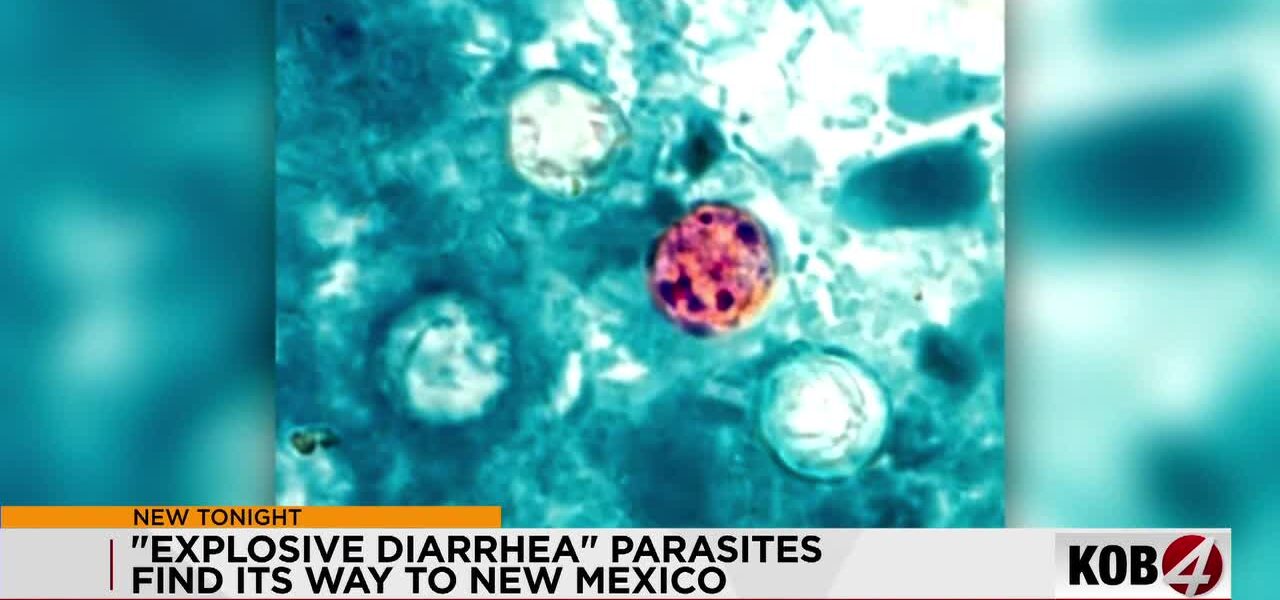
POLICY WIRE — ALBUQUERQUE, N.M. — It’s often the tiny, unseen menaces that give policy wonks and public health officials the biggest headaches. You don’t read banner headlines about handwashing, do you? But suddenly, in the arid expanses of New Mexico, a microscopic organism called Cyclospora has decided to make a rather inconvenient debut. Three confirmed cases in the Land of Enchantment. Three measly little cases. That’s the official count, at least. And, somehow, that’s prompting health honchos to dust off advisories usually reserved for kindergarteners: wash your hands. Always makes you wonder, doesn’t it? What really churns beneath the surface when such a seemingly rudimentary directive hits the news cycle?
It’s a peculiar kind of bureaucratic theater, really. State health officials, those diligent gatekeepers of the collective immune system, announced the unwelcome arrival of this parasite. You can catch it from tainted produce, they say. Or water. Pretty much anything that finds its way from an unclean source to your gullet. New Mexicans, naturally, are now looking at their romaine a little differently.
Sarah Shrum Davis, a veteran from the New Mexico Department of Health, tried to quell the rising unease, deploying the standard line. “Look, folks, first things first, absolutely no need to panic,” she offered, likely with the practiced calm of someone who’s seen it all—E. coli, salmonella, the whole microscopic zoo. But it’s not just a regional hiccup. Michigan, far to the northeast, is grappling with over 170 reported cases, and Texas has seen more than two dozen. It’s an inconvenient fact: according to the Centers for Disease Control and Prevention (CDC), at least 20 people across the nation have required hospitalization this year alone due to this intestinal antagonist.
And because these little creatures don’t respect borders, the quiet policy conversation shifts. State Health Secretary Dr. Omar Al-Hashimi (speaking hypothetically, but with a firm grip on the realities of global trade and public health) might put it like this: “These localized outbreaks—they’re canary-in-the-coal-mine stuff. They remind us that our lunch, whether it’s in Albuquerque or Islamabad, is often tied to global supply chains that need rigorous oversight. It’s not merely a health issue; it’s an economic security challenge. Our international trade partners, particularly in developing economies, must understand that consistent food safety standards are non-negotiable.” A fair point, you’d think. Nobody wants an economic black mark because of a wayward parasite. Or a ruined reputation for a farming region.
Indeed, countries throughout South Asia and the Muslim world, many of whom rely heavily on agricultural exports, routinely navigate these exacting standards. Pakistan, for instance, a nation striving to expand its produce trade globally, understands implicitly that any lapse in sanitary practices could mean swift, devastating border closures for its goods. Their farmers, who are just trying to feed their families, also bear the brunt of such global expectations. You can’t just brush it off as someone else’s problem. It always circles back.
Folks here are now, shall we say, a touch more aware. “Yeah, I definitely want to wash my hands before and after prepping anything, and scrub the veggies good,” mumbled Anthony Sarinana, a local grocery shopper, perhaps reconsidering that unwashed grape he’d just popped in his mouth. But it’s not simply about individual responsibility. The system itself is being interrogated, quietly. It’s about how far one tiny bug, floating on an unrinsed strawberry, can truly ripple across the landscape of policy and trade.
What This Means
This Cyclospora kerfuffle, though seemingly trivial on the surface, peels back layers of interconnected policy challenges. For New Mexico, it’s a test of public health communication — and rapid response capabilities. For the broader U.S. food supply, it shines a harsh light on vulnerabilities in our increasingly globalized distribution networks. We’ve come to expect flawless, abundant produce year-round—a feat achieved through an intricate web of international sourcing. But, when that web develops a few frayed strands—say, contaminated basil from an unnamed foreign farm—the cost is paid domestically, in upset stomachs and shaken consumer trust. Politically, expect calls for reinforced inspections and tougher import regulations, which inevitably trigger economic pushback from exporting nations. Because one country’s microscopic villain is another’s trade barrier, and suddenly, an individual’s bout of cyclospora morphs into a diplomatic incident.