


New Mexico’s Green Chile Challenge: A Culinary Bellwether in the Heart of America
POLICY WIRE — ALBUQUERQUE, N.M. — In a world often fractured by political maneuvering and economic anxieties, one might not expect the humble cheeseburger — specifically, one adorned with the verdant...

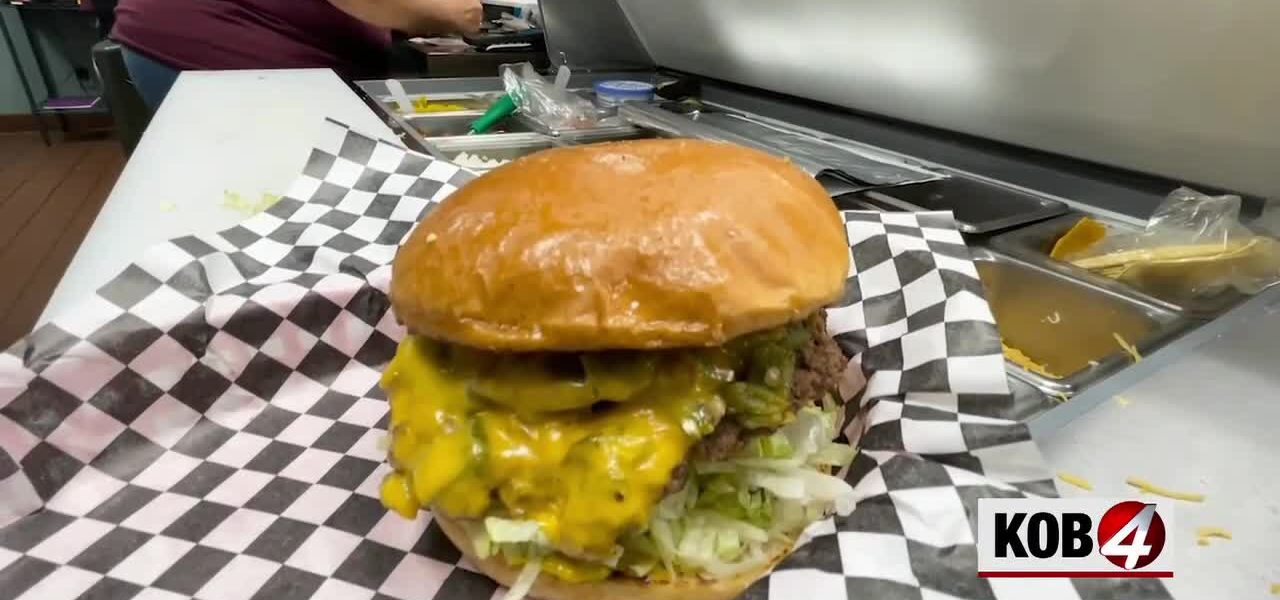
POLICY WIRE — ALBUQUERQUE, N.M. — In a world often fractured by political maneuvering and economic anxieties, one might not expect the humble cheeseburger — specifically, one adorned with the verdant fire of New Mexico green chile — to offer a glimpse into the mechanics of regional pride and commercial supremacy. But here we’re. Because sometimes, the sharpest reflections of policy and power play out not in gilded halls, but in a fairground cook-off. That annual culinary proving ground, the New Mexico State Fair Green Chile Cheeseburger Challenge, is gearing up again, silently—but fiercely—drawing lines in the culinary sand.
It isn’t merely about beef, cheese, — and capsaicin. Oh no. It’s a statement, a territorial claim to a very particular kind of flavor profile that, for the inhabitants of this high desert state, amounts to identity itself. The contest, an institution by any measure, continues to accept entries for the iconic Green Chile Cheeseburger Challenge through July 17 at noon. That date, rather an arbitrary one for most of the world, marks a quiet, yet firm, demarcation for New Mexico’s restaurateurs. Only brick-and-mortar establishments within the state borders can throw their aprons into the ring, ensuring this battle of the buns remains purely a local affair. One imagines the conversations, the whispered strategies in restaurant kitchens across the state as chefs contemplate their submissions; it’s a matter of immense, if regional, consequence.
This particular gastronomic rivalry feels different, somehow. You’ve got to admit, it holds a particular regional intensity. It isn’t just another food festival. For context, while New Mexico produces about 50,000 tons of green chile annually, making it the top producer in the U.S. according to the New Mexico Department of Agriculture, much of its significance remains geographically localized. It’s a culinary nationalism of sorts, isn’t it? The fair brass—or whoever manages the competitive selection process—will ultimately choose eight restaurants to compete for the crown September 14. Just eight. Think of the pressure, the anticipation, the potential for local bragging rights and, more importantly, a tangible bump in sales that could very well determine the solvency of a small business.
Last year saw Isleta Grill ascend to culinary royalty. They successfully defended their Blind Judging Championship and won the People’s Choice Champion in the 2025 New Mexico State Fair Green Chile Cheeseburger contest. Yes, the [QUOTE_PLACEHOLDER] designation—a future date—can cause a double-take; one assumes a typographical quirk or perhaps a testament to an extremely forward-thinking fair administration that operates on a different temporal plane. Their dominance wasn’t an easy walk in the park either. Isleta Grill faced off against a cadre of hopefuls: Sparky’s – Hatch, Downshift Brewing – Ruidoso, Grill at the Monte Carlo – Questa, Laguna Burger – Laguna Pueblo, Craft Republic – Albuquerque, Owl Café – Albuquerque, Fuego 505 – Albuquerque, and The Grill at the Sheraton – Albuquerque. Each name a battle standard, representing a specific geography, a local economy, a specific set of diners all ready to argue that their burger, the one from their place, truly embodies the essence of the state. It’s tribal, but in the best way possible.
And these aren’t just local flavor skirmishes. What we’re witnessing is an organic manifestation of cultural soft power. Much like how Pakistani street food, with its vibrant spices and robust flavors, often becomes an ambassador for its diverse regions, or how a chai stall in Karachi becomes a hub for political discourse and community, this green chile cheeseburger does something similar for New Mexico. It draws people in, it creates dialogue, it stimulates a very particular form of regional identity and—don’t kid yourself—tourism. The drive through Hatch, a chile mecca, isn’t just for souvenirs; it’s a pilgrimage for the palate. It’s that direct, sensory experience that translates into lasting memory, the kind of memory that brings repeat visitors and builds local economies better than any abstract economic policy paper ever could. You really can’t underestimate the power of a good meal to foster belonging and, eventually, bolster a micro-economy.
But the world keeps spinning, doesn’t it? What happens when these fiercely guarded local culinary traditions meet the cold, hard realities of a globalized market? Take the spice trade, for instance. For centuries, the flow of goods from South Asia, particularly through countries like Pakistan, dictated economic policy and international relations for empires far removed. They’ve always understood that controlling the spice meant controlling wealth — and influence. Here, the green chile, this humble Capsicum, commands a different kind of influence, mostly domestic, but with global echoes. One has to wonder, would a global appetite for New Mexico green chile ever impact supply chains, or even intellectual property rights regarding this specific strain? Probably not soon, but the principle is certainly there, a lesson gleaned from centuries of cross-continental trade.
These sorts of contests are really micro-negotiations, aren’t they? They’re about quality control, local sourcing (often from that prime chile country of Hatch or Chimayó), and the deeply embedded tradition of a certain kind of perfection. Policy makers, whether they realize it or not, often wrestle with very similar questions on a grander scale: how to maintain local identity in an increasingly homogenized world, how to support small businesses against larger competitors, and how to harness cultural uniqueness for broader economic good. This competition, for all its savory indulgence, serves as a delicious microcosm of those broader strategic puzzles.
What This Means
At first blush, a cheeseburger contest might seem like a frivolous local diversion. But to assume that would be missing the forest for the sizzling patties. Economically, these events are crucial marketing platforms for New Mexico’s restaurant sector, generating brand loyalty and driving tourist dollars. A win can be transformative for a small establishment, extending its reach beyond county lines. The very specific geographic restriction—entries are only open to brick-and-mortar restaurants in New Mexico—reflects a protectionist policy, ensuring local capital circulates within the state and fortifies a distinct regional brand.
Politically, the challenge quietly reinforces state identity. In an era of increasing federal encroachment or perhaps even global cultural amalgamation, a regionally specific, fiercely defended culinary tradition serves as a rallying point. It’s a palatable—pun intended—form of civic pride that unites otherwise disparate communities across New Mexico. Consider how a simple food item can serve as a non-partisan symbol of unity, something politicians would kill for. as an observer from afar might note the ongoing significance of local agricultural products in various regions, for instance, like the struggles New Mexico has faced with agricultural concerns previously, this event highlights the continuing importance of sustaining and celebrating those unique local outputs. It really is a cultural export without leaving home.
There’s also a subtle, perhaps unintentional, nod to geopolitical soft power. Think of it: just as countries leverage their cuisine as a form of diplomacy and cultural exchange (like France’s culinary prestige or Japan’s sushi mastery), New Mexico does this on a regional scale. It says, ‘This is who we’re. This is what we offer.’ That kind of self-definition, articulated through a medium as universally appreciated as food, is powerful. It transcends linguistic — and political barriers. In many ways, the fight for the Green Chile Cheeseburger crown is a reflection of ongoing policy debates about regional autonomy, economic development via local distinctiveness, and the enduring power of culinary traditions to shape not just palates, but indeed, local destinies.
The post New Mexico State Fair Green Chile Cheeseburger Challenge entries open now through July 17 appeared first on KOB.com. That’s a direct attribution, isn’t it? Just goes to show even in the high-stakes world of food fights, the sources remain a quiet truth.