


High Stakes in Brazil: Arsenal Stars Sweat Out World Cup 2027 Qualification Scramble
POLICY WIRE — London, England — For professional athletes, the dream isn’t just to play, it’s to play on the biggest stage. But as the FIFA Women’s World Cup 2027 qualification winds its...

POLICY WIRE — London, England — For professional athletes, the dream isn’t just to play, it’s to play on the biggest stage. But as the FIFA Women’s World Cup 2027 qualification winds its way through an intricate web of triumph and sheer desperation, some of football’s brightest female talents find themselves caught in a high-stakes lottery, their fate hanging precariously on final-day results and the whims of a capricious qualification format. And for a sizable contingent from London’s mighty Arsenal, the waiting game has become an agonizing, stomach-churning affair.
It’s a peculiar kind of limbo, really. While a handful of nations, like Australia—with Arsenal’s Steph Catley, Caitlin Foord, and Kyra Cooney-Cross already booked for Brazil—have clinched their tickets, others, burdened by an unexpected defeat or a stubborn rival, must navigate the treacherous waters of play-offs, or worse, face the bleak prospect of watching from the sidelines. Germany secured its European spot with admirable efficiency, and Colombia and Argentina punched their South American passes. But a significant swath of powerhouses, from England to the Netherlands, remain mired in uncertainty, their star players locked in an anxious dance with destiny.
Consider the Dutch dilemma. Daphne van Domselaar and Victoria Pelova, key cogs in Arsenal’s machine, face a scenario straight out of a Hollywood script. Their national team, the Netherlands, currently sitting third in their group, needs to beat Poland and hope France and the Republic of Ireland share the spoils. Any other outcome? Straight into the meat grinder of the UEFA play-offs, a gauntlet no one relishes.
“The competitive landscape has never been this intense, not truly,” observed FIFA’s Director of Global Football Development, Martha Sani, speaking from Zürich earlier this week. “Every confederation sees increased investment, yes, but also rising standards. There aren’t many ‘easy’ games left. And that’s a beautiful, terrifying thing for the sport.” Her words resonate especially in Europe, where the continental qualifying spots—11 direct, with more filtering through play-offs—are ruthlessly contested, making it a true sporting microcosm of market misjudgment and soft power dynamics for many national associations.
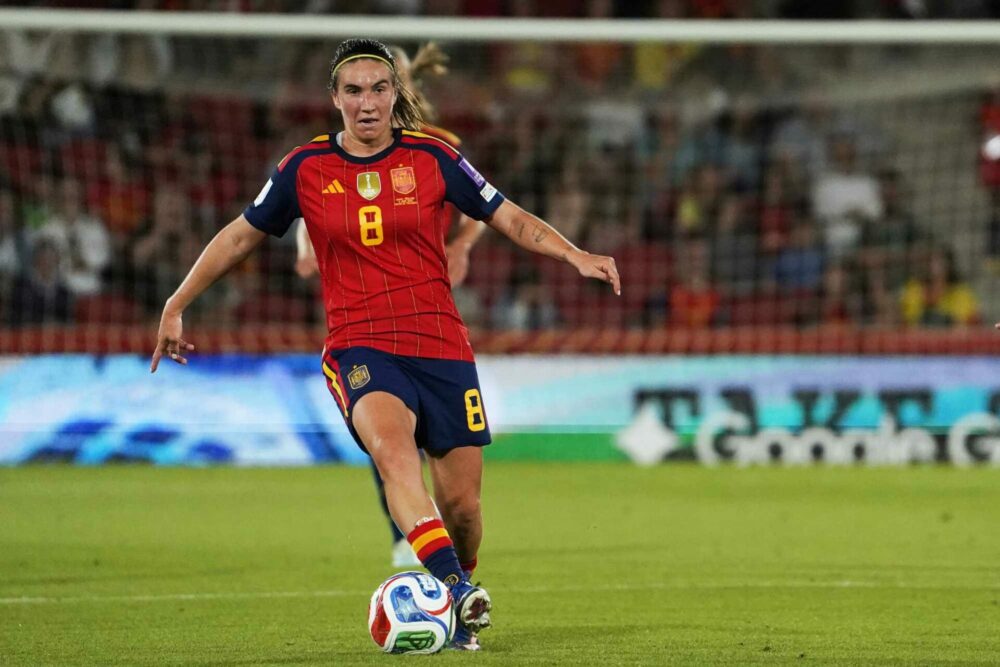
Then there’s England, featuring Arsenal’s Lotte Wubben-Moy, Leah Williamson, Taylor Hinds, Beth Mead, Chloe Kelly, Alessia Russo, and Michelle Agyemang. A thumping 4-0 defeat away to Spain—who are now nearly through thanks to goals from Laia Codina and Mariona Caldentey—sent the Lionesses spiraling towards the play-offs. It’s a gut punch, not just for the players, but for a nation that’s invested heavily in women’s football post-Euros glory. Similarly, Katie McCabe — and Ireland find themselves in a winner-takes-all clash against France. A triumph guarantees Brazil; anything else, — and it’s play-off purgatory.
But the World Cup, ultimately, is a global affair, a mirror reflecting disparate footballing fortunes. While the spotlight often shines brightest on European struggles, the larger narrative encompasses continents yearning for a place at the table. Even with AFC seeing six nations already qualified, including the Philippines and both Koreas, the pathways for many aspiring footballing nations, particularly across South Asia and the broader Muslim world, remain steep. Many, like Pakistan, with burgeoning interest but limited infrastructure, are miles away from contesting even preliminary qualification rounds. Investment disparities are stark; for instance, the entire annual budget for women’s football development in Pakistan is roughly a fraction of what a top-tier European club might spend on a single academy project, according to a recent regional sports development report.
“You watch these elite teams battle, and you know there’s talent everywhere, right?” mused Fatima Hussain, a Lahore-based youth coach campaigning for increased grassroots funding. “But without the pathway, without the sustained investment and professionalization, how can girls in Karachi or Faisalabad ever truly dream of playing on that stage? It’s not just about sport; it’s about equitable access to opportunity. And that often gets lost in the bigger picture.” Indeed, while FIFA has aimed to make the World Cup more inclusive—expanding it to 32 teams for 2023—the developmental gap persists, starkly. Roughly 70% of FIFA’s member associations are still classified as ‘developing’ in women’s football infrastructure, highlighting the scale of the challenge beyond just qualification battles for established powers.
And then there’s the long game. Emily Fox with the USA and Olivia Smith with Canada are afforded the relative luxury of later starts to their CONCACAF qualifying campaigns. They’ll likely stroll through; the U.S. simply needs a single victory over El Salvador, for crying out loud. The sheer disparity in competitiveness underscores how certain federations have consolidated their dominance, almost making qualification a formality, while others sweat bullets over every single match.
What This Means
The nail-biting finish to these World Cup qualifiers isn’t just about who makes it to Brazil; it’s a telling barometer of the professionalization and increasingly narrow margins within women’s global football. The growing parity—at least among the upper echelons—suggests FIFA’s investments and efforts are yielding a more competitive product, though at the cost of less straightforward qualification routes for even established giants. For clubs like Arsenal, having so many stars fighting for their national team spots adds a layer of economic risk and opportunity cost; injured players during the play-offs mean a potential talent drain for crucial club fixtures. the dramatic finishes and underdog stories (or near misses) create compelling narratives that fuel media interest and fan engagement, a key ingredient for the sport’s continued commercial growth. But it also exposes the widening chasm between the fully professionalized, well-funded nations and those still struggling for basic resources, hinting at a global sporting hierarchy that’s evolving, yes, but often at an uneven pace. Expect intense scrutiny on governing bodies to address this imbalance, as the dream of true global representation remains just that—a dream—for many.
The next few weeks, then, aren’t merely about football results. They’re about professional aspirations, national pride, and the continuing, complex geopolitical economy of global sport, all wrapped up in the dazzling, unpredictable drama of qualifying for the biggest show on Earth.