


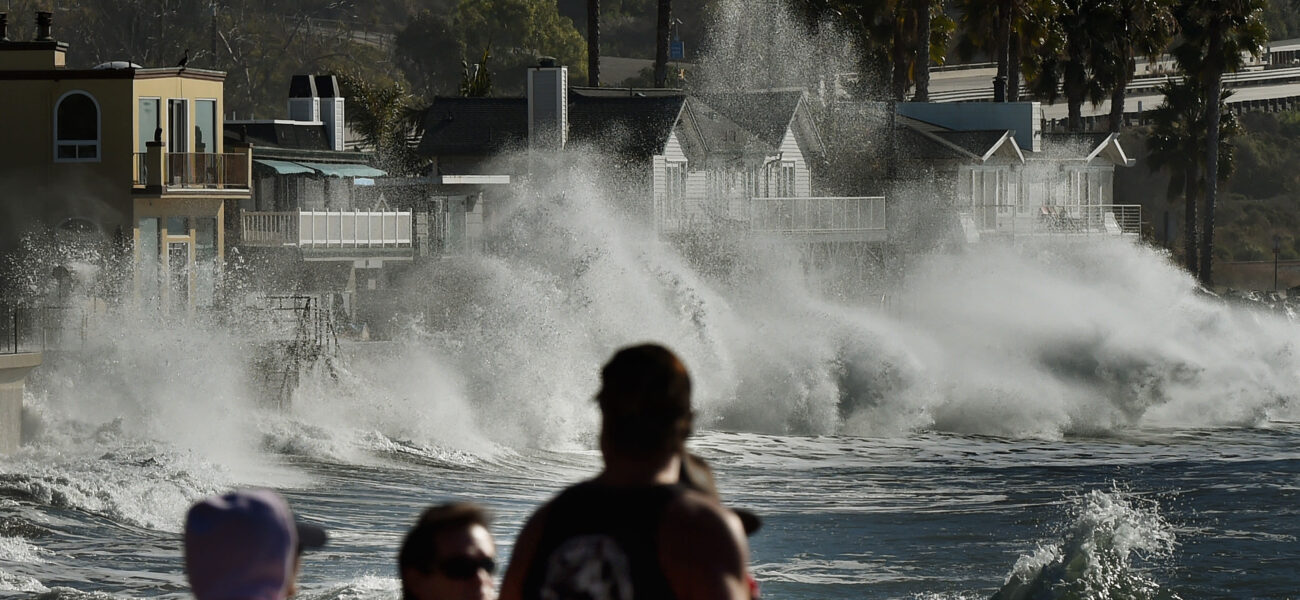
El Niño Intensifies: Global Crisis & Policy Paralysis
El Niño's rapid intensification threatens global stability. Unprepared nations face economic shocks, food insecurity, and humanitarian crises as policy paralysis looms.

POLICY WIRE — Washington, D.C. — Somewhere, an accountant’s spreadsheet is quivering. It’s not about the latest earnings report, though that’ll come, you can bet. No, it’s about the very climate systems we pretend to manage—systems now in full revolt, quietly redrawing lines on maps long before diplomats ever catch on. We’re talking El Niño, — and this one, it isn’t just a whisper on the wind anymore. It’s shaping up to be a very loud, very expensive headache, even for folks thousands of miles from the nearest ocean.
It’s here again, rearing its head with a disconcerting speed that makes one wonder if anyone actually learned a thing from past bouts of planetary fever. Climatologists, typically a measured bunch, are now stating the phenomenon is [QUOTE_PLACEHOLDER] Not easing in, not politely taking its turn; it’s building momentum, you see. And because of that, folks need to pay attention, because the effects aren’t going to stay confined to just weather maps.
This isn’t some quaint meteorological anomaly—this is a global disruption engine. Historically, a strong El Niño can nudge average global temperatures upward by as much as 0.2 degrees Celsius (0.36 degrees Fahrenheit), according to the National Oceanic and Atmospheric Administration (NOAA). That might sound like a trifle to the layman, but for climate models and the delicate balance of planetary systems, it’s a hell of a thump. What does that mean for your average citizen? Well, it translates to scorched earth in one place, drowning rains in another. It’s the kind of imbalance that snaps agricultural supply chains, sparks refugee crises, and, yes, pushes already strained national economies to the brink.
Consider the delicate dance of monsoons across South Asia. They aren’t just rain—they’re lifeblood. In places like Pakistan, where an estimated 42% of the workforce is still engaged in agriculture, any substantial deviation in rainfall means not just a bad harvest, but potentially mass destitution. Farmers here depend on predictable seasonal shifts; an El Niño often means either delayed or significantly reduced monsoon rains. But it’s not just dryness, is it? Sometimes, it means freak, intense downpours that obliterate infrastructure, exactly what we’ve seen in recent years with scorched earth scenarios shifting to floods.
It’s not hard to connect those dots. Reduced harvests mean food price hikes. Food price hikes mean hungry bellies. Hungry bellies, in countries already battling economic fragility — and political dissent, breed instability. And we don’t need a history professor to remind us how swiftly local discontent can snowball into broader regional friction, particularly across a sensitive geo-strategic fault line like the broader Muslim world. Pakistan, Bangladesh, parts of Indonesia—they’re all feeling the tremor. When forecasters warn, they aren’t just giving you a weather report; they’re painting a stark picture of future humanitarian, economic, and security challenges.
And here’s the thing: while the developed world frets over energy bills and vacation plans, nations on the frontline—many with limited resources and sprawling, vulnerable populations—are already grappling with climate shocks year after year. This latest intensification of El Niño? It’s just piling another weighty layer onto an already teetering stack. Global humanitarian organizations are already signaling a heightened alert for drought and food insecurity, particularly in East Africa and Central America, while unusual heavy rains are predicted for parts of South America.
📄 POLICY WIRE WHITEPAPER PUBLISHED: PAKISTAN'S NATIONAL SECURITY POLICY PRIORITIES
👉 READ BY CLICKING HEREBut can we blame anyone for not paying closer attention? Policy debates are usually swallowed whole by immediate gratification: election cycles, quarterly reports, the latest scandal involving some aging pop star’s new album. Climate change, — and its direct manifestations like El Niño, feel like a problem for future generations. Only, it isn’t, is it? It’s now. The consequences are immediate — and brutal.
What This Means
The rapidly escalating El Niño event presents more than just an atmospheric curiosity; it’s a stark indictment of our collective policy paralysis. Economically, we’re likely to see upward pressure on global commodity prices, especially food staples and certain raw materials, hitting developing nations hardest. Agricultural sectors across Latin America, Southeast Asia, and Africa are staring down potentially disastrous crop failures, which could then cascade into broader inflationary pressures globally. Supply chains, already brittle from recent shocks (pandemic, wars, etc.), will stretch, maybe even snap, in critical areas.
Politically, the implications are chilling. Resource scarcity—primarily food and water—can and often does exacerbate existing social tensions. In geopolitically sensitive regions, particularly the Muslim world, climate-induced migration becomes not just a humanitarian crisis, but a security threat, contributing to destabilization that global powers will struggle to contain. Governments in vulnerable nations will face immense pressure, and their capacity to respond will be severely tested, perhaps to breaking point. And because it’s always easier to point fingers than fix things, we’ll probably see a rise in nationalist rhetoric or calls for isolation as countries grapple with internal challenges, preferring finger-pointing over collaborative solutions. It’s a preview of the polycrisis we’re only just beginning to truly understand, and its effects won’t be confined to just charts and graphs. They’ll be on the streets.