


The Seer, the Hardwood, and the House Always Winning: On Sporting Prophecy and Public Palpitation
POLICY WIRE — New York City, USA — When does a mere basketball prediction transmute into a full-blown civic debate? When the stakes aren’t just championship trophies, but the very narrative of...

POLICY WIRE — New York City, USA — When does a mere basketball prediction transmute into a full-blown civic debate? When the stakes aren’t just championship trophies, but the very narrative of a city’s resolve and the intricate mechanics of public expectation. It’s a high-wire act, played out not by the athletes on the court, but by the pundits perched high above the fray, dictating terms of engagement to millions, day in, day out.
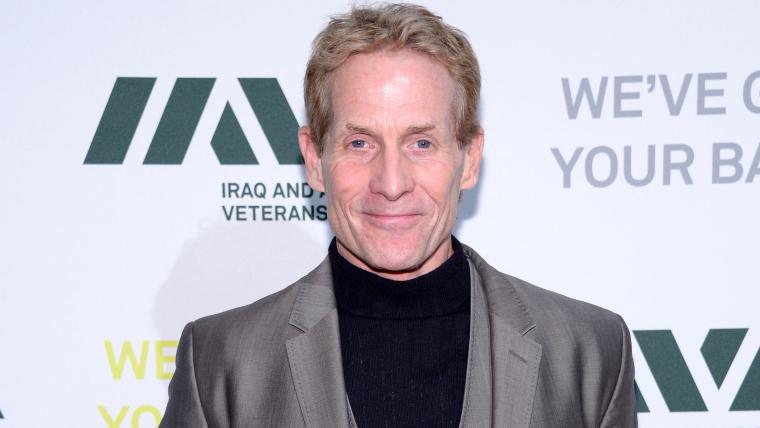
Consider the recent tremors emanating from Madison Square Garden. Game 3, a missed opportunity, saw the New York Knicks falter, allowing the San Antonio Spurs to slice their deficit to 2-1 in the NBA Finals. Most folks would see a momentum shift. A pause for concern, perhaps. But then, you have figures like Skip Bayless—the quintessential American sports oracle—who just won’t pivot. His stance? Knicks in six, baby. It’s a declaration less about athletic prognostication — and more about an unwavering faith in his own pronouncements. The man’s not merely covering a game; he’s crafting a legend, shaping perceptions for an audience far beyond sports fanatics.
And honestly, you’ve got to appreciate the theatricality. Here’s a New York squad, which by all accounts has thrilled their faithful, suddenly looking a bit wobbly. Victor Wembanyama and Stephon Castle—Spurs’ young guns—lit up the score, and just like that, a commanding 2-0 lead started feeling less like inevitability and more like a fond memory. Bayless, however, isn’t easily swayed by fleeting reality. His confidence isn’t derived from statistical probabilities alone; it seems carved from the stone of personal conviction, polished by decades of media-honed intuition. It’s a certainty that sells, doesn’t it?
This whole spectacle of media-fueled certainty, especially when coupled with massive markets like New York, ain’t just confined to basketball. This kind of rhetoric, you see it mirrored in broader geopolitical canvases, where narratives spun by a handful of prominent voices often supersede actual ground conditions. Pakistan, for instance, a nation where sporting allegiances run deep and passionate, often sees its cricket commentators operate with a similar authoritative gravitas, shaping public mood far beyond the boundary ropes. Their words can stir national pride or cast a pall of doubt—much like Bayless now faces in the Big Apple.
But the numbers back up the high stakes involved here. This isn’t just about pride. According to a recent projection by the New York City Comptroller’s Office, each home playoff game the Knicks play in the NBA Finals injects an estimated $10-12 million into the local economy, through ticket sales, hospitality, and peripheral retail. This isn’t pocket change; it’s tangible cash flow, influencing everything from taxi drivers’ tips to restaurant payrolls. One less home game? That’s real money off the table, affecting real New Yorkers.
Mayor Eric Adams, ever keen to link civic morale to the city’s bottom line, recently touched on this very synergy (during an impromptu street presser, likely): “Look, the Knicks ain’t just a team, they’re an institution. And when they’re winning, when this city’s electric—that ain’t just good for the soul, it’s good for business. Every bucket, every cheer, that’s dollars — and cents circulating right back into our neighborhoods. We’re watching more than just a game; it’s a living, breathing economic engine.”
Meanwhile, Dr. Fatima Gulzar, a cultural anthropologist at Karachi University specializing in global media impacts, offered a fascinating parallel during a recent online panel. “The way figures like Mr. Bayless cultivate an almost prophetic air—it’s incredibly potent. It crosses borders. Our Pakistani diaspora, for instance, they’re glued to these narratives. It’s not just about supporting a team, it’s about a shared experience, a commentary on determination, on overcoming adversity, or failing to—themes that resonate deeply, regardless of what’s happening on shifting global narratives.”
What This Means
This whole hoopla around Game 4, and specifically around a commentator’s insistence, highlights a couple of enduring truths. First, the economics of expectation are powerful. When a city’s primary sports franchise makes a deep run, it’s not just fans getting excited; it’s a measurable boost to local commerce, public mood, and even political capital for local leadership. A city riding high on a championship run sees increased tourism, higher retail sales, and a general buoyancy that translates into everything from bond ratings to bar patronage.
But there’s a more subtle dynamic at play. Pundits like Bayless, with their unshakable (or performatively unshakable) convictions, don’t just reflect public opinion; they shape it. They create mini-ecosystems of belief and doubt, framing how millions interpret athletic contests as proxy battles for broader ideals: resilience, underdog spirit, or the fallibility of heroes. It’s a masterclass in media manipulation—not necessarily nefarious, but certainly influential. And when the games wrap up, that impact doesn’t just evaporate. It lingers, sometimes coloring civic discourse — and political rhetoric for seasons to come. You can bet policymakers in New York, and really, any major sports market, are keenly aware of the emotional and economic ripple effects that stem from their city’s teams—and the amplified whispers of media prophets.