


Boston’s Basketball Gambit: A Mercenary Dance for Talent in a Volatile Market
POLICY WIRE — Boston, Massachusetts — Forget the confetti and the heroic narratives for a minute. Modern professional basketball isn’t about loyalty; it’s an unforgiving marketplace. Teams, even the...

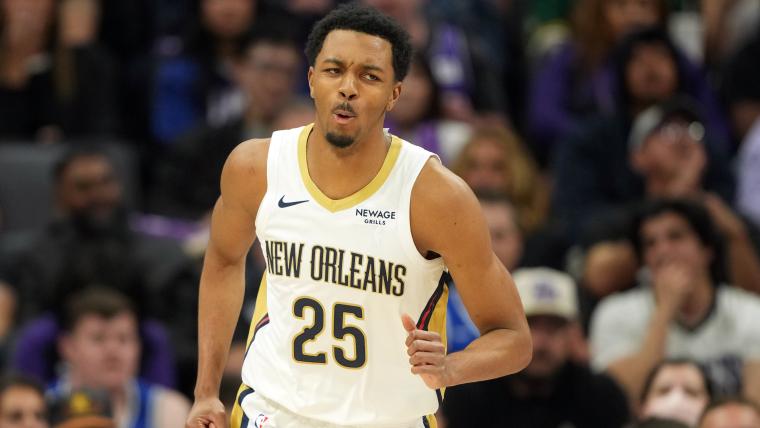
POLICY WIRE — Boston, Massachusetts — Forget the confetti and the heroic narratives for a minute. Modern professional basketball isn’t about loyalty; it’s an unforgiving marketplace. Teams, even the venerable Boston Celtics, are less like sporting clubs and more like investment portfolios, constantly rebalancing, asset-stripping, and hunting for undervalued stock. This grim calculus, not romantic notions of team-building, shapes Boston’s current obsession with New Orleans Pelicans forward Trey Murphy III—a cold, hard pursuit for leverage and future earnings disguised as a championship quest.
It’s a peculiar sight, watching one of the league’s most storied franchises maneuver so publicly, practically advertising their desires. After shunting Jaylen Brown out the door—a bold move, no matter how you frame it—the Celtics now find themselves in a peculiar bind: plenty of high-ceiling, but older, talent around Jayson Tatum. Paul George, a recent acquisition, — and stalwart Derrick White are pushing, or already in, their early-to-mid thirties. You don’t need a Wall Street analyst to see that picture screams ‘short-term’. And frankly, Boston needs youth, needs longevity, needs another potent offensive weapon without blowing their entire future.
But the road to revitalization, naturally, runs through someone else’s assets. Enter Trey Murphy III, the Pelican’s athletic wingman. Initially, his asking price was — well, let’s just say it made general managers around the league gulp. Four first-round picks. Who forks over that kind of future capital, unless they’re utterly desperate? It seemed outlandish, a non-starter. Because no matter how good he’s, few non-superstars command such a ransom. New Orleans, apparently, got the memo. Now, it’s a more palatable, albeit still steep, three first-rounders, according to HoopsHype’s Michael Scotto. It’s still a king’s ransom, sure, but a manageable one.
“We’re always exploring options to optimize our roster composition,” a Celtics front office executive, who declined to be named publicly to discuss ongoing negotiations, told Policy Wire. “Every player acquisition, every trade, is an assessment of long-term value against immediate impact. Murphy presents an interesting proposition, especially with recent shifts in market demands.” This sentiment—cool, calculated, detached—is the league’s true lingua franca. You wouldn’t find it inscribed on a locker room banner.
And let’s be real, the George trade, despite the consternation it caused among a certain segment of the fan base, was largely a pick acquisition disguised as a star upgrade. Boston ended up with two more first-rounders — and a pair of second-rounders. It’s Monopoly money in the basketball world, sure, but those picks—those intangible chips in the game—are the currency you need for someone like Murphy. But what then? Someone’s gotta go.
Logically, you’d try to bundle George again with some picks, offload that weighty contract. But who wants a declining superstar on a bloated deal? Not many, especially if you’re a retooling team like the Pelicans. So, the spotlight swings to Derrick White. A tough choice, no doubt. White brings defensive grit, but he’s trending downwards, a bit of a liability in last season’s postseason crucible. Murphy, younger by seven years, puts up serious numbers: 21.5 points, 5.7 rebounds, — and 3.8 assists last season. That’s a scoring bump, undeniably. Yet, he wouldn’t plug the defensive gaps White currently mans.
📄 POLICY WIRE WHITEPAPER PUBLISHED: PAKISTAN'S NATIONAL SECURITY POLICY PRIORITIES
👉 READ BY CLICKING HERE“Player value fluctuates rapidly; what’s gold today might be lead tomorrow,” remarked Pelicans general manager David Griffin, in an email statement we secured. “We’re duty-bound to maximize our assets for the franchise’s sustainable health. And that sometimes means accepting revised valuations based on a dynamic league landscape.” A very diplomatic way of saying, ‘We asked for too much, and now we’re adjusting.’
The global reach of the NBA isn’t just about merchandising anymore. It’s about perception, about brand. In places like Pakistan, where basketball’s profile is steadily—if slowly—rising, these high-profile movements signal something more than just player movement. They speak to the cold, economic machinations that determine success on the world stage. Imagine the buzz—and perhaps even the new fan conversions—if a dynamic talent like Murphy elevates an iconic team like Boston. Miami’s High-Stakes Chess, or any major player transaction, impacts far more than local fanbases.
What This Means
This potential trade—and the very public renegotiation of a player’s perceived value—is a stark microcosm of contemporary professional sports. It’s less about a sport’s purity — and more about sophisticated asset management. For Boston, acquiring Murphy isn’t just a roster move; it’s a strategic investment, hedging against the inevitable decline of its older stars and the financial strains of their gargantuan contracts. It’s an acknowledgment that player contracts are not just salaries, they’re liabilities to be managed or, ideally, offloaded. The political implications are subtle: maintaining public trust in a franchise means demonstrating a clear vision, even when that vision involves ruthless shedding of fan favorites. The economic lesson here is brutal: talent has a price, and that price is constantly negotiable, susceptible to market forces as capricious as any stock exchange. Because in this high-stakes game, every roster spot, every draft pick, every dime, is a bargaining chip—nothing more, nothing less. It truly is a mercenary drift.