


The Price of Lineage: Roma’s Pisilli Standoff Epitomizes Serie A’s Existential Grind
POLICY WIRE — ROME, Italy — In a sport awash with Gulf state oil money, oligarchic billions, and transfer fees that would fund small nations, sometimes the quietest battles are the most telling....

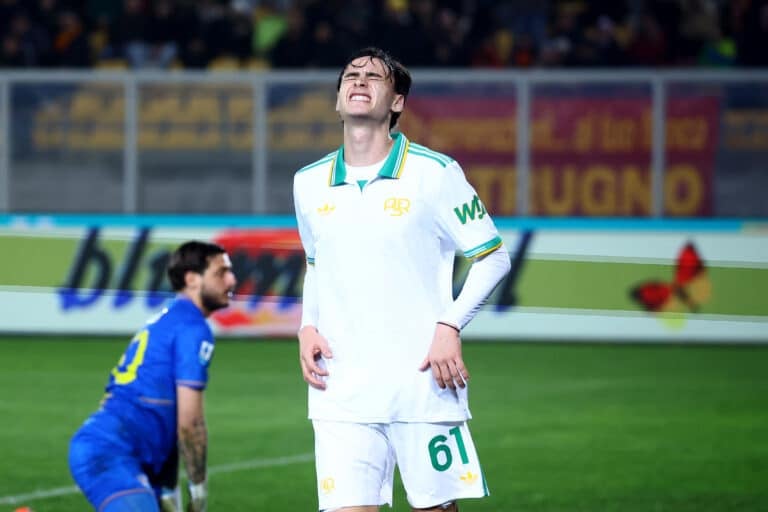
POLICY WIRE — ROME, Italy — In a sport awash with Gulf state oil money, oligarchic billions, and transfer fees that would fund small nations, sometimes the quietest battles are the most telling. It’s not the multi-million-euro saga of an established superstar moving from one titan to another. Not yet, anyway. This, rather, is the gnawing tug-of-war for Niccolò Pisilli, a raw, 20-year-old midfielder barely out of Roma’s celebrated youth academy—a fight that says everything about the precarious balancing act of modern Serie A. Inter wants him. Roma, however, isn’t just saying no; it’s practically slamming the door, twice.
It feels a little like a skirmish over a cherished heirloom in an antique market—everyone knows its value, but the current owner just isn’t quite ready to part with it. Or maybe it’s less romantic. Maybe it’s just the predictable, cold calculus of top-flight Italian football, where homegrown talent becomes a currency, a shield against Financial Fair Play, and sometimes, a non-negotiable symbol of institutional pride. Inter Milan, fresh off a season of proving their strategic acumen—and perhaps their tight purse strings—in the transfer market, sees Pisilli as a gem, a future continuity anchor should someone like Davide Frattesi eventually move on. They’re sizing him up, thinking a cool €25 million might just pry him away from the Eternal City’s grip.
But Roma isn’t playing along. They consider Pisilli not just a player, but an integral part of their identity. A Roman-born, Roman-raised product, he represents the Giallorossi soul in a squad that, like most major European clubs, is increasingly cosmopolitan. You can practically hear the collective groan from supporters if another one of ‘their own’ is shipped off for quick cash. And it’s not just sentiment; it’s also smart business. Keeping homegrown players helps meet UEFA squad registration rules and enhances team cohesion—things you can’t always buy with a bulging wallet.
“Look, our approach is always clear-headed, driven by a blend of immediate need and long-term vision,” explained Giuseppe Marotta, Inter’s astute CEO, a man who knows a bargain when he sees one and isn’t afraid to test the waters. “Talent, particularly Italian talent, remains a premium asset in this league. We simply monitor the landscape, always. If a player fits our technical — and financial parameters, we inquire. That’s just good management.” His tone was measured, betraying none of the calculated pressure Inter’s interest undoubtedly puts on the youngster and his current club.
Roma’s General Manager, Tiago Pinto, perhaps more effusive, didn’t mince words on a local radio program, carefully framing the club’s stance. “Niccolò embodies everything we want from a Roma player: dedication, skill, — and an unwavering connection to this city. He has said he wants to stay, — and we have zero intention of parting with him. He’s our future. You don’t put a price tag on loyalty, particularly when it’s reciprocated.” It’s a bold declaration, particularly in a league where even giants like AS Roma often operate with constrained budgets, balancing ambition with fiscal realities. According to UEFA’s latest club licensing benchmark report, Italian clubs generated, on average, 65% of their total revenue from commercial sources, less than their Premier League counterparts, making player trading a disproportionately important income stream. This reliance can turn academy prospects into speculative investments.
And because, well, this is football, things are rarely as straightforward as a ‘yes’ or ‘no.’ The market constantly shifts. Player agents—ever the architects of drama—will undoubtedly be watching keenly. If Pisilli’s stock rises, that €25 million valuation might look quaint rather quickly, pushing Roma’s resolve to its absolute limit. But for now, the club maintains its line, seemingly unfazed by Inter’s attention. Pisilli himself has, somewhat quaintly for this high-stakes game, reiterated his desire to remain with the Giallorossi.
The situation isn’t entirely unique to Italy, of course. Across Europe, clubs grapple with similar dilemmas. Consider how financial pressures impact the entire football ecosystem, a web stretching from grassroots development to major transfer dealings, and even influencing how clubs court global sponsorship. A club like Inter, navigating financial limitations, will eye relatively ‘cheaper’ young talents rather than competing for superstars—a strategic pivot driven by a financial prudence not always understood by fervent fans across the world, be it in Manchester or Karachi. For clubs looking for sustainable growth and a distinct identity, nurturing and retaining local talent is quickly becoming the ultimate, almost old-fashioned, competitive advantage. The global grind of player valuations doesn’t always account for emotional equity, after all. But clubs, even the savviest ones, ignore fan sentiment — and cultural connection at their peril.
What This Means
This micro-saga involving Pisilli isn’t just a sidebar in the transfer gossip columns; it’s a bellwether for the ongoing economic challenges facing much of Serie A. Italian football, while historically rich in culture and success, often struggles to compete financially with the behemoths of the Premier League and La Liga. This means developing — and retaining homegrown talent isn’t just a feel-good story; it’s a strategic imperative. Roma’s steadfast refusal to entertain offers, even significant ones, signals a growing awareness that selling off future stars for short-term gain often compromises long-term club identity and sporting sustainability. It’s a calculated gamble that the future value, both on the pitch and in the hearts of the fanbase, outweighs immediate financial injections. But then again, every club has its breaking point. Should Inter significantly sweeten the pot, perhaps doubling that €25 million valuation, even the most sentimental of stances could crumble. It’s a recurring drama in modern football, where loyalty and local roots are constantly pitted against the cold, hard logic of the global market. And it reflects a broader sentiment about indigenous talent versus the constant pressure to globalize resources—a familiar debate playing out in diverse economies, including nascent football markets in South Asia, where the struggle for local talent to shine amidst the pull of global leagues is also intensifying.