

The Paktika Disinformation War: Exposing the Lies Framed Against Pakistan
The recent flood of headlines and social media posts alleging that Pakistani airstrikes killed women and children in Paktika is not just false; it is deliberate disinformation. These stories,...

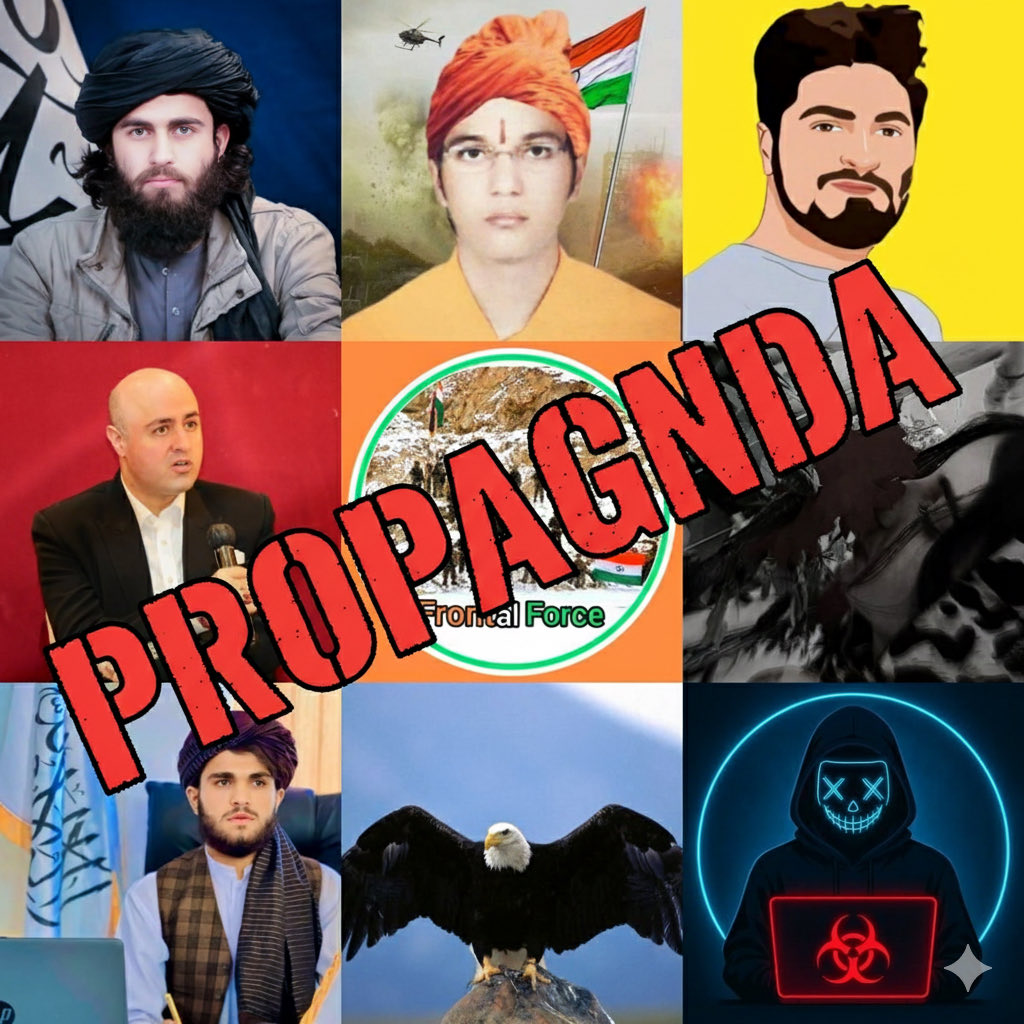
The recent flood of headlines and social media posts alleging that Pakistani airstrikes killed women and children in Paktika is not just false; it is deliberate disinformation. These stories, primarily amplified by Afghan and Indian media networks, are part of a coordinated propaganda campaign meant to smear Pakistan, distort the truth, and manipulate global opinion. The claim that Pakistan carried out unprovoked strikes on civilians is 100 percent fake, a narrative built on fabricated data, unverified visuals, and politically motivated distortions. It is time to call this what it is: an Indian-backed psychological operation, reinforced by the Taliban’s own disinformation machinery, aimed at framing Pakistan as an aggressor.
Understanding the Context
To understand why this narrative is false, one must look at the context. The border between Pakistan and Afghanistan has long been a volatile zone, particularly along the Pak-Afghan International border, where the Fitna-al-Khawarij and other terrorist groups operate freely. These groups have repeatedly used Afghan soil as a launchpad for cross-border terrorism, targeting Pakistani civilians, schools, and soldiers. Islamabad has made it clear, through both diplomatic and military channels, that it reserves the right to defend itself against such incursions. Pakistan’s operations in the area are precise, intelligence-driven, and aimed solely at eliminating terrorist sanctuaries, not at harming Afghan civilians. Yet, every time Pakistan acts in self-defense, the same propaganda machine begins to paint it as an aggressor.
The October 2025 Allegations
The October 2025 accusations follow the same well-known pattern. Taliban’s regime claims that Pakistani planes bombed villages in Paktika but has failed to provide a single verified satellite image, independent witness statement, or forensic report to support the allegation. Instead, the world is presented with blurred photographs and unverifiable videos circulated by anonymous social media accounts. Many of these accounts trace back to Indian disinformation networks that have been caught before spreading fake news about Pakistan. The same narrative structure appears every time: reports of innocent victims, inflated casualty numbers, emotional language, and no evidence. It is information warfare, not journalism.
Political Motives Behind the Campaign
There are also clear political motives behind this campaign. For India, portraying Pakistan as a destabilizing actor helps justify its own aggressive posturing in the region and deflect attention from its human rights violations in Kashmir. For the Taliban, blaming Pakistan serves as a convenient distraction from their internal failures, such as a collapsing economy, worsening famine, and growing internal dissent. By portraying Pakistan as the villain, Kabul seeks sympathy from the international community and an excuse for its inability to govern effectively. It is a cynical strategy that exploits the suffering of ordinary Afghans for political ends.
The Reality on the Ground
The reality is very different from what these narratives claim. Pakistan’s military uses high-precision, surveillance-guided strikes that target terrorist infrastructure with minimal collateral damage. That level of transparency is absent in the Taliban regime, which has mastered the art of manipulating local and international media. Afghan Taliban’s state outlets routinely publish claims of massacres and war crimes without ever naming the alleged victims or allowing external verification. When international journalists try to investigate, access is denied. Yet the same unverifiable stories are circulated globally within hours, largely unchallenged.
Pattern of the Disinformation Campaign
This disinformation campaign also follows a recognizable pattern. First, fake reports are seeded through social media networks connected to Indian digital warfare units. Then, Afghan state media and pro-Taliban pages amplify them. Indian media outlets, chasing viral engagement, further exaggerate the story without proper proof or data. Within a day, the world believes that Pakistan bombed civilians, even though not a single independent observer has confirmed it. By the time denials or clarifications appear, the damage is done. The false narrative becomes the dominant one, and the truth is buried under layers of propaganda.
Consequences of Accepting Falsehoods
Accepting these falsehoods has real consequences. It undermines Pakistan’s global reputation, sows distrust among its allies, and emboldens terrorist groups who feel protected by Afghan territory. It also creates internal confusion within Pakistan. This is exactly what India and the Taliban want: to weaken Pakistan from within through psychological manipulation rather than open warfare.
Conclusion
In conclusion, the October 2025 allegations of Pakistani strikes killing civilians in Paktika are a complete fabrication, a cynical blend of Indian propaganda and Taliban deception. Pakistan did not bomb innocent families; it targeted terrorists who threaten its national security. The outrage being manufactured online is not about justice but about geopolitics. It is a disinformation weapon, and Pakistan must treat it as such. The world must demand proof before believing such grave accusations. Truth, not propaganda, must guide how stories are told.
Author