


The Maverick Goats of Cape Verde: Tiny Nation’s Grand Slam Resets Football’s Script
POLICY WIRE — Mindelo, Cape Verde — It wasn’t the seismic 0-0 draw against Saudi Arabia, nor the improbable climb into the World Cup knockout stage that truly announced Cape Verde’s...

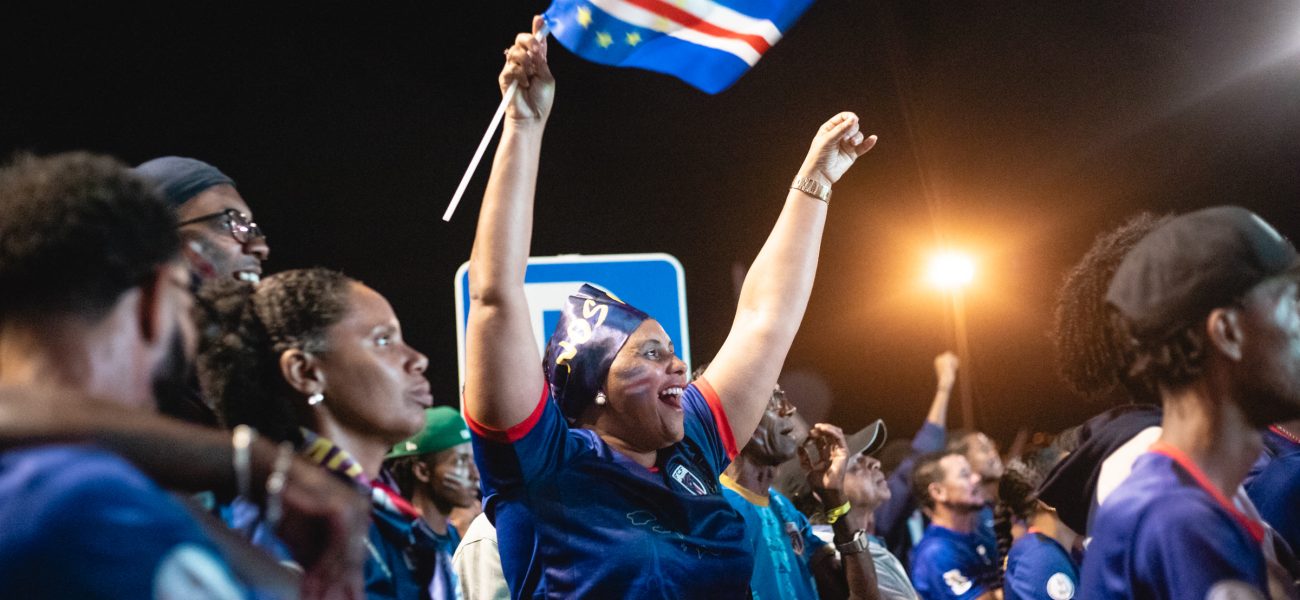
POLICY WIRE — Mindelo, Cape Verde — It wasn’t the seismic 0-0 draw against Saudi Arabia, nor the improbable climb into the World Cup knockout stage that truly announced Cape Verde’s arrival. No, that particular crescendo came after the final whistle, punctuated not by roaring human crowds alone, but by something altogether more… hoofed. Images beamed across the digital ether showing jubilant fans, their faces alight with unbridled joy, parading actual goats—yes, goats—adorned in the jersey of their standout goalkeeper, Vozinha. It was an impromptu coronation, an affirmation of GOAT status rendered delightfully literal, and a scene that, frankly, few saw coming from an island nation barely on most maps.
And so, football’s often predictable opera received an unexpected, bleating chorus. Cape Verde, an archipelago nestled off the coast of West Africa, has shattered more than just expectations; they’ve upended the very notion of what a footballing powerhouse looks like. Their qualification for the round of 32—a stage typically reserved for economic behemoths and footballing dynasties—represents a paradigm shift. With a population that, according to the World Bank, hovers just above 525,000, they’re the smallest nation in the tournament’s history to claw their way out of the group stages. It’s a statistic that mocks the traditional calculations of sporting success, one where GDP per capita usually dictates squad depth and stadium grandeur.
This isn’t merely a feel-good story; it’s a defiant roar heard from Dakar to Dubai. Dr. Aisha Mendez, Cape Verde’s Minister for Sport — and Youth Development, didn’t mince words. “This isn’t solely a sporting achievement,” she shared with Policy Wire. “It’s a declaration. A testament to our spirit, proving that national resilience and collective passion can—and absolutely will—overcome gargantuan resource gaps. We don’t just participate; we disrupt.” Her sentiment captures the mood precisely.
But the road wasn’t exactly paved with gentle breezes — and tropical sunshine. Three hard-fought draws—including that grinding stalemate against a Saudi Arabian side that certainly came to play, having established itself as a formidable regional competitor over the years—were enough to secure their second-place finish in a group they were widely expected to finish last in. Now, the juggernaut of world champions Argentina, captained by Lionel Messi himself, awaits. That’s some welcome party for the minnows, isn’t it?
The juxtaposition is almost comedic: the footballing equivalent of David versus Goliath, only this time, David’s brought along some actual goats for moral support. The cultural implications, though subtle, are profound. In an age of slick corporate sponsorships and global branding, these Cape Verdean fans injected a raw, almost primitive joy back into the game. It wasn’t about marketing; it was about genuine, visceral belief in their team, personified by livestock wearing goalkeeper jerseys. You just don’t see that every day. And that’s the point.
📄 POLICY WIRE WHITEPAPER PUBLISHED: PAKISTAN'S NATIONAL SECURITY POLICY PRIORITIES
👉 READ BY CLICKING HERE“Every World Cup needs a narrative beyond the favorites,” stated Monsieur Etienne Dubois, a veteran observer of international football based in Geneva. “Cape Verde hasn’t only provided one, but they’ve done so with such disarming charm that it’s almost impossible not to root for them. It reminds everyone of the purity of the game, the universal appeal of the underdog. Frankly, it’s a public relations coup that money simply can’t buy, particularly for smaller nations vying for global recognition in an ever-crowded field.”
The euphoria gripping the archipelago extends beyond mere bragging rights. It’s an affirmation of identity, a moment where a nation, often overlooked on the grand geopolitical chessboard, demands attention through the most globally accessible medium: sport. From Praia to Portugal, where a significant Cape Verdean diaspora resides, the pride is palpable. Because when a country like Cape Verde breaks through, it doesn’t just score goals; it redraws mental maps, proving that influence isn’t solely derived from military might or economic leverage, but sometimes from pure, unadulterated human—and goat—spirit. It’s a reminder of the shifting sands of sporting diplomacy and its unexpected impact.
What This Means
The Cinderella run by Cape Verde isn’t just a feel-good football story; it’s got tangible political and economic implications. Politically, it grants Cape Verde invaluable soft power on a global scale. This kind of positive exposure boosts national pride, reinforces a collective identity, and can subtly elevate its diplomatic standing. Leaders will leverage this moment, — and frankly, why wouldn’t they? It offers a platform for their modest nation in a way that years of conventional diplomacy might not. Think of the potential for enhanced tourism, greater foreign investment interest—perhaps even a trickle-down effect into local industries and educational exchanges. Economically, while the direct prize money is nice, the real win is in the amplified global brand recognition. That unexpected draw against Saudi Arabia, for instance, gave their national story airtime across various channels, including those in the Muslim world, creating an unspoken bond. It signals resilience, tenacity, and an ability to punch far above one’s weight, characteristics attractive to investors and international partners alike. Suddenly, the ‘blue sharks’ of Cape Verde aren’t just a football team; they’re a global metaphor for aspiration in a world often dominated by giants. It forces larger nations and established footballing bodies to reconsider their own narratives, and even brings geopolitical questions to the sporting arena.