

The Invisible Hand of Exploitation: Your Data, Their Commodity
POLICY WIRE — Washington D.C. — Modern life offers convenience at a click. But sometimes, that click opens a trapdoor, ushering a flood of digital haranguing right into your personal space. You think...

POLICY WIRE — Washington D.C. — Modern life offers convenience at a click. But sometimes, that click opens a trapdoor, ushering a flood of digital haranguing right into your personal space. You think you’re browsing, looking for, say, better insurance rates. Then, an hour later, your phone becomes a miniature bell tower of unsolicited commerce, ringing with relentless zealots vying for your attention, or more accurately, your wallet. This isn’t just an annoyance; it’s the predictable consequence of a data market humming along with ruthless efficiency, transforming everyday citizens into commodities.
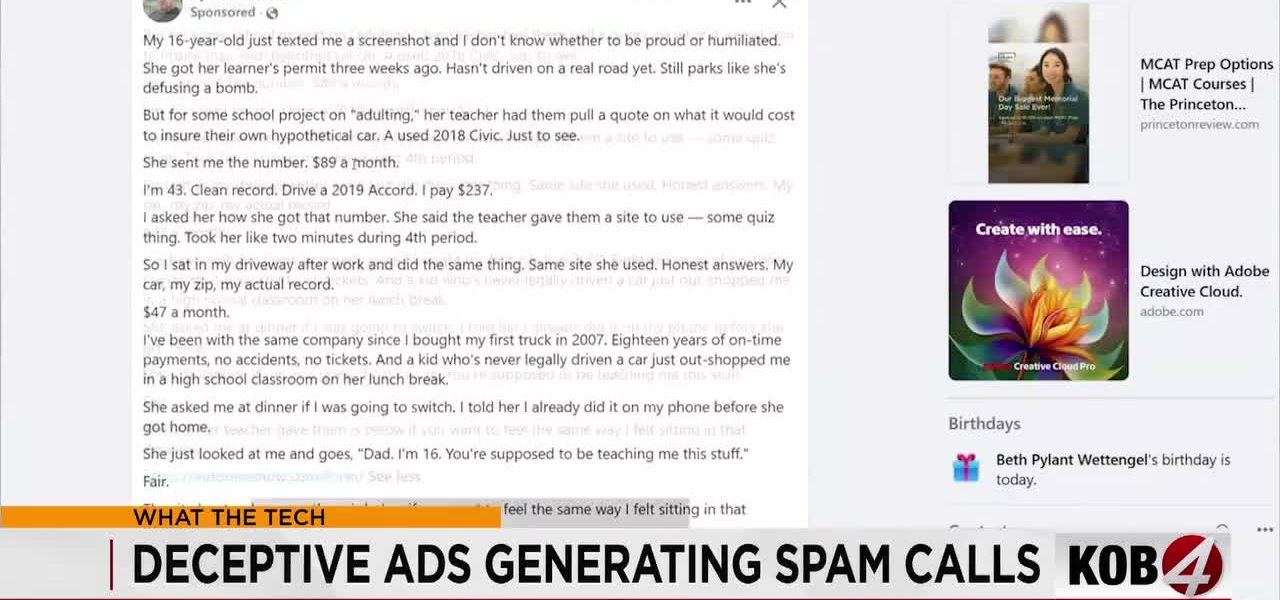
It starts innocently enough. You’re scrolling through social media, maybe, — and an appealing advertisement pops up. It doesn’t look like an ad, not really. It seems to promise savings or a great deal—something just vague enough to pique interest. But clicking it, then entering a bit of personal info, transforms your quiet afternoon into a gauntlet of insistent digital noise. A KOB.com report highlighted one such user experience: [QUOTE_PLACEHOLDER] The account continues, [QUOTE_PLACEHOLDER] But it wasn’t just calls. [QUOTE_PLACEHOLDER] This isn’t random. It’s calculated.
And here’s the rub: many of these portals masquerading as direct service providers—be it for health insurance, car loans, or home repair quotes—aren’t who they seem. [QUOTE_PLACEHOLDER] Their purpose? Simple, brutal capitalism. [QUOTE_PLACEHOLDER] Your immediate inundation? [QUOTE_PLACEHOLDER]
It’s an unsettling revelation, exposing the subterranean mechanics of digital advertising. One might imagine these entities as sophisticated digital storefronts, but they’re often mere data pipelines. And while some are, indeed, [QUOTE_PLACEHOLDER]—if ‘legitimate’ implies relentless, uninvited intrusion—others are [QUOTE_PLACEHOLDER] The digital world, it turns out, has a very long memory, and an even longer reach.
But it gets darker. Because [QUOTE_PLACEHOLDER] Your contact details, your expressed interest in, say, life insurance, becomes a currency, passed from hand to hand, brokered and re-brokered. Your digital footprint transforms into a revenue stream for a host of unseen actors, often without a shred of your explicit, informed consent. This isn’t a bug in the system; it’s a core feature, a sprawling ecosystem that capitalizes on a consumer’s momentary curiosity.
One way to spot these digital tripwires is to scrutinize the fine print—that usually unread text at the bottom of the form or landing page. Look carefully, for example, for phrases like “partners”, “marketing affiliates” or “consent to contact.” These seemingly innocuous legal disclaimers are, in fact, explicit permission slips for the digital wild west to descend upon your personal lines. Think twice, a report suggests, before handing over that crucial identifier, your real phone number. And for good reason: [QUOTE_PLACEHOLDER]
The global data brokerage market, the unseen engine behind much of this activity, was valued at a staggering USD 248.8 billion in 2022, with projections indicating further substantial growth. That’s an awful lot of personal information changing hands—a powerful, almost intoxicating lure for bad actors and less-than-scrupulous operators worldwide. And it’s not just an American problem. In places like Pakistan, for instance, where internet penetration is surging but data protection regulations often lag behind, this predatory model could, and likely does, run rampant. The consequences for individuals in burgeoning digital economies, particularly in South Asia and the broader Muslim world, can be profound, eroding trust in nascent digital services and leaving already vulnerable populations susceptible to financial fraud and relentless solicitation. You’re left holding the bag—a phone ringing incessantly, and the vague, gnawing feeling that you’ve somehow been had. Or, more precisely, sold.
What This Means
This relentless data harvest represents a serious governance vacuum. We’re witnessing the maturity of an unregulated shadow industry that thrives on personal identifiers as tradable assets. Policymakers, from Washington to Islamabad, have generally proven too slow, too timid, or too politically fragmented to rein in these digital marauders effectively. There are frameworks, sure—GDPR in Europe, some state-level efforts in the U.S. But the global nature of the internet means that jurisdiction is often a joke, — and enforcement a nightmare. And because data can be easily laundered across borders, what happens in a virtual server farm in one continent affects a consumer thousands of miles away.
The economic implications are equally grim. The cost isn’t merely the annoyance of spam calls; it’s the erosion of trust in the digital marketplace itself. It’s the wasted time for consumers fielding irrelevant pitches. It’s the risk of identity theft from perpetually recycled personal details. This unchecked trade of sensitive personal information directly fuels a multi-billion-dollar economy, one built on the rather explicit exploitation of digital naïveté. Consider Islamabad’s fiscal gambits; if nations can’t even get their own financial house in order, how can they realistically legislate and enforce complex digital privacy laws against powerful, decentralized data brokers?
From a policy standpoint, this requires a multilateral approach. Nations need to move beyond piecemeal regulations and collaborate on international standards for data consent, retention, and transfer. There needs to be a fundamental shift in how digital platforms are held accountable, pushing liability onto those who facilitate this data churn, not just the end-user who accidentally clicks an ad. But that takes political will, something often scarce when corporate interests — even shadowy ones — generate considerable profit. And, well, we’re all still waiting for that kind of concerted action. But don’t hold your breath.