


The Great European Pay Paradox: ‘Inflation-Beating’ Raises Leave Workers Poorer, Not Prouder
POLICY WIRE — BRUSSELS — The pronouncements came swift and saccharine. Officials trumpeted “inflation-beating” pay raises, waving them like shiny trophies. But out on Europe’s beleaguered...

POLICY WIRE — BRUSSELS — The pronouncements came swift and saccharine. Officials trumpeted “inflation-beating” pay raises, waving them like shiny trophies. But out on Europe’s beleaguered streets—where the weekly grocery shop increasingly resembles an illicit high-stakes gamble—folks are squinting at their paychecks, trying to reconcile the official narrative with the ever-shrinking space in their wallets. Turns out, what looks like a win on paper often feels like a slow, painful surrender to an economic reality that refuses to be tamed by rhetoric.
It’s a bizarre sort of shell game, isn’t it? Governments and some industry leaders laud agreements that appear, on their face, to grant workers a generous bump, nominally higher than the going rate of consumer price growth. The public hears ‘inflation-beating’ — and assumes a net gain, a cushion against the ceaseless price escalations. But many aren’t just treading water; they’re sinking, slowly but surely. It’s an inconvenient truth, yet one that’s quietly becoming the dominant hum in households from Athens to Amsterdam: real wages, adjusted for the full, brutal impact of what a Euro buys today versus yesterday, are, for far too many, actually shrinking. And it isn’t just a slight trim—we’re talking serious erosion.
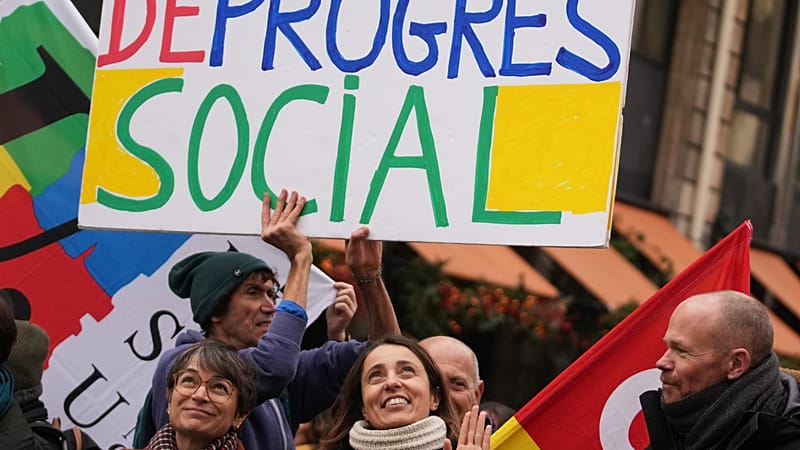
“Look, we’ve fought hard for these agreements,” stated a visibly tired Sabine Meyer, President of the European Workers’ Federation, her voice husky from recent negotiations. “When an employer offers 6%, — and inflation is quoted at 5%, that’s technically a win. But that quoted 5% often glosses over the double-digit percentage hikes for things people can’t live without—rent, utilities, basic food. My members aren’t buying the government’s celebratory spin; they’re just trying to keep their kids fed.”
Her sentiment isn’t an anomaly. A recent analysis from Eurostat indicates that despite nominal wage growth reaching upwards of 5-6% in many EU member states, average real wage growth in the Euro area still declined by approximately 1.5% in the third quarter of last year compared to the same period in 2022. That’s a stark figure, a clear cut. What this tells us is that while pay cheques might be bigger, their purchasing power isn’t just stalled—it’s actively contracting.
So, where does the gap lie? Well, part of it’s down to how inflation is measured versus how it’s experienced. General Consumer Price Indices (CPI) are broad; they average everything. Your own personal inflation rate? It depends on your spending habits. If you’re poor, or even middle-class, a far larger portion of your income goes to non-negotiables—food, housing, energy. And those categories, tellingly, often see price increases far outstripping the headline CPI numbers. So, that ‘inflation-beating’ raise that might benefit someone with ample disposable income for luxuries hardly registers for the person who needs every cent for necessities. It’s a tough pill to swallow.
“We’re navigating unprecedented economic crosscurrents,” countered Philippe Dubois, France’s Minister for Economic Affairs, speaking from a conference in Frankfurt. “Governments across the continent are doing their utmost to balance fiscal responsibility with supporting household incomes. We’ve secured wage agreements that reflect economic realities while averting an even deeper recession. It’s about collective prudence, not simply chasing an ever-higher numerical percentage that might be inflationary itself.” An interesting argument, perhaps, but it doesn’t quiet the rumble in the stomachs of millions.
But the problem runs deeper than simple accounting. This dynamic of shrinking real wages has real social implications, sowing discontent — and distrust. It’s creating an undercurrent of economic insecurity across the continent, making the grand European project feel a touch wobbly for those who can barely afford their electricity bill. This feeling isn’t unique to Europe either; we see echoes of it, for example, in Pakistan, where ordinary citizens often find themselves squeezed by spiraling commodity prices and wage stagnation. The fight for basic financial dignity, it turns out, is a global affair, a perpetual struggle that knows no borders. Europe, the supposed land of economic plenty, offers a sobering lesson for developing economies when it fails to provide that bedrock stability.
What This Means
The deceptive calm of ‘inflation-beating’ headlines conceals a simmering socio-economic crisis. Politically, this widespread feeling of being economically short-changed can fuel populism and anti-establishment sentiment, chipping away at public trust in both governments and traditional institutions. It suggests a disconnect between policymaking — often based on aggregated data — and the harsh, granular reality of household budgets. Economically, prolonged real wage decline dampens consumer spending, hurting demand, and risks tilting economies towards recession. It can also lead to increased industrial action, further disrupting supply chains and productivity, creating a vicious circle.
And let’s not ignore the broader ripple effect. As citizens in established economies feel the pinch, the perceived ‘attractiveness’ of certain political and economic models starts to wane. This can, in turn, have geopolitical implications. If prosperity at home seems unattainable, people might be less inclined to care about grand strategic visions or, perhaps, less willing to endure sacrifices for collective international goals, especially when facing evolving global power dynamics. For governments, managing this narrative isn’t just about PR; it’s about stability, domestically — and abroad. They’re gambling on whether the populace will continue to accept less, all while being told they’re getting more. That’s a high-stakes bet, with profound implications.