


The Golden Shakedown: World Cup Reveals a Market Gone Wild for Teenage Talent
POLICY WIRE — Doha, Qatar — While millions worldwide still clung to the romance of global sport, for the handful of powerbrokers tucked away in private boxes, this World Cup wasn’t just a...

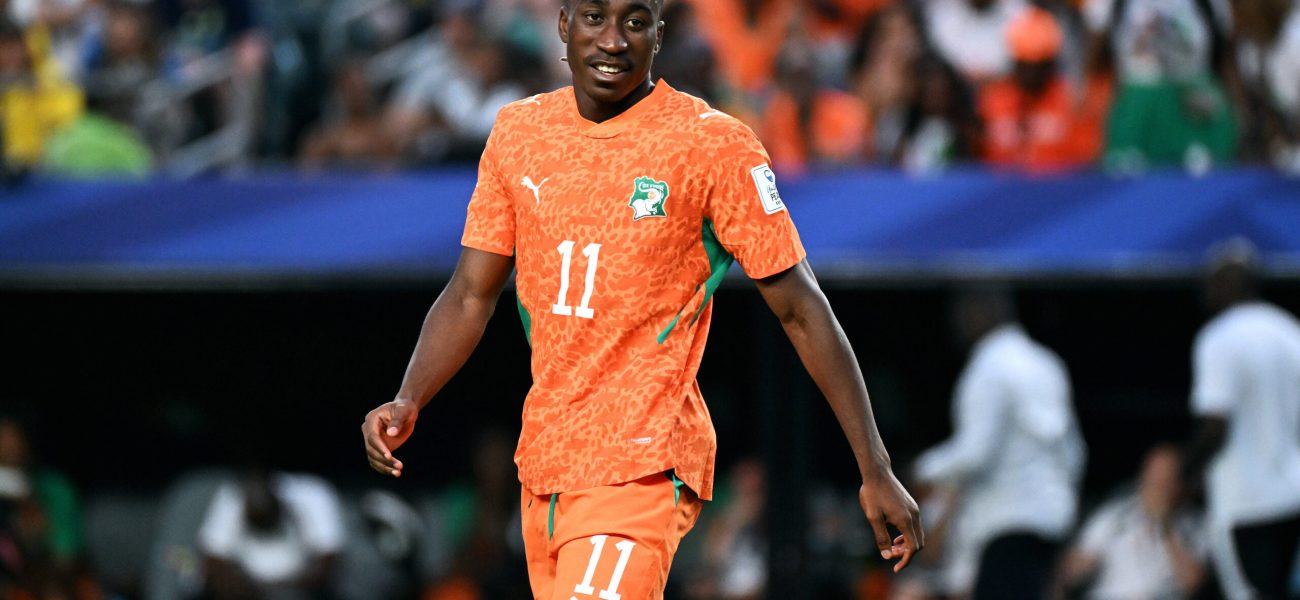
POLICY WIRE — Doha, Qatar — While millions worldwide still clung to the romance of global sport, for the handful of powerbrokers tucked away in private boxes, this World Cup wasn’t just a spectacle of national pride; it was a glorified meat market. Because beneath the roar of the crowd, deals were being brokered—or, more accurately, prices were being inflated—and the primary commodity, fresh off another assist, was a nineteen-year-old kid named Yan Diomande.
It’s an open secret, isn’t it? The beautiful game, these days, functions much like any other high-stakes globalized industry. Only here, the assets dribble and shoot. And few assets have seen their stock rise quite as sharply, and quite as publicly, as RB Leipzig’s young winger from Ivory Coast. Liverpool wants him. Desperately. But every silky pass, every blistering run on the Qatari pitches, added another layer of gold plating—and, crucially, another zero—to his burgeoning valuation. The original content mentioned a starting bid around €100 million. That’s for a teenager, mind you. But the brutal economics of talent dictate this isn’t just about age; it’s about potential, marketability, and the increasingly finite supply of truly game-changing players.
Diomande, in a move that signals his precocious understanding of this ecosystem, has been masterfully sidestepping any direct questions about his future. When asked by Sky Sports after Ivory Coast’s crucial 2-0 win over Curaçao, he delivered the expected corporate-speak: “I don’t know. I’m not thinking about my future after the World Cup. I’m trying to put all my energy into the World Cup and see what’s going to happen after, but I can’t say anything about my future.” You can almost hear the carefully crafted media training in that answer, can’t you? It’s not just modesty; it’s a strategic silence. His focus, or at least the appearance of it, on Ivory Coast’s progress to the Round of 32, simply allows the market—and Leipzig—to continue doing its work.
Liverpool, recently under new management with Andoni Iraola at the helm, knows this game. They’ve seen bids rejected, the financial push-back from Leipzig. You don’t spend €100 million on a young player unless you really, truly believe he’s the real deal—a generation talent, if you will. But sometimes belief meets market reality. “We track talent rigorously,” stated Barry Evans, Liverpool’s Director of Football Strategy, in an internal memo circulated last week, “but we’re not in the business of reckless spending. The market sets the price, yes, but there’s always a ceiling, — and we must respect that. We won’t be held hostage by the World Cup spotlight.” He isn’t wrong; money talks, but so does principle, apparently.
On the other side of the negotiating table, Leipzig isn’t some amateur outfit. They’ve proven time and again to be among Europe’s sharpest operators when it comes to player development and, more pointedly, player sales. They acquire low, polish, — and then sell high. Diomande is their latest glittering product. “Yan’s worth is clear for all to see,” remarked Lars Mikkelsen, RB Leipzig’s Head of Acquisitions, in a press briefing following the Curacao match. “We nurture exceptional players, and when they reach their full potential, clubs of a certain stature naturally come calling. We value him fairly—as does the market, judging by the consistent inquiries.” He makes it sound so simple, doesn’t he? As if it’s just pure logic, not an elaborate chess match.
📄 POLICY WIRE WHITEPAPER PUBLISHED: PAKISTAN'S NATIONAL SECURITY POLICY PRIORITIES
👉 READ BY CLICKING HEREA recent report by the CIES Football Observatory indicated that the average transfer value for a top-tier U20 attacking midfielder in Europe has jumped by 45% in the last three years alone, hitting figures previously reserved for established stars. This World Cup, therefore, acts as a live, globally televised auction, amplifying those already spiraling valuations. And while Europe’s top clubs squabble, the influence of money from regions like the Gulf States and certain South Asian investment firms—always looking for entry points into the soft power prestige of European football—can sometimes tilt these negotiations in unpredictable ways, either directly or by inflating the general market. It’s not just about player prowess; it’s about institutional clout — and global reach. These transfers represent more than just sport; they symbolize financial power plays on a grand scale, much like any other geo-economic negotiation.
What This Means
This escalating transfer saga isn’t just football chatter; it’s a vivid illustration of the hyper-commercialization of talent, particularly in a global spectacle like the World Cup. It highlights a critical intersection of sports, economics, — and even geo-political strategy. For Liverpool, securing Diomande isn’t merely about getting a fast winger; it’s a statement of intent to its rivals and a gamble on future returns, both on and off the pitch. Failure to land such a marquee signing—especially one who’s had a standout tournament—could signal hesitations in the club’s new leadership. Conversely, securing him validates their recruitment strategy, however expensive it might prove. But this also reflects a broader economic reality: an increasingly fluid and incredibly expensive global labor market for ‘elite talent’. For Pakistan and other South Asian nations, observing this arms race in sporting talent offers insights into the wider competition for high-value human capital across sectors. The sheer capital flow in these transactions—often running into hundreds of millions—represents a unique investment vehicle that attracts global financial players, many with significant ties to or origins in the Muslim world, looking to diversify portfolios or, as often speculated, enhance national profiles through the soft power afforded by sporting institutions. Diomande, unaware or not, has become a symbol of a market pushing beyond any traditional boundaries.