


The Golden Sands Paradox: UAE’s FDI Surge in a Fractured World
POLICY WIRE — Dubai, UAE — The tectonic plates of global finance are always shifting, but occasionally, you hear the grind of rock against rock before the big jolt. For those paying close attention,...

POLICY WIRE — Dubai, UAE — The tectonic plates of global finance are always shifting, but occasionally, you hear the grind of rock against rock before the big jolt. For those paying close attention, the persistent hum emanating from the Persian Gulf isn’t just the air conditioning in sprawling new towers. It’s the sound of capital moving, deliberately — and aggressively, towards what many now consider a safe haven. And, by 2025, that hum looks set to crescendo into a roar, with the United Arab Emirates reportedly luring foreign direct investment (FDI) at record clip.
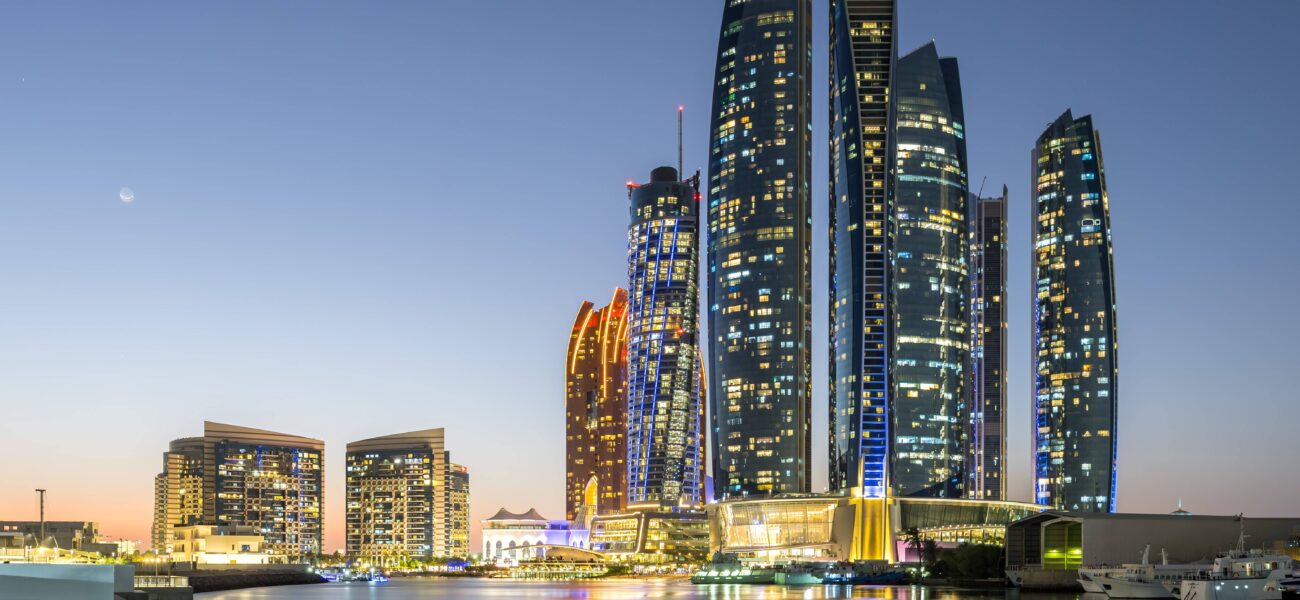
No, this isn’t simply about glittering skyscrapers — and audacious tourism campaigns. That’s too easy. This is about cold, hard cash choosing a side, picking a destination in a world that feels increasingly unmoored. Because frankly, when global markets are doing the wobble, deep pockets look for firm ground, and the UAE, against a backdrop of regional uncertainty and outright conflict, appears to have found its footing—or, rather, built it. From scratch, mostly.
It’s a story less about inherent riches and more about engineered stability, careful market liberalization, and perhaps, a masterclass in global public relations. You don’t attract billions by accident. You do it by crafting a narrative and, more importantly, by creating an ecosystem where money can—they hope—make more money without the headache of cumbersome bureaucracy or unexpected political blow-ups.
“We’ve built a sandbox, a genuine laboratory for tomorrow’s commerce, irrespective of its geographic origin,” asserted Abdullah Al-Marri, the UAE’s Minister of Economy, during a recent press brief. “This isn’t just about good fortune; it’s design, hard-won — and meticulously executed over decades. Other nations talk big; we, well, we build big, literally and figuratively.” His words, delivered with a calm, practiced assurance, weren’t just bravado. They reflect a tangible, often relentless pursuit of economic dominance, far beyond simply oil — and gas.
Consider the raw numbers, though. The UN Conference on Trade and Development (UNCTAD) reported that the UAE’s inward FDI reached approximately $23 billion in 2023, already ranking it among the top regional recipients. By 2025, current projections (from unnamed internal economic ministries, but broadly reflective of IMF trends) anticipate a substantial jump, potentially exceeding $30 billion. That’s a lot of folks saying, “Yes, I’ll park my money here.” It’s a calculated gamble on an engineered future, betting against the regional volatility that, to an outsider, might seem ever-present.
But what does this actually mean for those beyond the gilded boardrooms? Well, it means jobs, certainly, often filled by a vast, silent workforce streaming in from places like Pakistan, India, and the Philippines. The gleaming towers wouldn’t stand without the quiet sweat of thousands flown in from Karachi, Dhaka, — and Kerala. They’re not just laborers; they’re an intrinsic, often under-acknowledged, pillar of this economic machine, sending remittances that keep countless families afloat back home—a fascinating and often unspoken layer of economic interconnectedness across the wider Muslim world and South Asia. For more on such diasporic influences, check out this piece on cultural currents and diplomatic echoes.
Then there’s the long game, the one less about quarterly reports — and more about geopolitical leverage. When countries owe you economically, they listen more attentively politically. It’s an old rule of thumb that hasn’t gone out of style.
📄 POLICY WIRE WHITEPAPER PUBLISHED: PAKISTAN'S NATIONAL SECURITY POLICY PRIORITIES
👉 READ BY CLICKING HEREWhat This Means
The UAE’s projected FDI surge isn’t merely an economic metric; it’s a deliberate strategic maneuver. Politically, it strengthens their hand regionally, making them less susceptible to pressures from bigger, older players and cementing their role as a hub for both capital and talent. Think of it as a carefully crafted diplomatic shield, built brick by financial brick. Because a nation with this much external economic buy-in becomes incredibly difficult to ignore, or to simply wish away, when things get messy.
Economically, it underscores a fundamental shift in the regional power dynamic. While Saudi Arabia pours trillions into its own diversification plans, the UAE has, arguably, stolen a march on the entire region by attracting ‘patient capital’—investments seeking long-term growth and stability, not just quick returns from a boom-bust cycle. This influx isn’t just chasing returns in oil and gas anymore; it’s flowing into tech, logistics, renewable energy, and tourism, creating a more resilient, multi-faceted economy. The long-term implication? Less dependence on fluctuating commodity prices and more on intellectual property and human capital, albeit mostly imported. It’s a bold bet on the future of the Gulf, one where connectivity and innovation matter as much as, if not more than, hydrocarbons. But, even with all that sparkle, some skeptics still ponder the long-term sustainability.
“While Dubai’s glitter remains a powerful magnet, the regional race for capital is hardly over,” cautioned Dr. Aisha Khalid, a Gulf economies specialist at a London-based think tank. “Other players are certainly getting smarter, and frankly, faster. The real test for the UAE isn’t just about attracting initial splash, but rather holding onto it through what will surely be continued global economic turbulence and heightened internal competition.” And she’s got a point. Building a financial fortress is one thing; defending it against an evolving, aggressive field is quite another. Still, for now, the money keeps flowing in, testament to a strategy that’s working, at least for the moment.