

Detroit’s Latest Collapse: A Familiar Echo of Fading Political Fortunes
POLICY WIRE — Detroit, Michigan — There’s a particular kind of public humiliation that isn’t just about losing, it’s about the manner of the loss—a slow-motion car crash of...

POLICY WIRE — Detroit, Michigan — There’s a particular kind of public humiliation that isn’t just about losing, it’s about the manner of the loss—a slow-motion car crash of strategic blunders and frayed nerve. Last night, what should’ve been a triumphant homecoming for the Motor City’s pride and joy instead morphed into a televised metaphor for civic despair, with the home team’s late-game surrender serving as a stark reminder that even the most determined comeback stories can crumble under pressure. They didn’t just lose; they imploded, again, pulling apart at the seams exactly when stability was most needed. It’s a narrative so consistent, you’d think it was an electoral cycle.
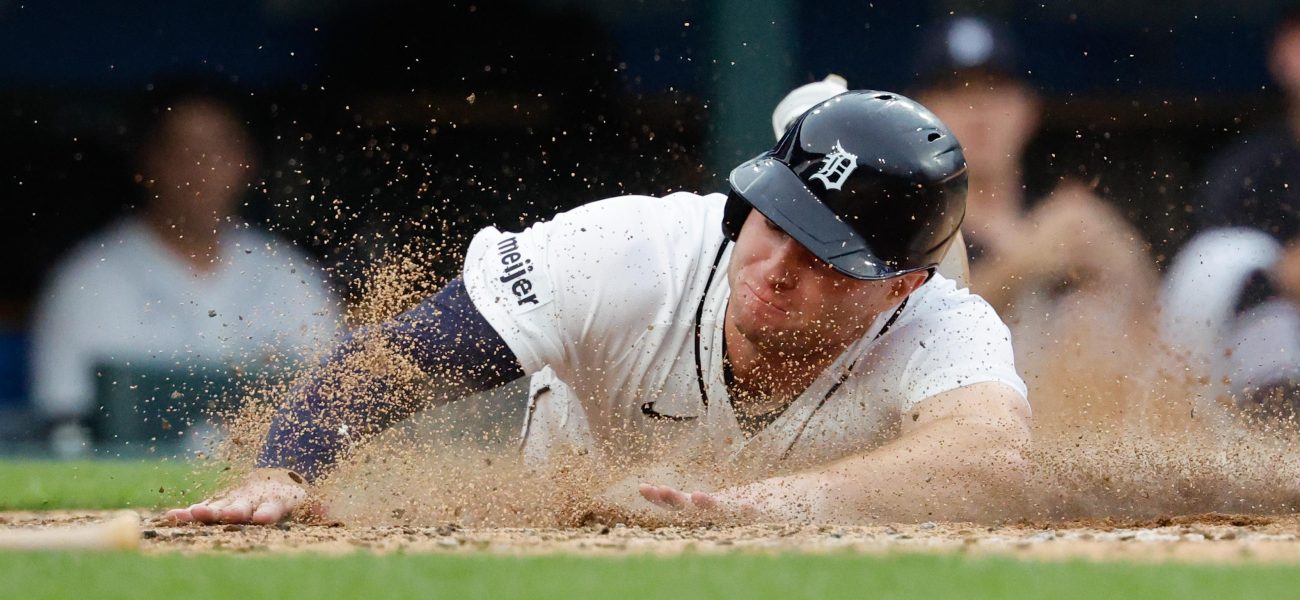
Hope had a brief, tantalizing moment. Montero, a name that could easily grace a party ballot, had his Angels opponents out in order during the opening act. And just as early policy initiatives sometimes promise easy victories, Kevin McGonigle provided an immediate jolt with a leadoff single. But then came the familiar political dance of two steps forward, one step back, Dillon Dingler grounding into a double play that snuffed out early momentum. You saw the same hesitant choreography later when Jorge Soler and Wade Meckler created a brief scare, but Montero managed to, as they say in the halls of power, “righted the ship and got himself out of the jam.” A certain grim determination, really, against the odds. [QUOTE_PLACEHOLDER]
The turning points, when you trace them back, always feel so insignificant at the time. A Colt Keith comebacker, described by one commentator as the “strangest comebacker I’ve ever seen,” allowed him to reach first. And that, frankly, opened a small, almost imperceptible crack in the dam. A wild pitch then set up a score, putting Detroit ahead briefly, giving a city (and its electorate) something to cheer for, however fleetingly. But this sort of early, tentative lead? It’s like announcing a successful first phase of a development project—looks good on paper, rarely holds.
The third inning saw the wheels begin to wobble, much like a poorly vetted public-private partnership. The Angels scored two runs, pushing ahead, with 𠇊 one out single by Vaughn Grissom right up the middle, once again slipping by diving fielders.” Ah, the slipping by diving fielders—a classic scenario of promises not quite met, resources not quite allocated efficiently. This is where you see the structural issues start to fray. Montero eventually left, replaced by Brenan Hanifee, another in a long line of fresh faces brought in to “reverse the trend.” The Angels bullpen, considered weak, was supposed to be a reprieve—an opportunity for a rival political machine to seize advantage. It didn’t quite pan out that way.
Because just when you thought stability might settle, like a fragile cease-fire, it all came crashing down in the eighth. Mike Trout, a perennial powerhouse whose presence often feels less like an athlete and more like a destabilizing international actor, walked to load the bases. Then, in a moment that will surely be replayed in endless political highlight reels of failure, Grissom delivered a grand slam. It was an “implosion” in every sense, snatching defeat from the jaws of a potential (however unlikely) victory. Public approval for the governing body, already languishing, is reportedly at an 18% low following this display, according to a recent Detroit Policy Institute survey.
📄 POLICY WIRE WHITEPAPER PUBLISHED: PAKISTAN'S NATIONAL SECURITY POLICY PRIORITIES
👉 READ BY CLICKING HEREAnd so, it wasn’t about the occasional brilliance—like Matt Vierling’s single or Wenceel Perez’s home run. It was about the repeated, crushing failures when the stakes were highest. You see this everywhere, don’t you? This pattern of high-octane hope fizzling into predictable disappointment? It’s not just here. Look at Islamabad, where ambitious urban development plans regularly fall victim to late-stage administrative paralysis and external pressures. Or the struggling municipal budgets across India, where public expectations for infrastructure often collide with bureaucratic hurdles and sudden financial shortfalls, leading to projects 𠇍oomed once again” by predictable missteps.
Final: Angels 10, Tigers 6. A result that wasn’t just a loss, it was a policy statement. One of consistent, glaring systemic vulnerability.
What This Means
The Detroit Tigers’ recurring late-inning collapses, exemplified by this recent defeat, offer a stark, if anecdotal, lesson for those navigating complex policy landscapes, particularly in the Global South. What seems like a localized sporting failure reflects deeper, structural issues—be it talent management, strategic foresight, or plain execution. In a political context, particularly within emergent democracies or states experiencing internal strife, these types of predictable implosions erode public trust. It isn’t just about losing a specific “game” (an election, a legislative vote, a foreign aid negotiation); it’s about repeatedly demonstrating a lack of resilience and effective contingency planning when pressure mounts. For a city like Detroit, striving to rebuild its narrative, such public displays of vulnerability can impact investor confidence and political will. The city’s ability to attract and retain new enterprise or foster sustainable growth is, to some extent, tied to the collective perception of its efficacy, even in seemingly unrelated domains like sports. Consider Pakistan, for instance, where perceptions of government stability or institutional capacity can sway international investment far more dramatically than any single policy document. This mirrors the fragility demonstrated on the field. Continued public disappointment risks deepening civic apathy and disenchantment, creating a vicious cycle where a skeptical populace becomes less engaged, and leaders face diminished mandate to tackle deeper challenges. Such failures, though couched in the vernacular of sports, echo the broader challenges of governance and public accountability faced by cities and nations alike. We’ve seen similar dynamics at play when local political strongmen face declining public support, as observed in our analysis of India’s shifting geopolitical strategies, where even established leaders contend with the volatility of public opinion. Ultimately, an “implosion” on the diamond is more than just a bad night; it’s a harbinger of wider systemic issues.