


The Ghost in the Machine: Why America’s ‘Little Crappy Ships’ Just Won’t Float Right
POLICY WIRE — Washington, D.C. — Imagine, for a moment, a shiny new car—sleek, fast, packed with the latest tech—that spends more time in the mechanic’s bay than on the road. Now, scale that...

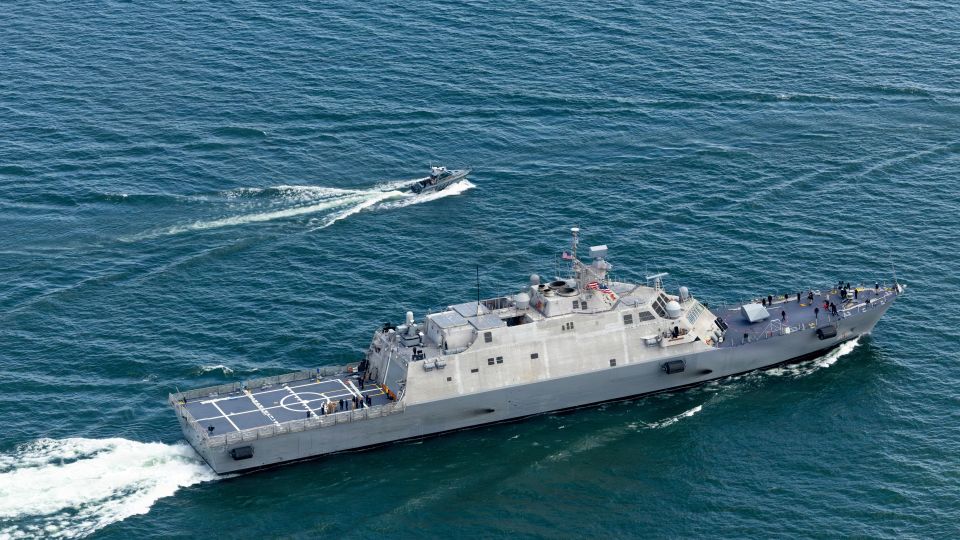
POLICY WIRE — Washington, D.C. — Imagine, for a moment, a shiny new car—sleek, fast, packed with the latest tech—that spends more time in the mechanic’s bay than on the road. Now, scale that up, way up, to the size of a warship. That, in essence, is the story of the US Navy’s Littoral Combat Ship program. It’s a saga less about sea power, more about bureaucratic inertia and, well, really expensive headaches.
It wasn’t always this bleak. Back in the day, the LCS was heralded as the future—a modular, quick-footed vessel designed for operations in coastal waters, a nimble warrior meant to counter asymmetric threats. Not your grand aircraft carriers, not your mighty destroyers. No, this was supposed to be the maritime equivalent of a Swiss Army knife, able to swap out mission modules for anti-submarine warfare, surface warfare, or mine countermeasures. Sounded slick on paper, didn’t it? Turns out, making that happen, making it reliable, making it work, was quite another beast altogether.
Because the reality? It’s been less than glorious. These aren’t battle-hardened dreadnoughts breaking waves across the South China Sea. Many have earned themselves a rather less flattering moniker among Navy brass: [QUOTE_PLACEHOLDER]the little crappy ship[QUOTE_PLACEHOLDER]. That’s the sort of blunt assessment that typically doesn’t make it into congressional testimonies, but it sure gets whispered in wardrooms and shipbuilding yards across the country. And it isn’t hard to see why.
Consider the staggering list of engineering malfunctions, maintenance woes, and cost overruns that have plagued the program since its inception. Remember that modularity? It never truly delivered. The supposed swappable mission packages proved far more complex — and time-consuming to integrate than advertised. They just didn’t work as advertised. The entire premise, in many ways, fell apart like a poorly assembled Lego ship on a choppy sea.
Now, the Navy’s looking to offload several of these vessels—early. Think about that for a second. Warships, costing hundreds of millions of dollars each, being deemed surplus to requirements, or simply too expensive to operate, after a fraction of their intended service life. The Navy initially planned for 52 LCS vessels; by 2021, they’d decided to scrap ten Freedom-class ships prematurely, some not even a decade old, in favor of moving resources to a new class of frigates, citing an average 30% cost overrun from initial projections for the program as a key driver (Source: U.S. Government Accountability Office, 2016). It’s a frankly embarrassing chapter in modern naval procurement, a kind of self-inflicted wound that screams ‘lesson unlearned’ to anyone paying attention.
But the domestic disappointment barely scratches the surface of the ripples this project sends out. How does this kind of stumble play on the global stage, specifically in regions where maritime power projection carries real weight? Places like the Persian Gulf or the wider Indian Ocean, where US presence provides a critical counterweight and reassurance to allies, frequently touch on the kind of littoral zones the LCS was supposed to dominate.
And for countries like Pakistan, long accustomed to carefully watching shifts in naval power and doctrine—often through the lens of regional security dynamics with India or the broader security concerns of the Muslim world—America’s flailing efforts to produce a reliable coastal combatant can’t exactly inspire unshakeable confidence. It paints a picture, not of indomitable technological superiority, but of flawed execution — and misplaced priorities. They’re watching, weighing how dependable US assurances, backed by military hardware, truly are. It’s not just about what ships sail, but what message their very existence (or premature demise) sends.
You can’t help but wonder what the procurement generals were thinking, way back when. The concept itself wasn’t entirely unsound, in a vacuum. But the execution—that’s where the wheels, or rather, the gears, fell off. It’s an object lesson in over-promising — and under-delivering, a spectacular maritime misstep. These ships, many still relatively new, have already become relics of a grand vision gone terribly, awfully wrong. Their future? Well, for many, it involves an ignominious end long before their time.
What This Means
This isn’t just about some ships; it’s a symptom of a larger, systemic challenge within US defense procurement—a system often bogged down by bureaucratic inertia, industry lobbying, and an almost religious adherence to new, shiny concepts without rigorous testing of practical viability. Economically, we’re talking billions flushed. It’s capital that could’ve gone to more pressing needs: modernizing existing fleets, investing in next-gen capabilities that actually work, or addressing critical domestic infrastructure. Politically, the implications are thorny. It offers ammunition to critics who argue against large-scale defense spending, or question the Pentagon’s ability to manage complex programs effectively. But even more critically, it quietly degrades the perception of American military prowess among allies and adversaries alike, particularly in sensitive maritime chokepoints that border the Middle East and South Asia. For instance, in areas where China’s naval presence is aggressively expanding, every US stumble is a Chinese talking point, highlighting perceived Western weakness. The message sent by the early retirement of relatively new warships is that the US Navy—the world’s most powerful—isn’t immune to wasting money on poorly designed systems. This failure doesn’t just cost cash; it costs credibility. The pivot now is to a more conventional, robust frigate design, implicitly acknowledging that versatility at the expense of survivability and reliability is a bad trade-off. This strategic correction, while necessary, effectively signals a retreat from the LCS’s initial, ambitious vision, and potentially leaves a temporary capability gap in exactly the kind of critical littoral zones the ‘little crappy ships’ were supposed to secure. What’s worse, it demonstrates a painful lesson for aspiring naval powers and regional partners: the biggest checkbook doesn’t always buy the best ships, or even ones that simply stay afloat.