

Michigan Governor’s Shifting Sands: The Fleeting Certainty of Political Ambition
POLICY WIRE — Lansing, Michigan — In politics, few pronouncements are as fragile as a definitive ‘no’ when uttered years ahead of an opportunity. Governor Gretchen Whitmer of Michigan...

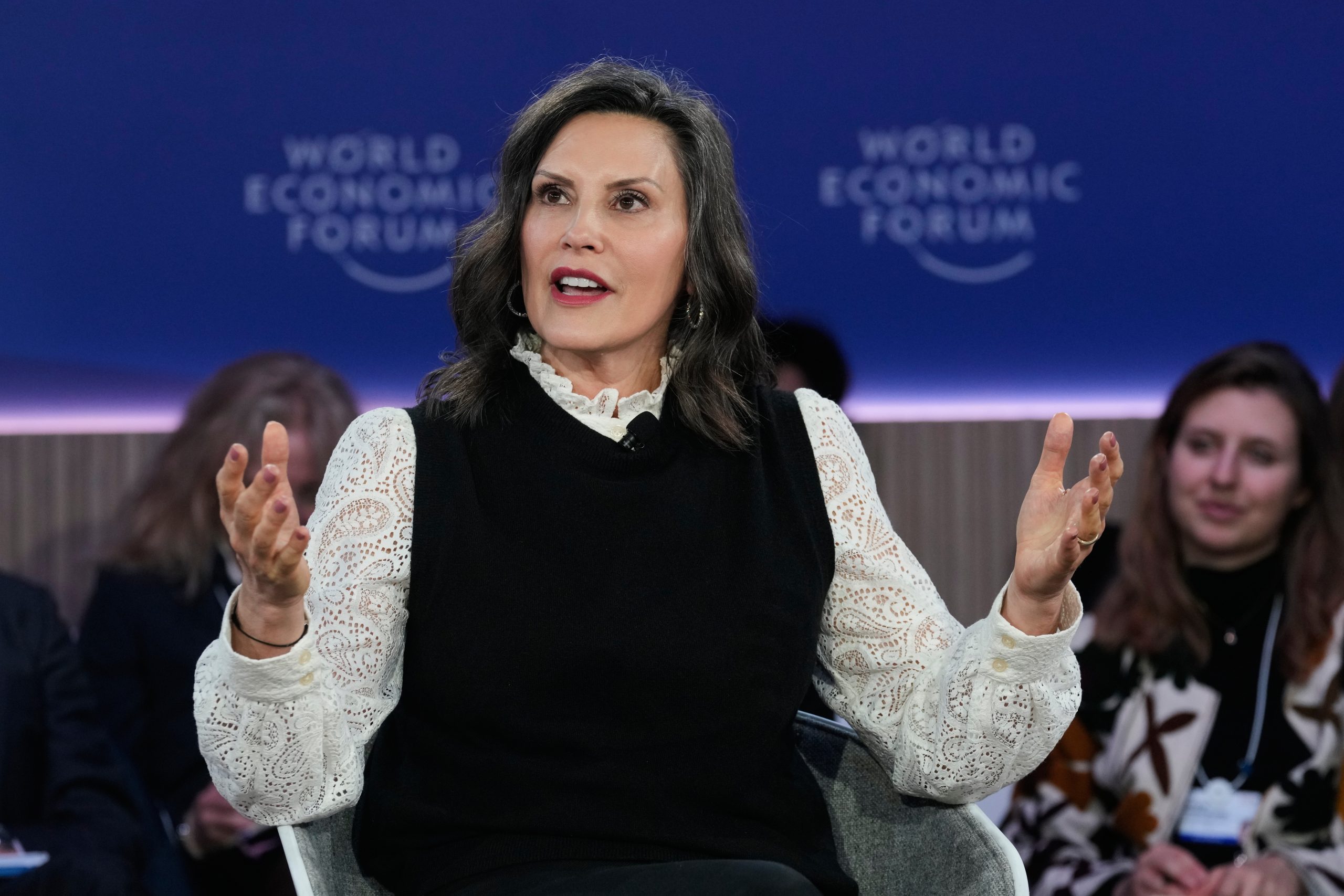
POLICY WIRE — Lansing, Michigan — In politics, few pronouncements are as fragile as a definitive ‘no’ when uttered years ahead of an opportunity. Governor Gretchen Whitmer of Michigan just proved that anew, offering a masterclass in the nuanced art of the public retraction. One moment, she was apparently shunting aside talk of a 2028 presidential run; the next, the door, it seems, wasn’t quite shut after all. It’s enough to make a seasoned observer wonder if electoral cycles are now measured in news cycles, or perhaps just a few short hours.
It began, as these things often do, with a seemingly innocuous query about future aspirations. A direct question. And a direct answer. At least, that’s how it appeared on the surface. Whitmer reportedly stated something to the effect of [QUOTE_PLACEHOLDER] regarding any White House ambitions for the cycle after next. Because, well, leaders are busy governing, aren’t they? Especially in a state like Michigan, with its complex industrial base — and perpetually swinging political pendulum. One imagines the priorities stacked high on her desk, far more pressing than musings about four years hence.
But the political class, bless its eternally hopeful heart, heard the whispers differently. Or perhaps, they heard nothing at all, merely projected their own narratives onto her words. Whatever the initial perception, the denial was surprisingly brief. Short-lived. Transitory, even. It wasn’t long—mere hours by most accounts—before a clarification, or perhaps a more carefully worded non-denial, emerged from her camp. The essence of this updated stance? Something along the lines of [QUOTE_PLACEHOLDER], suggesting that the governor is focused on her current job, yes, but leaving plenty of room for future considerations. One could almost feel the collective sigh of strategists across the Democratic party machine, ever so relieved that a prominent rising star hadn’t committed the cardinal sin of actually sounding unambitious.
And that’s the rub, isn’t it? In an era where political statements are dissected with forensic precision, where every syllable is weighted for its hidden meaning or strategic intent, candor can sometimes be mistaken for weakness. Or, worse yet, a genuine lack of interest in the ultimate prize. Political denials, especially from popular governors of swing states, are rarely definitive closing statements. They’re often strategic pauses, a way to bat away immediate speculation without actually ceding any future ground. It’s a dance, really—a delicate two-step between present responsibilities and potential futures, all under the relentless gaze of the national political apparatus.
Such maneuvers aren’t unique to America, of course. Across the political landscapes of Pakistan and the broader Muslim world, a politician’s pronouncements often come with layers of meaning, unspoken implications that are understood by those tuned into the intricate cultural and political currents. Denials of presidential aspirations in Islamabad, for instance, are frequently followed by feverish backroom dealings, signaling less a firm withdrawal and more a strategic recalibration. Public trust in such statements wanes universally when flip-flops become a pattern. A 2022 Gallup poll, for example, indicated only 25% of Americans had a great deal or fair amount of trust in politicians. Not a stellar endorsement, is it?
But back to Whitmer. What she managed to do, consciously or not, was generate headlines. And in today’s attention economy, any headline, particularly one that hints at national ambition, is a valuable commodity. It reminds donors, activists, — and other stakeholders that she’s a player, a potential future contender. She didn’t shut the door. She just nudged it a little bit, then politely, strategically, eased it back open before anyone could interpret it as closed. It’s a risky game, though. Too many such pivots — and the public starts wondering about your convictions, or whether your word carries any weight.
Because clarity, at some point, matters. We’ve seen similar dances play out with other hopefuls. It’s part of the pre-campaign campaign, the subtle signaling that precedes the actual announcements. But sometimes, these signals get crossed, creating mini-dramas that offer a brief, fascinating glimpse into the mechanics of political self-preservation and future-gazing. Her team, no doubt, is busy spinning this as a triumph of focusing on the here and now, even as the chattering classes are convinced she’s merely polishing her resume for a bigger job.
What This Means
Governor Whitmer’s brief flirtation with an absolute ‘no’ on 2028 before a rapid course correction isn’t just a political gaffe or a fleeting news item; it’s a telling symptom of the intense pressure cooker that’s modern presidential politics, even years out from an election. Economically, such speculative events can briefly sway donor confidence and shape early media narratives around a potential candidate’s viability. For the Democratic Party, it maintains Whitmer’s status as a key prospective candidate, allowing her to continue building her national profile without appearing to neglect her current duties or seeming overly ambitious too soon—a common criticism leveled at aspiring leaders. The momentary wobble, however, does raise questions about communication strategy and decisiveness, potentially giving future rivals ammunition down the line. It subtly underscores the delicate balancing act politicians perform between authentic public service and the relentless pursuit of higher office. It’s a reminder that in the upper echelons of politics, every word is weighed, every denial is noted, and absolute certainty is often merely a temporary stance, a placeholder for ambition not yet ready to fully declare itself.