


The Ghost in the Machine: Luis Lara’s Fleeting Power Surge Rattles Brewers’ Analytics Lab
POLICY WIRE — Glendale, Arizona — The desert sun bakes Arizona every spring, and sometimes, it seems, it bakes a little magic into a baseball bat, too. Or so it appeared with Luis Lara. Remember him?...

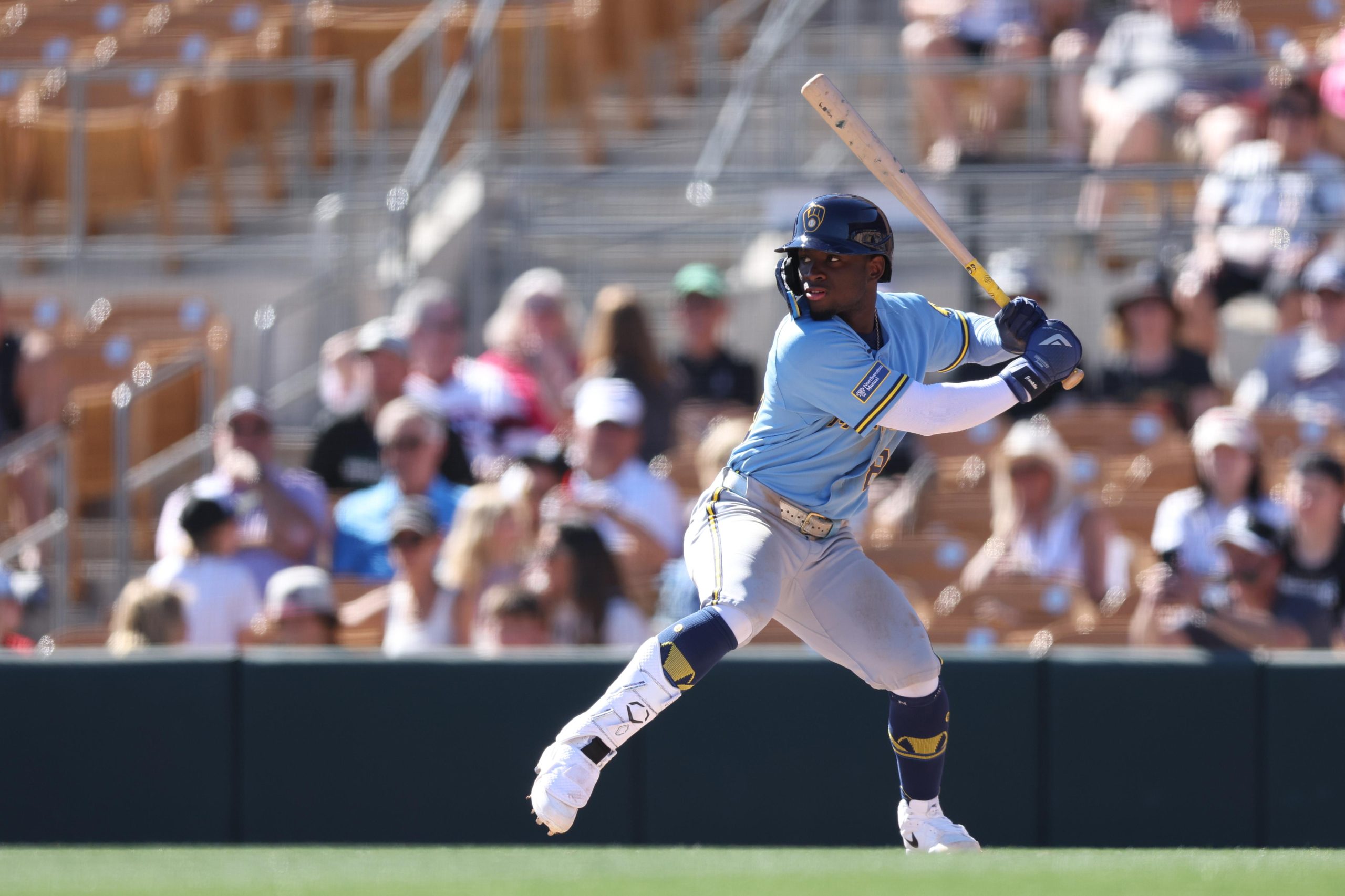
POLICY WIRE — Glendale, Arizona — The desert sun bakes Arizona every spring, and sometimes, it seems, it bakes a little magic into a baseball bat, too. Or so it appeared with Luis Lara. Remember him? For a fleeting six weeks, the young Milwaukee Brewers prospect transformed from a contact wizard into a bona fide slugger, belting seven home runs faster than you could say ‘prospect rankings leap.’ He’d shattered his previous career best, put the entire league on notice—a new offensive force, everyone whispered.
And then, as quickly as the mirage appeared, it evaporated. Almost two months later, Lara still had precisely those seven home runs. A surge, yes. But it became an immediate, perplexing drought. What was happening? Did the kid possess raw, untapped power that briefly—briefly—unlocked? Or was it all just a statistical hiccup, an optical illusion for data junkies — and desperate fanbases?
It’s the kind of statistical head-scratcher that would give even the most seasoned data scientists sleepless nights. You see, the initial power display wasn’t just pretty to watch; it launched Lara up Baseball America’s prospect list to No. 52, with MLB Pipeline slotting him at No. 89. Yet, even Pipeline, notoriously conservative, kept his power grade stubbornly low, a mere 40 on the 20-80 scale, vastly dwarfed by his 70-grade defense and elite speed. Quite the disconnect, wouldn’t you say?
To truly understand this bizarre tale, you’ve got to peel back the layers—way beyond the simple home run column. Because, like any good political debate or economic forecast, the surface numbers rarely tell the whole, grubby truth. The Brewers, a club renowned for its development system, certainly weren’t just shrugging. “Luis’s raw tools are undeniable, everyone sees that,” admitted Matt Arnold, the Brewers’ General Manager, in a recent private briefing. “But converting those flashes into consistent, impactful output at the plate—that’s the challenge. It’s what we’re always working on with our guys.” It’s never simple, this game. Never is.
Statcast data, bless its nerdy heart, extends now to Triple-A. And that’s our key. We’ve got raw power indicators: average exit velocity, maximum exit velocity, 90th-percentile exit velocity, and—most tellingly—hard-hit rate. Lara’s current overall profile? It doesn’t exactly scream ‘power hitter.’ His average exit velocity lags behind the average; his 90th-percentile number is just solid. But here’s the rub: that 109 mph maximum exit velocity. That’s a monster shot. It tells you the physical capacity for power is absolutely there. He can hit it hard. But the inconsistency, that’s where the whole thing falls apart.
His hard-hit rate—balls struck at 95 mph or harder—clocks in at a meager 20.7%. To put that into perspective, the major league average hovers around 33%. That’s a whopping third less often. It means, quite simply, that he’s not making the loud contact often enough to project as a legitimate power threat. And this matters. Because in 2023, hitters batting balls 95 mph or faster boasted an eye-popping .506 batting average, while those struck below that threshold managed a paltry .221, according to MLB Statcast data. The gap’s like a chasm.
But the real trick is comparing the ‘surge’ period to the ‘drought’ period. From March 27 to May 6 (the home run burst), his hard-hit rate was 28.25%. After May 7 (the silent stretch)? It dropped to 18.34%. His average exit velocity also fell by nearly three miles per hour. That’s not a negligible drop, even if other factors—like his essentially flat strikeout rate (around 14.5%) and steady batting average—remained stubbornly consistent. And you might think bad luck played a part. Nope. His BABIP (batting average on balls in play) actually increased after the power dried up. Go figure.
No, the biggest shifts seem to reside in his approach at the plate. His first-pitch strike rate went up, meaning he was falling behind in counts more often. His overall swing rate jumped too. He got more aggressive, expanding his swing decisions. Pitchers weren’t really changing tactics; they weren’t feeding him more strikes or different pitches. Lara, it seems, simply started swinging at pitches he was less likely to drive with authority. He still makes contact, mind you, because he’s good at that. But he stopped consistently getting to his raw power. “It’s the ultimate tightrope walk,” noted Sarah Khan, a leading sports analytics consultant for several MLB teams. “Players must balance aggression with selectivity. Lara’s physical tools are unquestionable, but the strategic component, the plate discipline required to consistently unleash that power, that’s where the development truly lies. It’s about optimizing potential, not just showing it off now — and then.”
What This Means
This saga isn’t just about baseball; it’s a microcosm of decision-making everywhere. Think about investing in an emerging market or backing a controversial policy. You see initial promising numbers—a quick GDP bump, a dip in a social indicator—and the narrative writes itself. Then the ‘surge’ stalls. Was the underlying potential ever really there, or was it a brief alignment of fortunate circumstances, a Triple-A park effect (to stick with baseball terms)? This calls for forensic scrutiny, not just reactive headlines.
In policy, just like in baseball, genuine growth and sustained success hinge on fundamental shifts, not ephemeral spikes. And it’s why a careful reading of data is so paramount, especially when assessing claims of progress or looming threats. You can’t just take declarations at face value; you need to understand the sub-components. How many times have we seen an initial ‘de-escalation’ in geopolitical tensions only to find that underlying structural issues haven’t been addressed? Just as the IAEA often dismisses mere ‘war of words’ to focus on verifiable monitoring data, good governance demands we look beyond the rhetoric to the granular realities.
For the Brewers, extending Lara was still smart business. A center fielder with elite speed, superb defense, — and high contact skills is valuable even without 20 homers. They’re betting on their development system—one of baseball’s best, by the way—to bridge the gap between Lara’s undeniable raw power (that 109 mph blast wasn’t accidental) and his inconsistent delivery of it. Because if they can help him refine his strike zone discipline and swing selection, ensuring he connects when it counts, there’s a whole other level to his game. If not, hey, he’s still a hell of a player. That’s why you always look for the story underneath the numbers, particularly when dealing with potential.