


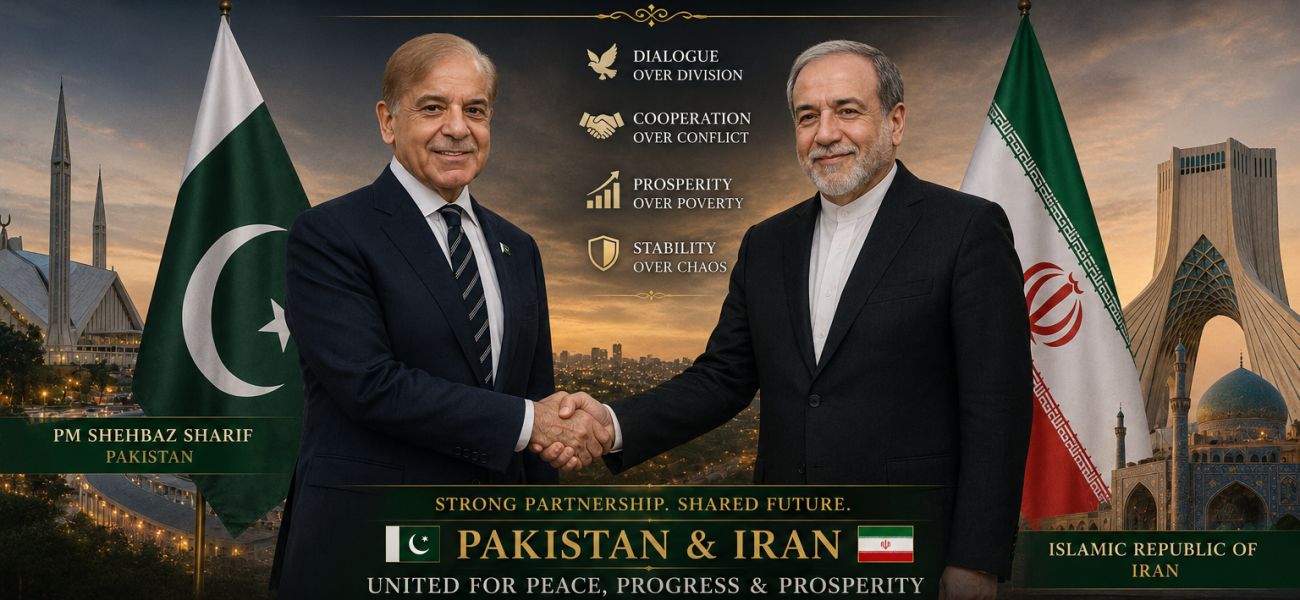
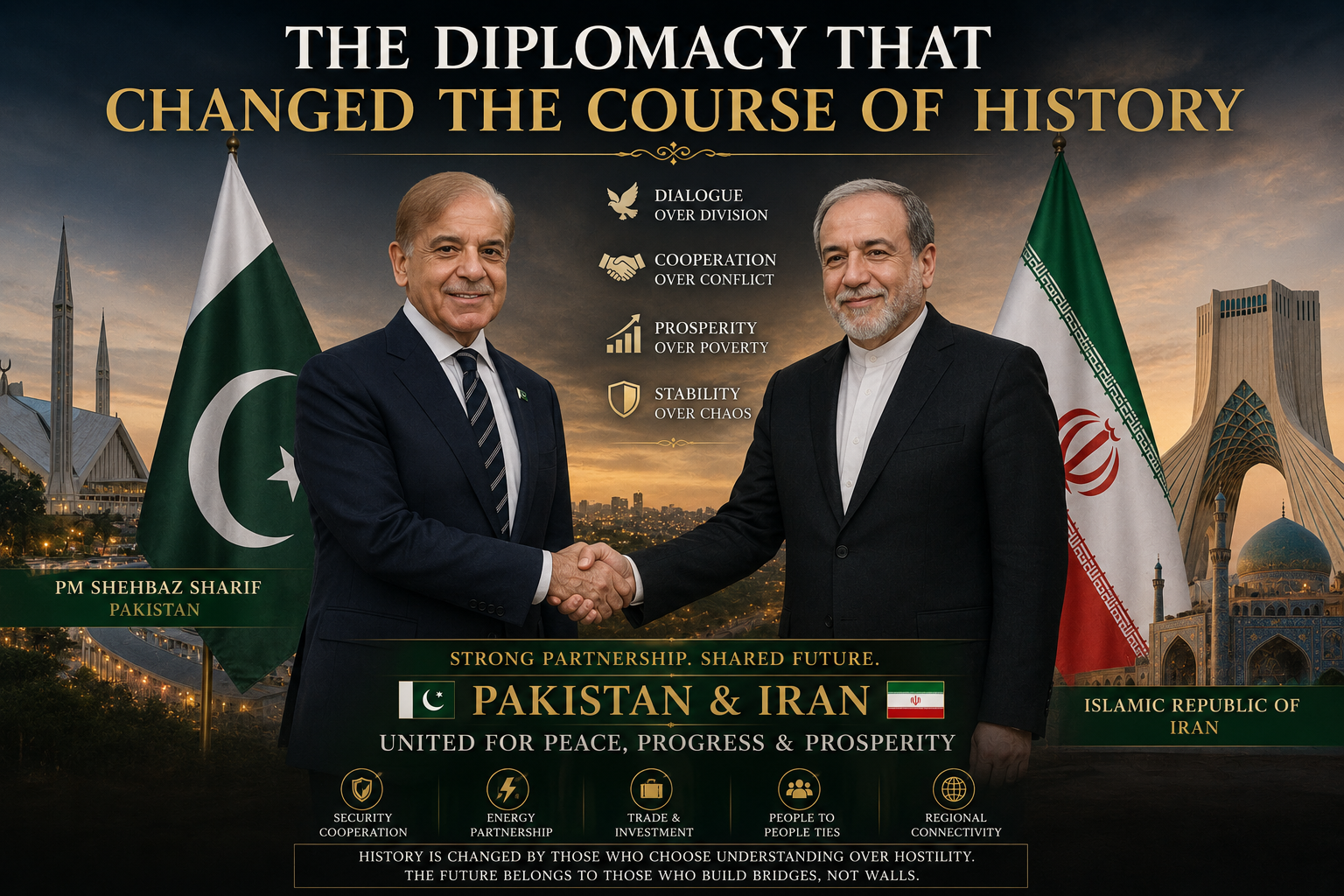
The Diplomacy That Changed the Course of History
The dream which poet laureate Allama Iqbal had, was neither of a fort, nor of a force; rather he dreamt of a civilisation that would illuminate darkness. And it is pertinent to note that...
The dream which poet laureate Allama Iqbal had, was neither of a fort, nor of a force; rather he dreamt of a civilisation that would illuminate darkness. And it is pertinent to note that Quaid-e-Azam, in his very first speech to the Constituent Assembly, had talked of coexistence and not of conquest. These were not the words of men building a garrison. They were the words of men building a conscience.
Seventy-eight years later, that conscience has spoken, and the world has listened.
A Nation Shaped by Every Fault Line
Pakistan’s success in bringing the United States and Iran to the negotiating table, laying the groundwork for a peace framework now advancing in Switzerland, is being described in diplomatic circles as extraordinary. For anyone who has studied Pakistan’s history rather than merely its headlines, it was always inevitable.
Pakistan has lived on every fault line the modern world has produced: between East and West, between rival powers competing for influence across Asia, between the demands of Washington and the sensitivities of Tehran. That experience did not break Pakistan. It educated it. It forged a diplomatic instinct genuinely rare in its time, the ability to speak honestly to all sides and be trusted across divides that others consider unbridgeable.
Bilateral relations with Tehran have seen much improvement from 2024 onwards, whereby the two states have entered into deals to deal with their common concerns. Iran has openly declared its support for Pakistan during the war that broke out between Pakistan and India in May 2025, thus enhancing trust between the two countries. At the same time, the bilateral relations between Washington and Islamabad have become stronger under the leadership of President Trump.
The Moment That Changed Everything
When US airstrikes against Iran threatened to drag the entire region into catastrophe in early 2026, Pakistan did not retreat into safe neutrality. With barely 90 minutes remaining before President Trump’s deadline to strike Iran’s civilization, it was Pakistan’s quiet, relentless diplomacy, led by Prime Minister Shehbaz Sharif and Field Marshal Asim Munir , that produced the breakthrough.
Trump announced the ceasefire citing direct conversations with Prime Minister Sharif and Field Marshal Munir, stating they had “requested that I hold off the destructive force being sent tonight to Iran.” The words of Iranian Foreign Minister Abbas Araghchi were equally striking: Iran accepted the ceasefire “in response to the brotherly request of PM Shehbaz Sharif,” with Araghchi expressing gratitude for their “tireless efforts to end the war in the region.”
Two leaders. Two superpowers. One Pakistani handshake holding the line between war and peace.
Islamabad at the Centre of History
On April 11 and 12, 2026, Islamabad hosted the highest-level direct engagement between Washington and Tehran since 1979. A 300-member US delegation led by Vice President JD Vance sat across from a 70-member Iranian team led by Parliamentary Speaker Mohammad Bagher Ghalibaf. The world watched a city whose very name means the City of Islam host a conversation that would determine the fate of the Middle East.
Prime Minister Shehbaz Sharif later addressed Pakistan’s National Assembly with rare candour about what those weeks truly demanded. “Throughout this period, he was awake all day and night,” Shehbaz Sharif told lawmakers, describing Field Marshal Asim Munir as the man who kept negotiations alive each time, they appeared close to collapse. “If this journey had not continued, the dream of peace would have been shattered.”
The international acknowledgement followed swiftly. Saudi Foreign Minister Faisal bin Farhan Al Saud specifically acknowledged Pakistan’s “consistent and sustained efforts in support of mediation and dialogue throughout the process.” Iranian Foreign Minister Araghchi wrote that “tireless Pakistani and Qatari mediation” had delivered results.
The Verdict of World Leaders
US Vice President Vance, standing alongside Pakistani leadership in Switzerland this week, left little ambiguity about his assessment. He praised both Prime Minister Sharif and Field Marshal Asim Munir, describing their contributions as commendable and calling Asim Munir an excellent military commander.
Prime Minister Sharif confirmed the diplomatic breakthrough in a social media post, declaring: “Peace has never been this close as it is now.” The first round of high-level Switzerland talks concluded with both sides agreeing to a roadmap for a final deal within 60 days, alongside a communication line to avoid incidents in the Strait of Hormuz.
Iqbal’s Vision Made Real
This is what Pakistan looks like to Iqbal, not as a geographical entity squeezed between empires but rather as a living moral influence on some of the world’s most important conversations. A country that has spent decades building meaningful relationships, that will not be limited to any one alliance, that treats each friend consistently with respect has become indispensable because the world needed someone to trust.
The work of a peacekeeper is not always an exciting task. Patience is required while others are calling for action; restraint is required while others are calling for reaction; and the ability to be trusted by all parties in a world where all other countries must make a choice is a difficult task. Pakistan accepted that challenge with dignity and skill, and the confidence of knowing who they were.
Allama Iqbal dreamed of a star rising in the East. In the spring of 2026, it rose, not over a battlefield, but over a negotiating table. That, perhaps, is the finest thing a nation can do with its moment in history.
Author