


The Cosmic Gambit: Blue Origin’s Fiery Setback Jolts Private Space Race
POLICY WIRE — Cape Canaveral, USA — It was a sound more familiar to residents of Gaza or Peshawar than Florida’s Space Coast, a sudden, concussive roar that rattled homes and nerves across Cape...

POLICY WIRE — Cape Canaveral, USA — It was a sound more familiar to residents of Gaza or Peshawar than Florida’s Space Coast, a sudden, concussive roar that rattled homes and nerves across Cape Canaveral and Cocoa Beach just after 9 p.m. Thursday. Then came the unexpected spectacle: the night sky, for a fleeting, terrifying moment, wasn’t dark; it was a furious orange, a temporary aurora over the launch complex. This wasn’t some distant geopolitical rumbling, however, nor was it the expected thunder of a successful ascent. Instead, it was the raw, unambiguous voice of gravity — and mechanics — reminding Jeff Bezos and his Blue Origin enterprise that space, indeed, remains a stubborn, unforgiving frontier.
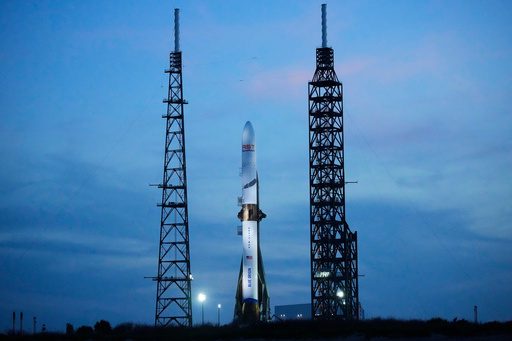
Because the blast wasn’t a launch, but an unexpected disassembly during a pre-flight engine-firing test of their massive New Glenn rocket. This isn’t a small machine; towering at 321 feet (98 meters), it’s built for heavy lifting, the kind that might one day shuttle astronauts to the moon for NASA. But Thursday night, it lifted only fire and debris, shaking the ground with an energy usually reserved for something leaving Earth’s embrace, not breaking apart on it. Locals didn’t need official announcements; social media, as it always does, erupted with accounts and images of the inferno, capturing the visceral shock of residents wondering just what in heaven’s name had gone wrong.
It’s a rough reminder, isn’t it, that even with billionaires bankrolling the adventure, the laws of physics don’t really care about quarterly earnings or audacious dreams. Blue Origin’s colossal New Glenn was supposed to launch next week, carrying a payload of internet satellites — part of Amazon’s Leo constellation, aiming to extend global connectivity. Those plans, naturally, are now on an unscheduled hold. This incident, while thankfully causing no injuries according to officials at Cape Canaveral Space Force Station, casts a long shadow over the company’s ambitious lunar programs.
Remember April? That’s when this same New Glenn design grounded a satellite in the wrong orbit due to another engine hiccup. That was only its third flight. Now, just as the space agency awarded Blue Origin a contract worth hundreds of millions of dollars to launch moon buggies as part of the Artemis program, it seems their moonshot has, well, quite literally gone up in smoke. It makes you wonder about the long-term investment calculus, doesn’t it?
Elon Musk, a competitor who’s certainly no stranger to spectacular (and public) rocket failures at his own company, SpaceX, chimed in with a rare moment of camaraderie. “Sorry to see this, I hope you recover quickly,” he relayed to Blue Origin. Perhaps it’s an acknowledgement of the shared, brutal difficulty of the task, a tacit understanding that for all the cutthroat competition, everyone in this rarefied club is trying to do something extraordinarily hard.
Bezos, for his part, was quick to acknowledge the reality: “It’s too early to know the root cause but we’re already working to find it,” he said. And then, the typical corporate resilience, or perhaps just stubborn resolve: “Very rough day, but we’ll rebuild whatever needs rebuilding and get back to flying. It’s worth it.” Sure, it’s ‘worth it’ when you have a reported personal net worth north of $200 billion. For many in the burgeoning global space industry — including nations like Pakistan with its Space and Upper Atmosphere Research Commission (SUPARCO), which often relies on international partnerships and meticulously managed resources — a single setback of this magnitude would be catastrophic, delaying their modest yet significant space aspirations for years. Pakistan’s growing interest in communication and remote sensing satellites, for example, demonstrates how these large private sector players, with their enormous capital and advanced tech, inadvertently set the pace and the (sometimes very expensive) expectations for other, less resourced nations entering the space domain. When private enterprises stumble so publicly, it inevitably forces a re-evaluation of risk and reliability, even for states that are years behind in capacity.
NASA Administrator Jared Isaacman offered his own sobering take. [QUOTE_PLACEHOLDER] He assured the public that information on impacts to the Artemis program, and his recently outlined moon base plans, would be forthcoming. But what he doesn’t have to say aloud is that every major player—SpaceX, ULA, and now, especially, Blue Origin—is feeling the immense pressure. This incident is less a bump in the road — and more a gaping crater.
Officials were quick to confirm that despite the dramatic visuals and ground-shaking force, there was no ongoing threat from fumes or other hazards. Also, no, this doesn’t affect other upcoming launches. United Launch Alliance’s Atlas V, another workhorse, was still scheduled to fly the next night with its own batch of Amazon Leo satellites. The cosmic traffic jam isn’t quite clear yet, you see. But the implications of Thursday’s fireworks show extend far beyond just one company or one launch window.
What This Means
This incident isn’t merely an unfortunate technical mishap; it’s a stark policy reverberation echoing across the public and private sectors of space exploration. Economically, this fiery setback could prove expensive. Blue Origin will likely face extensive delays, potentially pushing back lucrative NASA contracts, and incurring significant repair and investigative costs. Investor confidence in space tech, a sector still grappling with high risks and long development cycles, might also take a hit, especially concerning those startups that have staked their futures on novel, untested hardware. It certainly reinforces SpaceX’s increasingly dominant market position, painting them as the more reliable (albeit still prone to fiery spectacles) choice for commercial launches, while also subtly strengthening the argument for governmental agencies like NASA to maintain their own foundational launch capabilities rather than outsource entirely.
Politically, the competitive private space race is a core tenet of current U.S. strategy, aimed at outpacing rivals — and maintaining global leadership in space. An explosion of this nature, especially on a heavy-lift vehicle destined for lunar missions, highlights the inherent fragility of this strategy when it hinges on private enterprise. The reliability of these systems is paramount, not just for scientific advancement but for national prestige and security. Any perceived weakness or significant delay by a key player like Blue Origin gives countries with their own burgeoning space programs, whether China, Russia, or even nations like India and UAE, further ground to tout their own capabilities. It might even spur a re-evaluation of how much reliance can be placed on a single private entity for critical, long-term strategic objectives like the Artemis lunar program. It also serves as a poignant reminder that even the deepest pockets can’t buy immunity from physics, nor can they entirely shield the space program’s public image from the dramatic failures inherent in pushing boundaries beyond Earth’s comfortable embrace.