


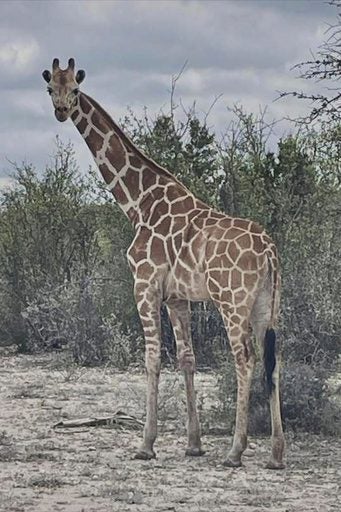
Texas Wild: The Peculiar Policy Predicament of a Wandering Giraffe
POLICY WIRE — CAMP WOOD, Texas — For a few anxious weeks, it wasn’t just the cattle that roamed America’s heartland; it was a 10-foot-tall, 1,200-pound giraffe. Gracie, a three-year-old anachronism...

POLICY WIRE — CAMP WOOD, Texas — For a few anxious weeks, it wasn’t just the cattle that roamed America’s heartland; it was a 10-foot-tall, 1,200-pound giraffe. Gracie, a three-year-old anachronism in the Texas Hill Country, proved once again that nature, however domesticated, often bats last. Her recent 4-mile trek through the brush has pulled back the curtain, however briefly, on an ecosystem most Americans don’t realize exists here: a thriving, unregulated trade in exotic wildlife.
It’s a peculiar thing, really—to lose track of something that size. But then again, the Hill Country, with its rugged terrain — and sprawling private lands, is accustomed to peculiar. Sheriff Nathan Johnson of Real County noted he’s fielded reports of various missing fauna over the years: wildebeests, water buffalo, zebras, monkeys. A giraffe, though? That was a first, even for him. This ain’t your grandad’s farm anymore; it’s an open-air menagerie, a living investment portfolio. And sometimes, those investments wander off.
Gracie, who had been missing for about two weeks, was eventually spotted during an aerial search. It appears she’d rather enjoyed her unscheduled sabbatical. Vick Jones, her owner, contacted a veterinarian and then started assembling a crack team—not for a wild game hunt, but for a delicate extraction. “She’s in good shape,” Jones reported later, an audible sigh of relief perhaps woven into his calm delivery. “She’s standing there, swishing her tail.”
Found roughly a half-mile from a natural water source and with plenty of leafy greens within reach, it wasn’t exactly a struggle for survival out there. In fact, Jones figured she’d been chilling in that very spot for a solid week. But then, retrieving a giraffe isn’t like calling the dog home. Vets had to come out, sedative in hand, — and then a specialized hood over her eyes. Imagine the logistical nightmare. From there, it’s a careful maneuver onto an open-pasture trailer, then into a taller, enclosed transport specifically designed for giraffes, before the long, bumpy ride back to the Cedar Hollow Ranch, about 100 miles west of San Antonio.
This whole episode — the search, the careful recapture, the specialized transport — highlights a lesser-known aspect of the modern ranching economy. This ain’t about beef anymore, for some folks. It’s about conservation, private collections, or maybe just the sheer novelty of housing a herd of antelope next to your driveway. The Texas Hill Country, it’s worth noting, boasts one of the largest concentrations of exotic captive animals in the U.S. And that means it sometimes boasts escaped exotic animals, too. Back when Gracie wandered, Real County’s 2,700 residents were actually asked to keep an eye out for her, even though she was found on uninhabited private land. But it’s easy to see how one wrong step from any of these majestic beasts could turn into a rather large community problem.
Jones, Gracie’s owner, thinks she didn’t intend to bolt. She was just nibbling some trees in a rocky section of his property, wandered past an unfenced area, and then, finding herself on the wrong side of the gate, decided to keep walking rather than turn back. A fence is planned now, which probably won’t be cheap. Building a barrier tough enough to deter a creature like Gracie in this particular landscape means [QUOTE_PLACEHOLDER] That’s a serious commitment.
📄 POLICY WIRE WHITEPAPER PUBLISHED: PAKISTAN'S NATIONAL SECURITY POLICY PRIORITIES
👉 READ BY CLICKING HEREAnd yes, despite her intimidating stature, Gracie wouldn’t have harmed any unsuspecting hiker. “If you move toward her, she’s taking off,” Jones assured us. Which makes sense. Wild things, even those semi-tamed, generally prefer to keep their distance.
What This Means
This saga, at its core, is a snapshot of evolving land use and the intricate challenges of private exotic animal ownership in America. What begins as a personal passion — or perhaps an investment — inevitably interacts with public safety and policy. There’s a noticeable lack of a coherent, unified regulatory framework for these species across states, and Texas, particularly, is known for its relatively permissive laws. This often leaves local authorities, like Sheriff Johnson, improvising solutions for unexpected problems, like a giraffe taking a stroll.
Economically, it’s a niche market, but it’s booming. People are making significant investments in animals like giraffes, not just for tourism but often for breeding programs that supply other private zoos or collectors. It’s a parallel economy running alongside traditional agriculture, but without the generations of regulatory oversight that govern cattle or crops. Internationally, countries with similar arid landscapes and a strong connection to wildlife, such as Pakistan or parts of South Asia, grapple with their own unique sets of challenges in exotic animal management and conservation. They might have a richer history of species coexisting with human populations, but the modern pressures of urbanization and illegal trade mean similar debates about boundaries and policy enforcement are just as pertinent. This little Texan drama, therefore, serves as a microcosm, highlighting the global tension between individual property rights and the broader societal implications of animal welfare and control. But let’s be real—the primary implication for Jones is going to be a heavier hardware bill for that fence.