

Thailand’s Industrial Boom Threatens Forests and Elephants Over Water Plans
Explore how Thailand's push for industrial water security through the Khlong Wang Tanot reservoir project threatens protected forests and wild elephants.

POLICY WIRE — Chanthaburi, Thailand — A decades-old debate is intensifying across rural Thailand as a proposed reservoir project moves forward to satisfy surging industrial water demand while threatening protected forests, local communities, and wild elephant habitats.
The planned Khlong Wang Tanot reservoir in Chanthaburi province, located roughly a four-hour drive southeast of Bangkok, is engineered to store 99.5 million cubic metres of water to support development along the country’s eastern seaboard.
Initially conceived during the 1990s, the initiative gained cabinet approval in August with a seven-year construction timeline, though it still requires official clearance to utilize protected forest land inside Khao Sip Ha Chan national park.
Seeda Saengkla, the head of Ban Klong Yang village, oversees a community of 334 households and 654 residents located directly within the proposed reservoir zone, noting that many locals are willing to relocate if adequate relocation support and fair compensation are guaranteed.
Water scarcity is hardly a novel challenge for eastern Thailand, where the Royal Irrigation Department initiated watershed studies in the 1990s following severe dry-season shortages that have only worsened alongside expanding durian orchards and unpredictable rainfall patterns.
Three existing reservoirs already operate within the watershed, making Wang Tanot the prospective fourth and largest addition intended to boost agricultural water security and mitigate downstream flooding during the wet season.
Thammanoon Innooch, director of the Large-Scale Irrigation Construction Office, stated that the infrastructure is designed to utilize only the minimum necessary national park land and will prioritize local water requirements before potentially diverting up to 70 million cubic metres of surplus runoff annually to Rayong province.
Regional industrial needs have skyrocketed to accommodate high-tech manufacturing, prompting 29 data-centre projects to apply for investment incentives within the Eastern Economic Corridor across Chachoengsao, Chonburi, and Rayong provinces.
Kwankamol Chittrakul, a water resources management expert, explained that developers are rushing to capitalize on current conditions before stricter regulations on water and electricity consumption take effect, even as industry water demands are projected to surge by 58 per cent between 2024 and 2037.
The World Bank projects that total annual water demand across the three EEC provinces will hit 3.6 billion cubic metres by 2037, warning of potential supply shortfalls reaching nearly 40 per cent under normal conditions and up to 72 per cent during dry years.
Somnuck Jongmeewasin, research director at EEC Watch, questioned the relentless pursuit of new supply over better conservation, recycling, and equitable distribution, warning that affluent industrial users can easily purchase resources while local residents face a heavily skewed water competition.
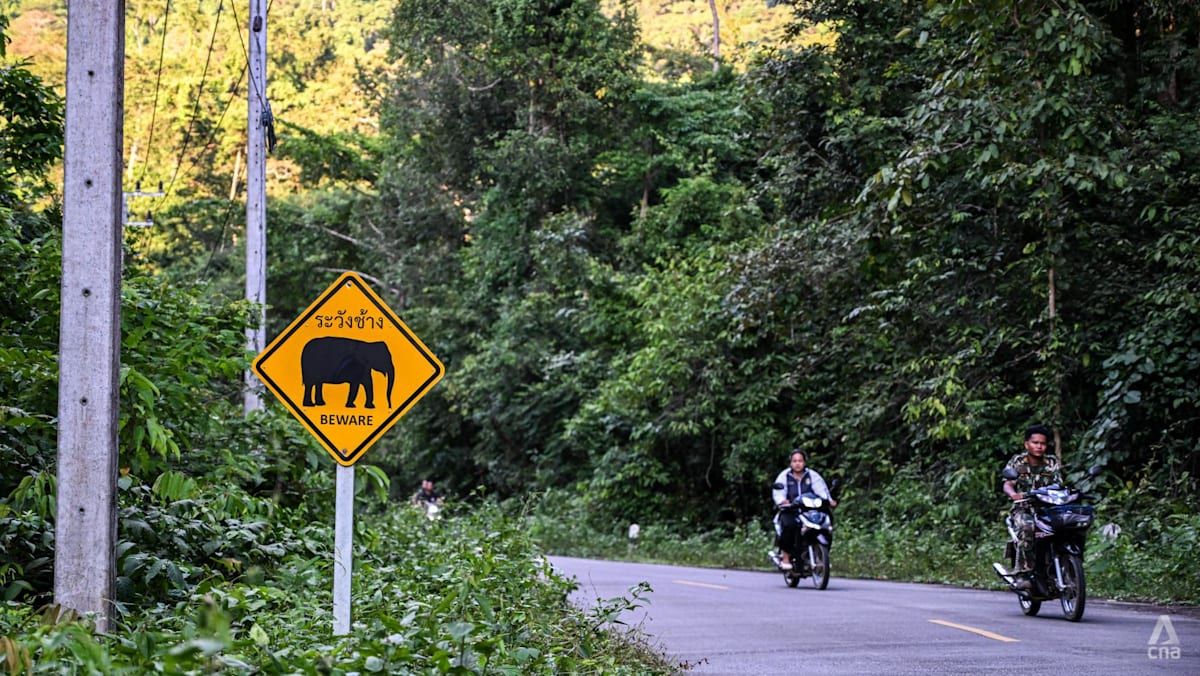
Beyond human communities, the reservoir project endangers a critical wildlife corridor utilized by more than 100 wild elephants navigating seasonal feeding routes across the Eastern Forest Complex, according to senior Department of National Parks veterinarian Supakarn Kaewchot.
Mahidol University associate professor Rattanawat Chaiyarat and animal hospital director Padet Siridumrong both warned that disrupting generational migratory paths will likely fracture herd cohesion, drive elephants into agricultural zones, and escalate human-wildlife conflicts.
Rubber farmer Silchai Sae Jia, aged 73, expressed deep frustration over the persistent threat of elephants damaging his plantation and frightening workers, fearing that losing surrounding natural habitat will eventually render his property entirely uninhabitable despite the proximity of a massive reservoir view.
Reporting by Policy-Wire (PW)