



The Edelstam Prize and the Politics of International Legitimacy
Conflicts are rarely shaped by events on the ground alone. How they are understood, interpreted and presented to the outside world can be equally consequen...

Conflicts are rarely shaped by events on the ground alone. How they are understood, interpreted and presented to the outside world can be equally consequential. In an era when international opinion increasingly influences diplomatic relationships and political legitimacy, the recognition of individuals associated with domestic conflicts carries significance beyond the recipients themselves. The 2026 Edelstam Prize awarded to Baloch activist Mahrang Baloch offers an important case in this regard. Presented by its organisers as recognition of human rights advocacy, the award also brings into focus the complex relationship between political activism, internal security and the internationalisation of domestic conflicts. For Pakistan, this debate is particularly significant because Balochistan’s challenges extend beyond law and order, touching questions of political inclusion, national security, regional connectivity and economic development.
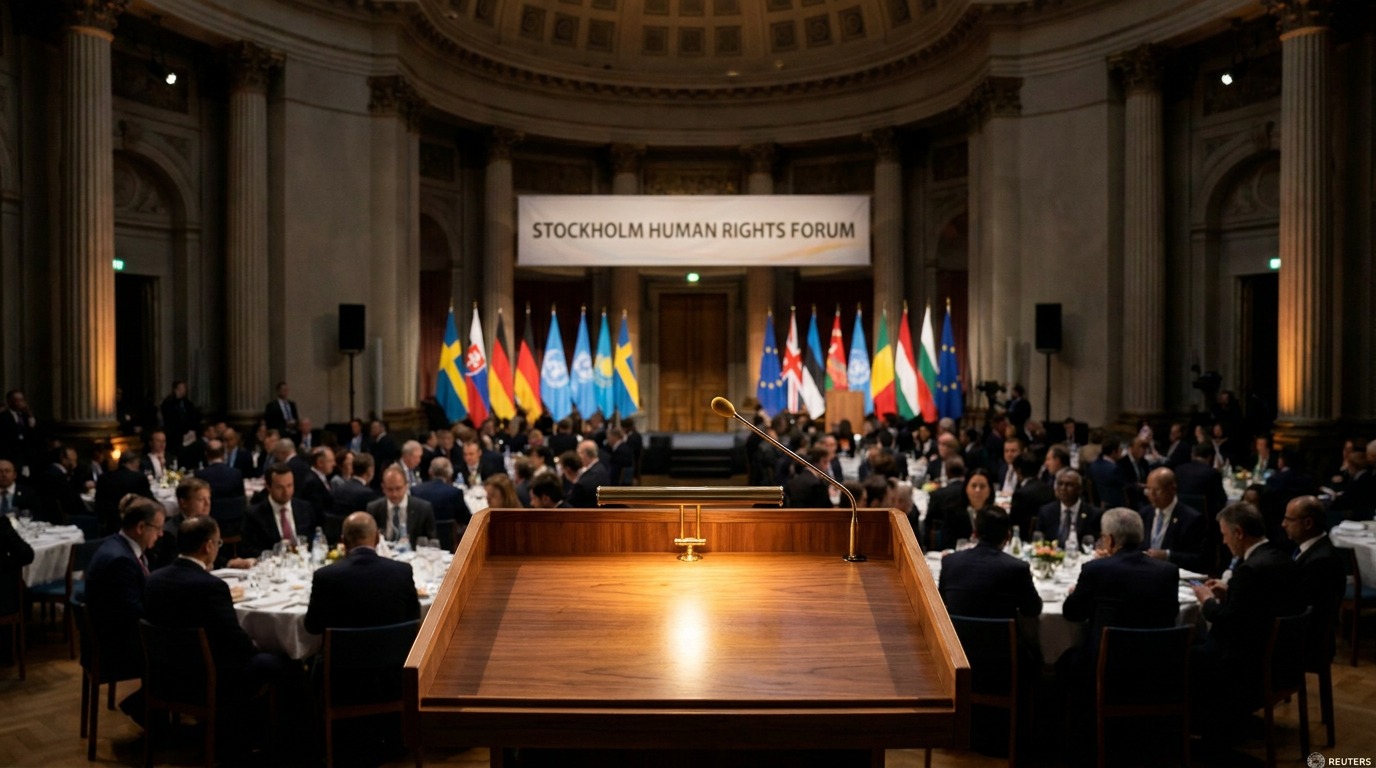
The Edelstam Foundation announced on 24 November that Mahrang Baloch would receive its 2026 prize for what it described as her courage in defending human rights and advocating for victims of enforced disappearances. The ceremony is scheduled for 3 December in Stockholm. The foundation has also criticised her conviction, describing the proceedings as a “faceless trial” and calling for her release. These are serious claims, and they deserve examination against the legal record rather than acceptance or rejection solely on the basis of the organisation’s assessment. The foundation itself states that an appeal against the sentence has been admitted by a division bench of the Balochistan High Court for regular hearing. That judicial process is therefore an important part of the picture.
International awards are not merely ceremonial gestures. They confer visibility, credibility and a degree of moral authority on the individuals and causes they recognise. In this sense, they can influence how a domestic political dispute is understood by foreign governments, international organisations, media and advocacy networks. Political scientists have long examined this process through the concept of normative power: the ability to shape political outcomes by establishing which values, narratives and actors receive international recognition. Such influence does not necessarily mean that an award is politically directed or that its organisers have an ulterior motive. It does, however, mean that the selection of a recipient and the language used in the citation can have consequences beyond the stated purpose of honouring an individual.
The central question, therefore, is not whether human rights deserve international attention. They do. The more consequential question is whether the full complexity of Balochistan’s situation is being represented. Enforced disappearances, allegations of unlawful detention and demands for accountability are matters that Pakistan must address through transparent investigations, due process and credible institutional mechanisms. Families seeking information about missing relatives cannot simply be treated as participants in a security dispute. Their concerns require serious engagement. At the same time, Balochistan is also confronting an armed insurgency in which militant organisations have targeted civilians, security personnel, infrastructure and development projects. A credible assessment must recognise both realities rather than allowing one to erase the other.
This distinction is particularly important when considering the position of the Baloch Yakjehti Committee (BYC) and the state’s allegations concerning its leadership. In August 2024, DG ISPR Lieutenant General Ahmed Sharif Chaudhry described the BYC leadership as a “proxy of terrorist organizations, illegal spectrum, and criminal mafias”, alleging that its activities helped undermine security operations and development projects. In a separate briefing on 23 May 2025, he described Mahrang Baloch as a proxy for terrorists and argued that the conflict was being driven by India rather than representing a broader Baloch struggle. These statements represent the military’s official assessment; they should be understood as allegations by state authorities, not as a substitute for independently tested evidence. Equally, international recognition of an activist should not be treated as proof that every claim made by or on behalf of that activist is beyond scrutiny.
The challenge for policymakers and international observers is to avoid collapsing distinct categories into one another. Peaceful political mobilisation is not terrorism, and criticism of state policy is not inherently disloyalty. Equally, the language of human rights cannot be used to place violence beyond accountability or to obscure the activities of armed groups. The responsibility of the state is to distinguish between peaceful dissent and criminal conduct through evidence and law. The responsibility of international organisations is to apply the same standard when evaluating allegations, recognising that the security environment in which activism takes place can be complicated without making human rights protections any less important.
The wider regional context adds another dimension. Pakistan has repeatedly raised concerns about external support for militant violence in Balochistan and Khyber Pakhtunkhwa. In its 20 November response to Indian remarks at the United Nations concerning Pakistan’s mineral resources, the Foreign Office reiterated its position that India sponsors terrorist activities intended to undermine Pakistan’s stability and obstruct development. India rejects such allegations. These competing claims form part of a broader regional contest in which security, economic interests and international narratives increasingly intersect. They should be assessed through evidence, but they cannot be separated from the strategic environment surrounding Balochistan.
That environment is becoming more consequential as Pakistan seeks to develop its mineral resources, strengthen regional connectivity and attract investment. Balochistan’s geography gives it significance for projects linking Pakistan with the Gulf, Central Asia and wider international markets. Its mineral potential, including major copper and gold deposits, could contribute to national growth and create employment opportunities for local communities. But investment depends on more than resource availability. It requires security, public confidence, predictable governance and a sense among local populations that development will translate into tangible improvements in their lives. Any sustained instability can therefore impose costs that extend well beyond the province.
Recent security developments underline the seriousness of the challenge. On 26 November, ISPR reported that security forces had killed 12 militants in four intelligence-based operations in Nushki, Sibi, Panjgur and Kech between 20 and 23 November. The military described the militants as belonging to an India-backed network. Such claims reflect the state’s stated security assessment, while the continuing violence demonstrates the scale of the threat confronting the province. The response, however, cannot be limited to security operations alone. Counterterrorism measures must be accompanied by stronger civilian institutions, improved public services, economic opportunity and political channels through which grievances can be addressed.
For Pakistan, the most effective response to international criticism is not to contest every award or question every organisation’s motives. It is to strengthen the credibility of its own institutions. Where allegations of disappearances or unlawful treatment arise, transparent inquiries and timely legal processes can reduce the space for misinformation and build public confidence. Where individuals are accused of involvement in violence, the evidence should be presented through fair and open judicial proceedings. The distinction matters: a state confident in its legal and political institutions has less need to rely on competing narratives to establish its position.
The Edelstam Prize should therefore be viewed neither as a verdict on Pakistan nor as an event that can be dismissed without reflection. It is a reminder that the international perception of Balochistan is shaped not only by militant violence and geopolitical competition, but also by the state’s response to legitimate public concerns. Pakistan has a clear interest in preventing the internationalisation of its internal security challenges from becoming a substitute for an informed understanding of the province. Yet that objective will be achieved most effectively through evidence, institutional transparency and visible progress on the ground.
Ultimately, the question is not who succeeds in presenting the most persuasive narrative abroad. It is whether the people of Balochistan experience greater security, justice and opportunity at home. International recognition may influence perceptions, but durable legitimacy is built through governance. For Pakistan, that remains the most important strategic response.
