


Tennessee’s High-Stakes Weather Gamble: When Spectacle Meets Storm Front
POLICY WIRE — Nashville, TN — The rumble that descends upon Middle Tennessee this weekend won’t just be the thundering horsepower of NASCAR machines, but the atmospheric kind—a fickle, heavy...

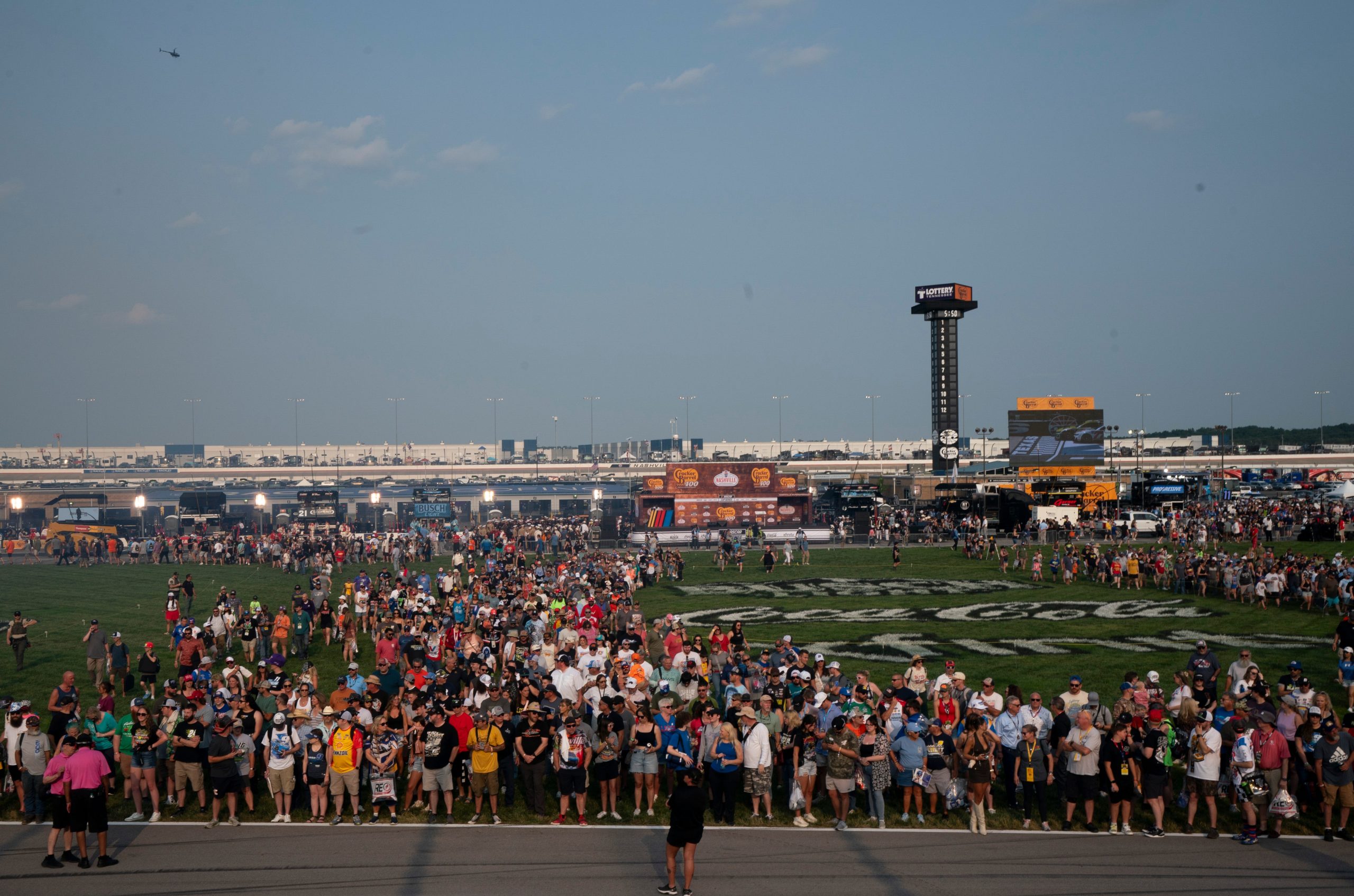
POLICY WIRE — Nashville, TN — The rumble that descends upon Middle Tennessee this weekend won’t just be the thundering horsepower of NASCAR machines, but the atmospheric kind—a fickle, heavy breath of nature threatening to drench a meticulously choreographed economic spectacle. A sudden deluge, a flash of lightning, and the intricate dance of millions in tourism dollars, media exposure, and raw athletic prowess could all be washed into a logistical quagmire. It’s a familiar narrative for anyone tracking the ever-increasing cost of weather volatility, not just on far-flung agricultural lands but on the slick asphalt of our most commercialized pastimes.
Organizers for the much-anticipated Cracker Barrel 400 at Nashville Superspeedway aren’t just scanning lap times; they’re fixated on NOAA radar, a modern oracle determining fortunes. The forecast isn’t exactly painting a picture of blue skies and sunshine, rather a weekend draped in an 80% chance of showers and thunderstorms on Friday, potentially disrupting practice and qualifying heats for the Allegiance 200 NASCAR CRAFTSMAN Truck Series and the Sports Illustrated Resorts 250 NASCAR O’Reilly Auto Parts Series. By Sunday, when the big engines truly roar, the probability hovers stubbornly around 60%, a percentage that could keep more than just umbrellas aloft.
And it’s not just the race cars in peril. There’s a side dish, literally and figuratively, with the season’s first Full Moon Pickin’ Party at Percy Warner Park—a bluegrass tradition that typically draws its own crowd, looking for a different kind of thrumming. But bluegrass, like high-octane racing, often struggles to deliver its particular charm under a driving rain or the threat of a thunderclap.
“Nashville’s economy thrives on events like these. They’re critical,” Mayor John Cooper remarked recently, his tone conveying a pragmatic awareness of the stakes involved for a city that’s increasingly reliant on its entertainment juggernaut. “We’ve invested heavily in infrastructure, but nobody—and I mean nobody—has full control over the skies.” His point? You can build state-of-the-art facilities, you can market the daylights out of an event, but you can’t exactly negotiate with Mother Nature. That’s a lesson being learned with increasing regularity around the globe, as weather patterns shift with unnerving speed. New Mexico’s ephemeral downpours might offer a fleeting relief from drought, but an organized chaos of rain over a major sporting event in Tennessee spells nothing but headaches and fiscal worry.
The National Weather Service’s Alexandra Holley put it plainly: “Scattered to numerous thunderstorms are forecasted for this evening and Saturday. Sunday precipitation and thunder chances look to peak before the green flag flies, but lightning is still a concern for the pre-race festivities.” It’s that pesky lightning, not just the rain, that forces an entire sport, thousands of spectators, and hundreds of millions in economic activity into an anxious holding pattern. One bolt, — and safety protocols mean everyone clears out. Instantly.
Because, for all the pageantry — and excitement, these events are immense economic engines. A single NASCAR Cup Series race weekend can inject an estimated $75-100 million into the local economy, according to various sporting economic impact studies. Think of the hotels, the restaurants, the gas stations, the merchandise vendors—each of them hanging on Holley’s pronouncements like stock traders monitoring market fluctuations. These aren’t just numbers on a balance sheet; they represent countless temporary jobs and a tangible ripple effect through the local service industry.
This localized gamble on clear skies in Tennessee, in an odd, distant parallel, echoes the geopolitical strains seen elsewhere—how delicate logistical chains and economic stability hinge on factors often beyond direct control. Imagine, for instance, how an unexpected monsoon or an extended drought in a nation like Pakistan can upend entire agricultural cycles, causing severe economic instability and mass displacement. That’s an extreme comparison, granted, but the underlying vulnerability to environmental unpredictability is a shared theme. While NASCAR simply faces delays, in parts of South Asia, these weather shifts mean hunger, migration, and societal unrest.
Tennessee Governor Bill Lee, when asked about contingency planning for state-supported tourism ventures in a changing climate, offered a broader, almost philosophical view. “We support robust tourism; it’s a bedrock of our state,” he stated. “But we’re also learning that resilience isn’t just about good roads. It’s about adaptive strategies, embracing technology, and being ready to pivot when circumstances—environmental or otherwise—demand it.” It’s a dry observation, devoid of theatricality, yet it speaks volumes about the practical challenges facing public officials everywhere. You plan, you prepare, — and you pray the sky holds off long enough.
What This Means
The fate of a NASCAR race, ostensibly a mere sporting event, becomes a poignant mirror reflecting larger policy and economic anxieties. For one, it highlights the increasing financial fragility of outdoor spectacles in an era of unpredictable weather. Governments — and event organizers pour millions into these ventures, yet remain hostages to atmospheric caprice. It forces questions about climate change adaptation funds—not just for agricultural resilience in Pakistan but for major entertainment hubs like Nashville. Should event insurance become a quasi-public utility, or are municipalities expected to absorb the financial hits of climate-influenced cancellations?
Economically, the impact of weather-related cancellations isn’t just a loss of ticket sales. It’s the missed wages for hospitality workers, the lost inventory for concessionaires, the dimmed reputation of a city trying to project itself as a reliable destination. This micro-event at Nashville Superspeedway is a microcosm of a larger gamble played out on a global stage: can our socio-economic structures—so accustomed to a predictable climate—adapt swiftly enough to what’s now becoming the unpredictable norm? The answer, at least for this weekend in Tennessee, depends on a series of cold fronts and warm fronts, converging over a single, very fast, racetrack. It seems even the grandest spectacles must now account for the most elemental forces.