


Tehran Throws Cold Water on Paris’s Strait Plan: Sovereignty Before Safety?
POLICY WIRE — Tehran, Iran — It turns out not everyone craves international assistance—especially when it involves a stretch of water through which roughly a fifth of the globe’s oil supply...

POLICY WIRE — Tehran, Iran — It turns out not everyone craves international assistance—especially when it involves a stretch of water through which roughly a fifth of the globe’s oil supply moves daily. While Paris was busy orchestrating a grand coalition for maritime security and mine-clearing in the Strait of Hormuz, Tehran, with characteristic bluntness, gave the notion a decisive thumbs down. The diplomatic outreach, framed as a measured approach to cool a perpetually simmering pot, collided head-on with Iran’s unyielding doctrine of self-reliance and regional authority. Forget the pleasantries; Iran sees external security missions, even those couched in collaborative language, as little more than thinly veiled encroachments.
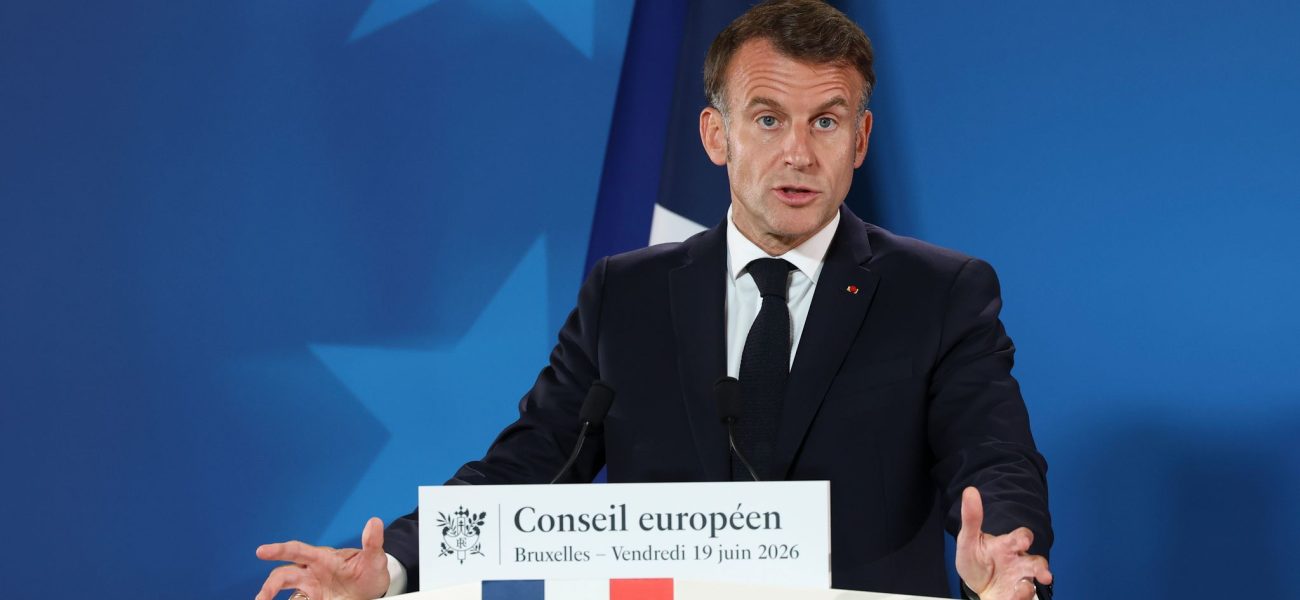
French diplomats, sources suggest, had hoped for a different outcome. They’ve been keen on an alternative to the heavy-handed, American-led presence in the Gulf—something softer, more European, perhaps less provocative to Tehran’s sensitivities. But even this olive branch, if you can call it that, proved too bitter for Iranian palates. [QUOTE_PLACEHOLDER] Iran doesn’t require any foreign intervention for the security of its waters, the nation’s Foreign Ministry spokesperson Abbas Mousavi made clear. And that, dear readers, really says it all.
It’s not just about mines. This is about dominion, about who calls the shots in a waterway that’s been the stage for countless geopolitical dramas. Iran considers such proposals as provocative and unnecessary, reinforcing its conviction that the security of its own backyard—and a rather significant, energy-rich backyard it’s—is exclusively its own prerogative. You see, the French proposal, however well-intentioned or strategically nuanced it may have been from a European perspective, landed like a lead balloon in Tehran. It was seen as just another attempt by outside powers to meddle, to assert influence where Iran believes only its writ should run. We’re talking ancient grudges — and modern power plays here.
This rejection didn’t come out of nowhere. Tensions in the Gulf have been simmering, often boiling over, for months now. Attacks on tankers—their origins often murky—and the unfortunate downing of a US drone haven’t exactly fostered an environment of trust. So when France suggests an international group to clear potential obstacles (mines, to be precise), Iran views it not as a helping hand, but as an infringement, an implicit questioning of its capabilities and sovereignty. It’s a perception problem, alright, but one deeply rooted in decades of suspicion — and power imbalances. They’ve their reasons.
Because ultimately, Iran fears any foreign military presence in the region, regardless of its origin, with deep suspicion. It’s not personal against the French, though historical ties aren’t exactly butter smooth. It’s systemic. It’s about not wanting to share control over a geopolitical choke point. Analysts across the board would agree: about one-fifth of the world’s oil supply passes through the Strait of Hormuz, a sobering figure backed by numerous sources, including the U.S. Energy Information Administration’s analysis from 2022. This statistic alone frames the Strait’s importance, turning any minor incident into a potential global economic tremor. You can bet policymakers in London — and Tokyo aren’t sleeping easy about this ongoing diplomatic sparring.
But the ramifications stretch even further, impacting regional stakeholders like Pakistan. Historically, nations within the broader Muslim world, including Pakistan, have consistently called for de-escalation and dialogue in the Persian Gulf. They understand intimately that any unchecked escalation directly threatens their own economic stability and national security. They’ve watched this theater unfold for decades, worried about how easily things could get out of hand. And Pakistan, positioned on the Arabian Sea, literally looks towards these fraught waters, understanding that stability there’s key to its own commercial shipping routes and regional trade relationships.
📄 POLICY WIRE WHITEPAPER PUBLISHED: PAKISTAN'S NATIONAL SECURITY POLICY PRIORITIES
👉 READ BY CLICKING HEREThere’s also an older, unstated threat underpinning Iran’s stance: the implied, not-so-subtle warning that if it cannot export its oil, no other country in the region should be able to either. It’s a desperate kind of leverage, perhaps, but effective in concentrating international attention. Iran’s navy routinely flexes its muscles, staging drills that serve as loud, splashy reminders of its military capabilities in the Strait. And it hasn’t hesitated to tell past international outfits to mind their own business. The recent French offer joins a long line of rejected proposals.
What This Means
Tehran’s brisk rejection isn’t just a snub; it’s a recalibration of geopolitical friction. Politically, it signals Iran’s continued resolve to assert unilateral control over its claimed territorial waters and airspace, viewing even benevolent international efforts as challenges to its sovereignty. It solidifies a long-held stance that external interference, regardless of its purported benefits, invariably serves to destabilize the region or undermine Iranian authority. It effectively hobbles attempts by European powers, like France, to craft an independent, de-escalatory foreign policy separate from Washington’s maximalist pressure.
Economically, the message is equally stark. It reaffirms the inherent instability in the world’s most critical oil chokepoint. By refusing international assistance for demining, Iran implicitly elevates the perceived risk of navigation for commercial shipping. Insurers will take note. Freight costs could tick up. And while an actual closure of the Strait remains a doomsday scenario, the persistent shadow of an incident will weigh on global energy markets. This isn’t just about security; it’s about setting the rules of engagement, or rather, rejecting any rules that aren’t of its own making. And it further underscores the complex dance between regional pride and the undeniable reality of global energy dependency.
But make no mistake; this wasn’t a casual dismissal. It was a strategic, if perhaps self-isolating, maneuver by a state deeply entrenched in a struggle for regional preeminence. And it further complicates efforts to lower the temperature in the Gulf, potentially leaving a vacuum that other, less diplomatic, forces might seek to fill. After all, diplomacy is always a tightrope walk. Sometimes, however, a state just prefers to walk alone, even on a narrow, heavily mined path. International alliances, it seems, have their limits.