


The Rising Anti-Taliban Resistance in Northern Afghanistan
The recent attack in Faizabad, the capital of Badakhshan province, has brought a clear reality back into focus: Afghanistan under the Taliban is nowhere near as peaceful or stable as the regime...

The recent attack in Faizabad, the capital of Badakhshan province, has brought a clear reality back into focus: Afghanistan under the Taliban is nowhere near as peaceful or stable as the regime claims. When fighters from the Afghanistan Freedom Front launched rockets and direct armed assaults on the provincial governor’s office, they hit the heart of the Taliban’s local power structure. The Taliban routinely tell the world that they have total control over the country and that war is entirely over. However, when anti-Taliban fighters can coordinate and carry out high-profile strikes on well-defended government centers in major northern cities, that narrative falls apart.
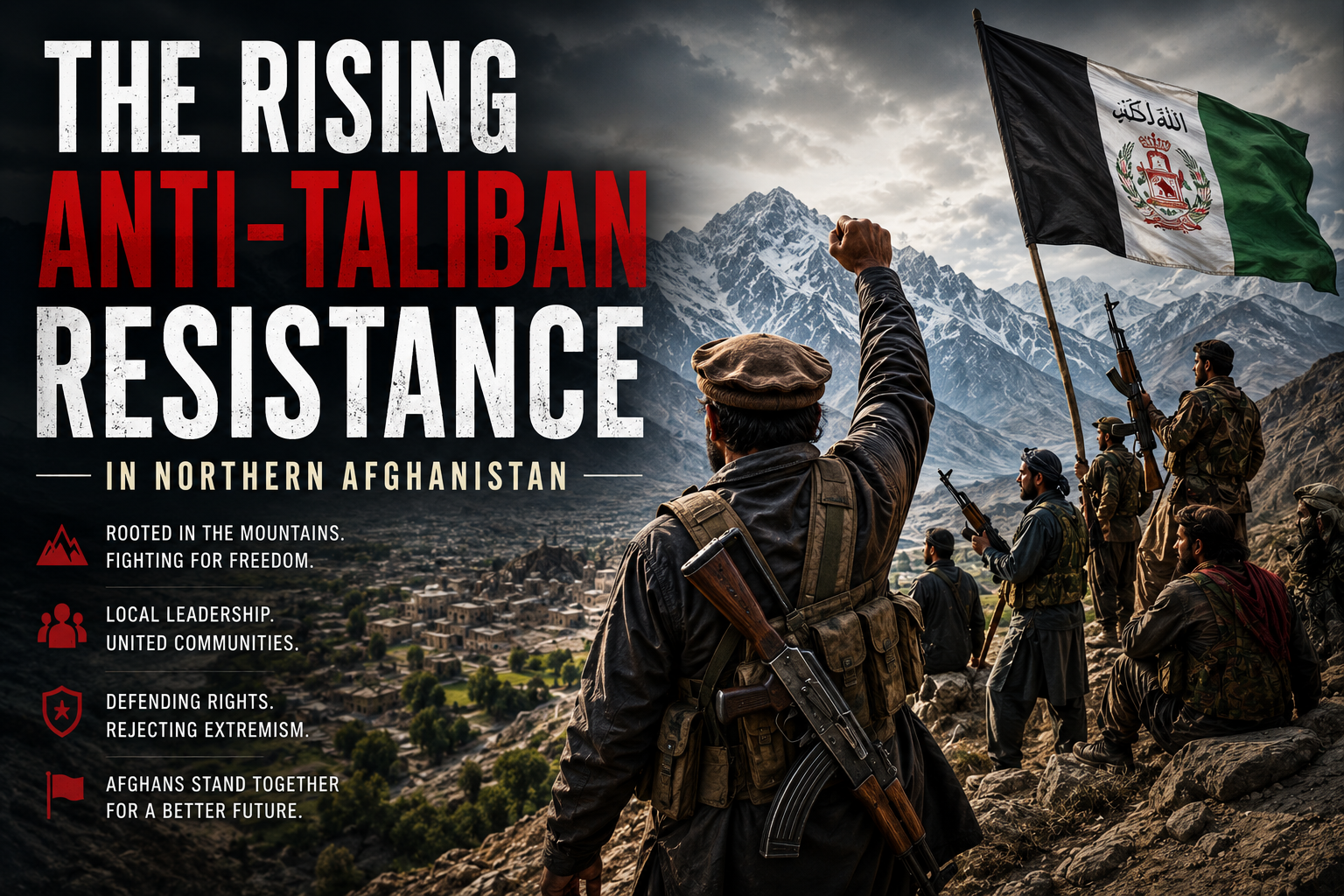
Instead of bringing genuine nationwide peace, the Taliban’s harsh governance is actually fanning the flames of fresh violent resistance. Badakhshan, located in northern Afghanistan, has turned into a major hub for anti-Taliban operations. Resistance here is not limited to sporadic firefights in remote mountains; it includes the targeted assassinations of high-ranking Taliban officials, such as the provincial director of information and culture and the mayor of Faizabad. Add in persistent ground clashes and rocket attacks in outlying areas like the Zebak district, and a clear pattern emerges. The Taliban do not possess the political legitimacy or the practical military capacity to secure the region, let alone maintain genuine public order.
The fundamental problem with the Taliban’s approach to ruling Afghanistan is that they rely purely on military dominance and ideological force while completely ignoring the needs and rights of the population. A healthy, stable nation relies on basic political freedoms, an inclusive government that represents diverse ethnic groups, economic opportunities, and fundamental human rights, especially for women and minority populations. The Taliban have systematically dismantled all of these components.
By marginalizing local populations and stripping citizens of their basic rights, the regime has created widespread anger and frustration. People who feel completely shut out of their country’s political future, economically starved, and constantly threatened by a heavy-handed religious police force naturally turn toward resistance. In places like Badakhshan, where local history and ethnic dynamics already create tension with the Taliban’s central leadership, oppressive governance does not create obedience, it creates armed opposition.
Whenever a major security breach happens, the Taliban’s response reveals their deep insecurity. Instead of acknowledging security failures or addressing the political grievances driving the violence, the regime falls back on brute force and total secrecy. The regime immediately shuts down communication lines, restricts local media, and attempts to hide the reality of attacks from the public. Official Taliban statements routinely minimize casualties, deny that attacks ever took place, or claim that anti-Taliban groups have been entirely wiped out. Furthermore, the regime responds to security failures by punishing local communities, conducting arbitrary arrests, and increasing surveillance on ordinary citizens.
This pattern of secrecy and denial is deeply telling. A government that is genuinely secure, stable, and backed by its people does not need to hide security incidents or constantly deny casualties. By treating the public with constant suspicion and trying to control every piece of news, the Taliban behave less like a national government and more like an occupying force keeping a hostile population under control.
The strike on Faizabad exposes the severe limits of relying on brute force to run a country. You can force people into silence for a short period using guns and intimidation, but you cannot build long-term stability without economic progress, international recognition, and the consent of the governed. Under Taliban rule, Afghanistan’s economy has largely collapsed, leaving millions dependent on international aid.
Internationally, no major country has officially recognized the regime, keeping Afghanistan isolated from global trade, banking, and diplomatic channels. At the same time, the regime continues to enforce draconian restrictions, such as banning girls from school and women from working, which destroys the country’s economic potential and alienates the public even further.
An isolated country with a ruined economy and an unhappy population is inherently fragile. The increasing frequency of coordinated attacks by groups like the Afghanistan Freedom Front proves that the regime’s control is brittle. As long as the Taliban continue down this path, refusing to share power, denying basic human rights, and hiding the truth behind state propaganda, they will remain trapped in a cycle of instability. Resistance will continue to grow, proving that authoritarian force can enforce quiet for a moment, but it can never deliver true security or prosperity to the Afghan people.
Author