


Taiwan’s Tightrope: Rubio Echoes Old Lines as Tensions Simmer
POLICY WIRE — Washington D.C. — Another Tuesday, another pronouncement from the marble halls of Capitol Hill about Asia-Pacific stability. One might’ve expected, or perhaps even hoped...

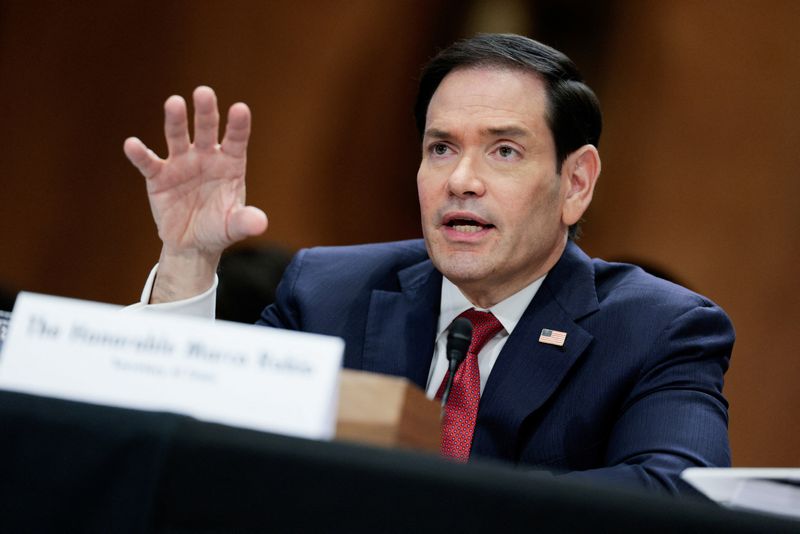
POLICY WIRE — Washington D.C. — Another Tuesday, another pronouncement from the marble halls of Capitol Hill about Asia-Pacific stability. One might’ve expected, or perhaps even hoped for, some fresh thinking—some innovative twist on Washington’s time-honored but increasingly fraught posture concerning Taiwan. Instead, the message out of Senator Marco Rubio’s office landed with all the novelty of yesterday’s newsprint: essentially, folks, settle down; there’s no new plot line here. It’s the same old tune, hummed once more, just a little louder perhaps, because the drums across the strait have certainly picked up their pace.
It’s this recurring rhythm of reaffirmation that makes you wonder who exactly these statements are meant to soothe. The message of an unchanged U.S. policy toward Taiwan—that decades-long dance of strategic ambiguity that’s been Washington’s stock-in-trade—feels less like reassurance and more like an exasperated sigh. Are we calming Beijing? Or perhaps trying to reassure Taipei without overtly poking the dragon? It’s a delicate diplomatic ballet, one that fewer and fewer people seem convinced is going to end without someone tripping over their own feet.
And let’s be real, the context for these boilerplate assurances couldn’t be murkier. The globe’s a mess right now. You’ve got hot spots popping up all over, from Eastern Europe to the Middle East. Beijing, for its part, isn’t just quietly wishing for Taiwan’s reintegration; it’s explicitly stated its aims and beefed up its capabilities to match. That’s not exactly the backdrop for business as usual, is it? Yet, we keep getting these nods — and winks about steadfast principles. Policy as usual, they say. But ‘usual’ keeps getting redefined every other day, don’t it?
But when you’re looking at things through the lens of places like Pakistan, for instance, a US stance on Taiwan isn’t just about cross-strait relations. It’s about America’s overall commitment — and consistency in global power plays. South Asian nations, sitting cheek-by-jowl with an ever-expanding Chinese influence, observe Washington’s every move in the Pacific. They watch how America manages its allegiances—and its rivals. A wobbly stance, or one perceived as such, doesn’t just affect Taipei; it ripples across Islamabad and Dhaka, influencing regional equations, arms purchases, and strategic alliances.
They ask, what does it mean for us if Beijing grows bolder? What if an economic powerhouse like Taiwan, which provides over 90% of the world’s most advanced semiconductor chips, according to a 2021 report from the Semiconductor Industry Association, were brought under different governance? The global economic fallout from such an event would be colossal, a tidal wave felt from Karachi to Canberra. But we aren’t talking hypotheticals anymore, are we? The mere potential for disruption has economies — and supply chains in knots. It’s this massive interconnectivity that makes the American approach here more than just a localized foreign policy issue; it’s a global determinant. The stakes, to put it mildly, aren’t low.
So, when Senator Rubio simply states [QUOTE_PLACEHOLDER], or articulates Washington’s unchanging commitment [QUOTE_PLACEHOLDER], what does it genuinely convey in this era of twitchy international diplomacy? It sounds like an attempt to draw a line in the sand without getting any grit between your toes, or trying to manage expectations while doing precious little to reset them. You can’t just trot out the old playbooks and expect the outcomes to remain constant when every other variable has gone completely haywire. It’s not how the world works anymore, if it ever did.
We’ve heard the same sentiments, often word for word, from various U.S. administrations. Republicans — and Democrats alike cling to this ‘strategic ambiguity’ like a political life raft. But the waters around that raft are getting awfully choppy, — and China isn’t shy about rocking the boat. And let’s face it, they’re not always subtle about their growing might, either; just look at some of Beijing’s domestic plays, like its battle against ‘invisible’ eateries that hints at a much deeper regulatory and control drive.
📄 POLICY WIRE WHITEPAPER PUBLISHED: PAKISTAN'S NATIONAL SECURITY POLICY PRIORITIES
👉 READ BY CLICKING HERESome critics suggest these repeated statements serve a domestic political function more than an international one, meant to signal strength and continuity to an American electorate increasingly weary of foreign entanglements—or just plain confused by them. It’s about looking firm without making any dramatic moves that might be construed as escalation. But in a high-stakes poker game, continually checking your hand only works if your opponents actually believe you’ve got something to play. Sometimes, they just call your bluff. It’s a calculated gamble, I guess. Or perhaps, it’s just habit. We’re certainly a creature of habit, as a nation.
But how long can you really maintain a posture of ‘no change’ when everything around you is constantly shifting? It’s like arguing that the weather’s always going to be the same because your thermostat is stuck on one setting. The clouds are gathering, friends. They really are. And some people—many people, I’d say—are starting to feel the drops.
What This Means
Senator Rubio’s reiteration of a ‘no change’ policy on Taiwan, while superficially designed to signal stability, ironically highlights Washington’s predicament. It’s an admission that the foundational elements of this decades-old stance are under immense pressure but Washington isn’t ready, or perhaps able, to articulate a more explicit position. Politically, it grants breathing room by avoiding any inflammatory declarations that could provoke Beijing, which is crucial for managing the fraught US-China relationship.
Economically, it underscores the continuing—and deeply worrying—risk to global supply chains, especially for high-tech manufacturing, that relies heavily on Taiwan. Any genuine shift, perceived or actual, could trigger market volatility worldwide. For nations in South Asia and the broader Muslim world, Washington’s persistent ‘ambiguity’ can be interpreted in several ways: either as a pragmatic diplomatic tool to prevent war, or, conversely, as a reluctance to truly commit to a long-term strategic vision for confronting Chinese expansionism. This lack of explicit commitment can complicate regional decision-making, particularly for those trying to balance strong economic ties with Beijing against security interests tied to Washington.
The ‘no change’ narrative, then, becomes a sort of political default: easy to say, harder to genuinely maintain, and increasingly opaque in its real-world implications. It tells us less about what Washington will do — and more about what it isn’t ready to do just yet.