

Supreme Court’s Seismic Shift: Voting Rights Act Faces Existential Threat, Echoes of Selma Persist
POLICY WIRE — Washington, D.C. — The ghosts of Selma, it seems, are not merely spectral figures haunting memory lanes; they’re now active, if silent, participants in Washington’s latest...

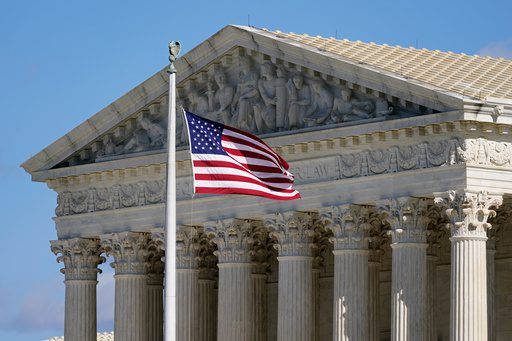
POLICY WIRE — Washington, D.C. — The ghosts of Selma, it seems, are not merely spectral figures haunting memory lanes; they’re now active, if silent, participants in Washington’s latest judicial drama. This week, America’s highest court, with surgical precision, began dismantling crucial fortifications of the Voting Rights Act (VRA)—a legislative bulwark forged in the crucible of outright racial violence and sustained by decades of hard-won battles. The decision, concerning a congressional district in Louisiana, isn’t just about lines on a map; it’s about the enduring, fraught struggle for political power, and who gets to wield it.
At its core, the conservative majority found Louisiana’s second Black-majority district—a contorted entity Chief Justice John Roberts once derisively labeled a “snake” for its 200-mile stretch across disparate communities—relied too heavily on race. Never mind that the district aimed to correct a previously discriminatory map. The implication, thinly veiled, is that striving for racial equity in representation can itself be deemed unconstitutional if it becomes too “conscious” of demographics. And so, the provision known as Section 2, the VRA’s primary weapon against vote dilution, finds itself severely hobbled, its future utility shrouded in judicial ambiguity.
U.S. Rep. Troy Carter, whose own predominately Black New Orleans district feels the immediate tremors, didn’t mince words. “This ruling is about far more than lines on a map — it’s about whether Black Louisianians will have a meaningful opportunity to make their voices heard,” he shot back, his statement echoing through the Capitol’s marble halls. He warned, quite presciently, that the consequences would be “immediate and severe,” placing Louisiana’s two majority-Black congressional districts firmly in the crosshairs of future legal challenges and partisan gerrymandering.
Still, not everyone views this as a setback. For Kevin Roberts, executive director of the conservative advocacy group Heritage Action, the decision marked a return to foundational principles. “The Civil War Amendments were forged at tremendous human cost to secure a constitutional order grounded in equality before the law—not racial classifications,” Roberts averred, articulating a judicial philosophy that often sees color-blindness as the ultimate antidote, even when historical inequities persist. “Today’s decision restores that understanding and reaffirms that the Constitution doesn’t permit sorting Americans by race in the exercise of political power.” One could almost hear the faint applause from state legislative chambers across the country, where Republican-led bodies are now poised to redraw electoral boundaries with renewed vigor.
The timing, naturally, adds a layer of bitter irony. This judicial blow lands barely a month and a half after civil rights luminaries commemorated the 61st anniversary of Bloody Sunday in Selma, Alabama, where state troopers brutalized voting rights marchers on the Edmund Pettus Bridge. That horrific violence shocked the conscience of a nation, spurring the very legislation the Court now finds itself deconstructing. Elena Kagan, speaking for the three liberal dissenters, put it starkly: “The consequences are likely to be far-reaching and grave. Today’s decision renders Section 2 all but a dead letter.”
And so, America, self-proclaimed beacon of democracy, finds its own electoral infrastructure under stress, its foundational promise of equal access to the ballot box increasingly reliant on a judiciary that, for many, seems determined to reinterpret history through a narrow lens. Election law expert Nicholas Stephanopoulos has estimated that nearly 70 of the 435 congressional districts were, until this decision, protected by Section 2’s explicit mandate against racial vote dilution. That’s a substantial chunk of the House that suddenly finds itself on shifting sands.
📄 POLICY WIRE WHITEPAPER PUBLISHED: PAKISTAN'S NATIONAL SECURITY POLICY PRIORITIES
👉 READ BY CLICKING HERESuch domestic developments, frankly, resonate far beyond America’s shores. In nations like Pakistan, for instance, where diverse ethnic and religious groups constantly vie for equitable representation—often against a backdrop of historical grievances and shifting political landscapes—the erosion of established electoral safeguards in a foundational democracy like the U.S. isn’t just distant news. It’s a concerning precedent, a quiet nod to the idea that electoral systems, even those painstakingly built, aren’t immune to retrenchment. The global community watches, discerning not just what America does, but what it permits to be undone within its own borders. (It’s a mirror, isn’t it? One where the reflection grows increasingly complex.) Political stability, it seems, can be as fragile as a developing airline’s finances, where external shocks or internal mismanagement can send even the most established structures into a nosedive. AeroPak’s grounding, after all, wasn’t just about fuel; it was about systemic vulnerabilities.
What This Means
This ruling is a clarion call, signaling open season for partisan mapmakers seeking to solidify power bases. Republican-led states, already embroiled in aggressive redistricting battles, will interpret this decision as a tacit judicial blessing to minimize the electoral impact of Black and Latino voters, who predominantly favor Democrats. The balance of power in the U.S. House of Representatives, always a tightrope walk, could now tilt further. But beyond mere partisan advantage, this decision fundamentally reconfigures the American democratic experiment, shifting the burden of proof for discrimination to an almost insurmountable standard of “intentionality.” The spirit of the VRA, designed to counteract the enduring effects of historical disenfranchisement, has been subtly but definitively undermined. It’s a move that risks exacerbating political polarization and deepening the chasm of mistrust between minority communities and the very institutions meant to protect their rights. For those who believe in an inclusive, representative democracy, this isn’t just a legal skirmish; it’s a profound strategic retreat.
Florida, for example, saw its Senate reverse course momentarily to review the decision before its Republican supermajority pushed forward with a proposed gerrymander designed to expand the GOP’s congressional advantage to as much as 24-4. So, the battle isn’t theoretical; it’s happening right now, in statehouses nationwide. The Supreme Court has, in effect, offered a toolkit to those who would rather engineer electoral outcomes than let the will of a diverse populace determine them. The hard-won victories of previous generations, it seems, must be re-fought by each new one, often against a judiciary that once stood as a bulwark against oppression.