

Sudan: El-Fasher Atrocities Expose Global Neglect
A new report details horrific atrocities by RSF in Sudan's el-Fasher. Despite 8.8M displaced, the world's inaction persists. Uncover the overlooked crisis.

POLICY WIRE — New York, USA — The calendar pages flip, seasons change, and with alarming regularity, another meticulously researched report detailing unspeakable barbarism lands on the desks of officials the world over. This time, it’s from Amnesty International, dissecting the horrors visited upon el-Fasher, Sudan. They’ve laid bare what anyone paying even a sliver of attention already knew: the Rapid Support Forces (RSF) aren’t just fighting a war; they’re perpetrating crimes against humanity. But let’s be honest, who’s still listening?
It’s a pattern we’re all too familiar with. The initial shock, the condemnations – usually muted, sometimes forceful – and then, often, the slow, agonizing fade into the background. Sudan, a nation that has hardly known sustained peace in living memory, is just another casualty in a crowded field of global tragedies. What happened in el-Fasher, particularly between April — and June this year, isn’t complex geopolitical chess. It’s wholesale slaughter, systematic torture, — and the deliberate targeting of civilians based on ethnicity. The report doesn’t pull its punches, documenting witness accounts of women and children killed, homes ransacked, and a population systematically terrorized.
“The depravity documented in el-Fasher isn’t just an internal affair; it’s a global stain that implicates us all through our inaction,” fumed Volker Türk, the UN High Commissioner for Human Rights, in a statement obtained by Policy Wire, likely from a desk overflowing with similar reports. “We’ve seen this script before, time and again, and the world can’t keep looking away, pretending these are distant problems.”
And yet, look away they do. Or rather, they offer rhetorical condemnations while practical action remains elusive. The Sudanese conflict, a sprawling civil war pitting the RSF against the Sudanese Armed Forces (SAF), has plunged a nation already teetering on the edge into an abyss. El-Fasher, once a relatively stable haven for displaced people in Darfur, became ground zero for the RSF’s relentless offensive. These weren’t isolated incidents, you see. Amnesty details how the RSF, alongside allied militias, conducted widespread killings, arbitrary arrests, and mass displacement, sometimes in full view. It’s gritty. It’s horrific. It’s what happens when the veneer of civilization cracks completely.
“This report, chilling as it’s, merely confirms what we’ve long suspected: accountability isn’t optional when you’re dealing with atrocities of this magnitude,” commented State Department Spokesperson Matthew Miller, echoing a sentiment that could be stamped on half a dozen different crises simultaneously. “The international community has a duty to act, but more importantly, to ensure justice for the victims.” Duty, sure. Action? That’s where the policy starts to drift, where the promises unravel.
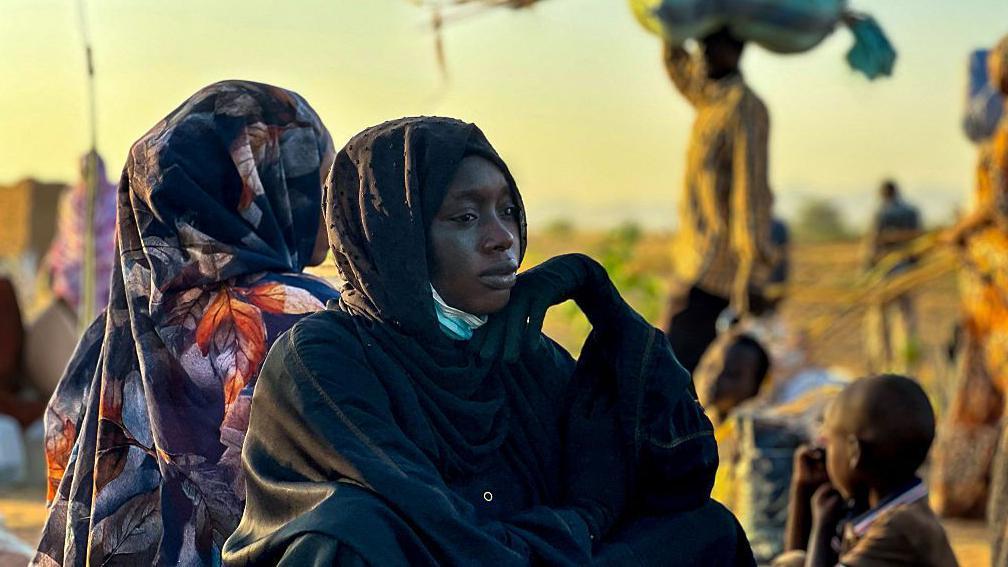
The scale of the humanitarian disaster in Sudan is truly staggering. The UN Refugee Agency (UNHCR) reports that over 8.8 million people have been displaced both within and outside Sudan since April 2023 alone. Think about that: 8.8 million lives uprooted, shattered, pushed into desperation. It’s a statistic that should command front-page attention, but often it’s buried deep, behind headlines about distant elections or more economically strategic conflicts. Because, let’s be real, resources and diplomatic leverage are finite, and some humanitarian catastrophes just don’t capture the global imagination in the same way as others.
What This Means
This fresh batch of revelations from el-Fasher signals more than just the ongoing tragedy in Sudan; it’s a grim barometer of international collective conscience. Politically, it means another deepening crisis point in an already volatile region. For years, the international system has wrestled with the Darfur issue, and now we’re witnessing a repeat performance on a grander scale, with seemingly less sustained political will to intervene effectively. But you know, nations squabble over definitions of genocide while the bodies pile up. It’s frustratingly predictable.
Economically, the impact is catastrophic. Sudan’s infrastructure is pulverized. Its nascent economic prospects, slim as they were, are now nonexistent. We’re looking at decades of reconstruction, provided any stability can ever be established. And where does this leave its neighbors? Countries like Egypt, Chad, and South Sudan bear the brunt of refugee flows, destabilizing already fragile economies and societies. It’s not just a Sudanese problem; it’s a regional calamity with global implications for humanitarian aid — and stability.
But there’s also the matter of the wider Muslim world’s response. While expressions of concern are periodically issued by bodies like the Organization of Islamic Cooperation (OIC), the coordinated, forceful action that might be expected from a collective of nations sharing religious and historical ties has been notably absent. It makes you wonder: Is this another example of intra-faith conflict receiving less immediate solidarity, or simply a reflection of an overwhelmed global response mechanism? Either way, the silence often speaks volumes. The Sudanese conflict underscores a bitter truth about modern conflict resolution: Some tragedies are simply deemed less strategically important, allowing cycles of violence to churn on, largely unmolested. It’s a sad state of affairs, indeed.