

Ukraine’s Drones: Reshaping Modern Warfare
Ukraine's cheap, ingenious deep-strike drones are rewriting the rules of modern warfare. Discover how DIY tech challenges military might and sets a new global precedent.

POLICY WIRE — Kyiv, Ukraine — Forget the precision-guided munitions with their billion-dollar research budgets. Forget the gleaming fighter jets. The raw, brutal truth of Ukraine’s defense against Russia isn’t just about grit—it’s about ingenuity, a whole lot of duct tape, and a grim determination to turn off-the-shelf components into instruments of strategic disruption. It’s the silent hum of something barely more sophisticated than a hobbyist’s project that’s keeping generals on both sides awake at night. These aren’t the weapon systems your daddy knew; this is something far more unnerving for established powers.
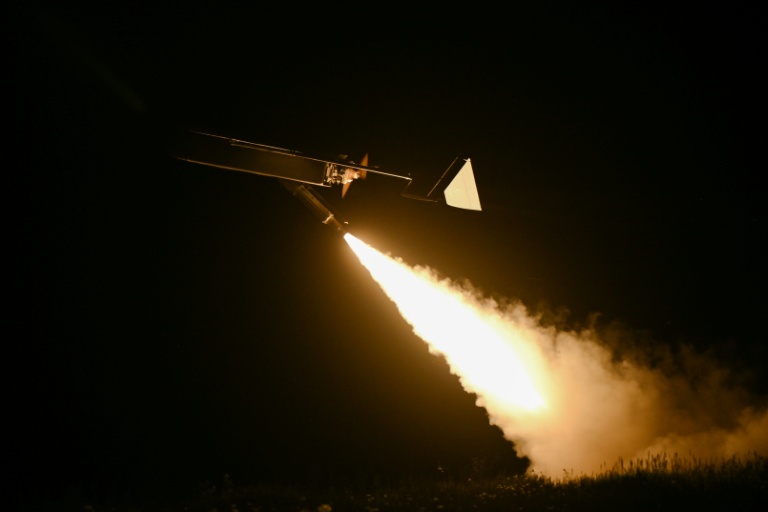
Down narrow corridors and in unassuming workshops across Ukraine, the shadow architects of this new conflict operate. They’re a disparate bunch—IT specialists, engineers, even a few artists who simply refuse to let their country be erased. Their work? To design, build, and deploy a growing armada of deep-strike drones, cheap and cunning, aimed straight at Russia’s nerve centers. They don’t wear flashy uniforms or march in parades; their victories are measured in quiet explosions hundreds of miles from the front, reported tersely by official channels, but screaming volumes to those paying attention.
But the real story isn’t just the drones; it’s the anonymity of the people behind them. Their identities are guarded tighter than Fort Knox, for obvious reasons. They operate with a blend of hacker culture and battlefield necessity, bypassing traditional procurement bottlenecks and defense bureaucracy. And it’s working. The Kyiv Independent reported last year that Russian targets, once considered impregnable, have seen strikes nearly 800 miles from the frontline—targets like fuel depots, airfields, and even command centers. These strikes aren’t designed for overwhelming tactical destruction, but for psychological impact, to demonstrate Moscow’s inherent vulnerability, to erode its citizens’ sense of security. They don’t want to conquer Russia. They want to irritate it into submission.
Because let’s be honest, few defense doctrines predicted this particular brand of asymmetric warfare. Western militaries, geared for conventional engagements against peer adversaries, find themselves squinting at a conflict where a relatively inexpensive drone can ground a multi-million dollar aircraft or ignite an oil refinery. “This isn’t just about adapting technology; it’s about adapting thinking,” noted Oleksii Danilov, former Secretary of Ukraine’s National Security and Defense Council, during a rare public statement last month. “We’ve learned to fight with what we have, not what we wish we had.” His words, steeped in a grim pragmatism, certainly cut to the chase.
And it’s a lesson that resonates far beyond Eastern Europe’s battlefields. Look at the increasing tension points in South Asia, where complex borders and long-standing rivalries provide fertile ground for any innovation that promises an advantage without bankrupting national treasuries. Pakistan, for instance, a nation grappling with its own internal security challenges and a contentious relationship with its neighbor, must be watching these developments with keen interest. The ease with which these relatively low-tech, yet strategically effective, weapons can be procured and deployed is a game-changer for regional powers with constrained defense budgets. It’s not hard to picture similar DIY solutions emerging from the volatile intersections of Afghanistan or the protracted skirmishes along the Line of Control. Who needs an air force when you can assemble a deep-strike capacity in a garage?
Dr. Eleanor Vance, a senior defense analyst at the Royal United Services Institute (RUSI), put it more bluntly: “What we’re witnessing is the commodification of long-range attack capabilities. It strips away the advantages traditionally held by established militaries. If you’ve got internet access — and a soldering iron, you’re almost in the game now. That scares quite a few defense ministries—and it absolutely should.” Estimates suggest that a significant proportion of these Ukrainian deep-strike drones cost less than $10,000 to produce, yet can disable targets worth millions. That’s an absurd return on investment, folks.
They’ve fundamentally changed the calculus of distance. Geography isn’t the impenetrable shield it once was. The drone teams, with their clandestine methods and lean operational structures, aren’t just blowing up enemy infrastructure; they’re blowing holes in outdated assumptions about national defense. This shift isn’t an anomaly; it’s a terrifying template for future conflicts. The question isn’t if others will follow, but how quickly, — and what chaos it’ll unleash on an already jittery globe.
What This Means
The rise of Ukraine’s improvised, deep-strike drone operations signals a significant political and economic recalibration for global security. Economically, it de-escalates the entry barrier for asymmetric warfare, making it more accessible to state and non-state actors alike. This challenges traditional defense industry behemoths, whose expensive, sophisticated systems now contend with swarms of cheaper, smarter adversaries. On the political front, it reshapes deterrence doctrines; what does deterrence mean when a hidden workshop can project power hundreds of miles? States might invest less in conventional air defenses and more in counter-drone technologies and highly localized, rapid response intelligence. it creates new headaches for non-proliferation efforts, as the components are often dual-use and commercially available. Expect increased pressure on tech companies to monitor sales, alongside a likely black market boom. For developing nations—particularly in regions like the Middle East or South Asia, where geopolitical rivalries simmer—this represents a disruptive force that could either level the playing field or ignite unforeseen proxy conflicts. The genie is well — and truly out of the bottle, and it’s buzzing.