

Strickland’s Precipice: UFC 328 and the Unforgiving Calculus of Career Oblivion
POLICY WIRE — NEWARK, NEW JERSEY — It’s not simply the specter of defeat that hovers over Sean Strickland as he prepares to clash with Khamzat Chimaev at UFC 328 this Saturday, May 9th; it’s the...

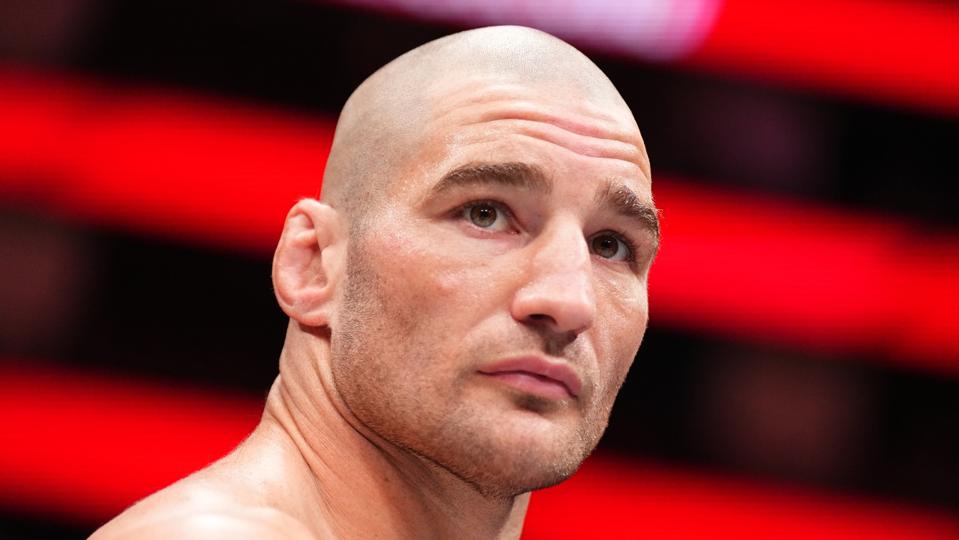
POLICY WIRE — NEWARK, NEW JERSEY — It’s not simply the specter of defeat that hovers over Sean Strickland as he prepares to clash with Khamzat Chimaev at UFC 328 this Saturday, May 9th; it’s the chilling prospect of a career calcification, a public demotion to pugilistic purgatory. The erstwhile champion, known for his abrasive candor and unyielding pressure, isn’t merely fighting for a title shot—he’s battling to retain his very relevance in a sport notoriously unsentimental about its fading stars. This isn’t just another loss on a fight record; it’s a potential career inflection point, a descent into the thankless role of gatekeeper, where one exists only to test the mettle of rising contenders.
Behind the headlines of anticipated fireworks, a stark truth looms for Strickland. The challenge isn’t merely to win; it’s to avoid a specific, profoundly humiliating brand of loss. Chimaev, the Chechen powerhouse now fighting out of Sweden, brings a wrestling pedigree that could dismantle Strickland’s stand-up centric game. And if Chimaev opts for an early psychological gambit—standing and trading blows in the initial rounds, perhaps even winning them—before reverting to his ground dominance, the reverberations could be devastating. It’s a calculated, brutal sequence designed to shatter a fighter’s self-perception, proving superiority in both his opponent’s realm and his own. Such tactical cruelty transcends mere physical damage; it’s an assault on morale, a public evisceration.
Still, Strickland’s path to victory is deceptively straightforward, yet agonizingly difficult to execute: staunch the takedown. His defense rate, hovering around 72% according to UFC statistics, might suffice against lesser middleweights. But Chimaev is no ordinary opponent. Consider his ruthless efficiency against Dricus du Plessis at UFC 319, where he landed a staggering 12 takedowns and maintained control for 22 of 25 minutes. Should Strickland falter in defending even the initial shots, his entire strategic edifice crumbles, leaving him prone to Chimaev’s suffocating top control—a prolonged, inescapable torment that could last the duration of the fight. It’s a psychological cage match as much as a physical one.
“The fight game, at its core, is a meritocracy that devours its own if they show any weakness,” remarked Dana White, UFC President, speaking pre-fight in a candid moment. “For a fighter like Strickland, who thrives on psychological warfare, being on the receiving end of a prolonged mauling… that’s a different kind of wound entirely. It reshapes their narrative, often permanently.”
The potential for a 50-44 or 49-45 scorecard beating, amplified by Chimaev’s own penchant for mid-fight taunting, could flip Strickland’s entire persona on its head. Imagine the vocal trash-talker, pinned — and silenced, his own rhetoric weaponized against him from the top position. That’s a unique torment, a public undoing far more insidious than a close decision loss, however disappointing.
Chimaev, for his part, represents a different kind of global force. His Chechen heritage and Muslim faith resonate deeply across swathes of the Muslim world, including Pakistan and other South Asian nations, where combat sports heroes often transcend mere athletic achievement to become symbols of pride and resilience. A dominant victory for Chimaev wouldn’t just secure his championship aspirations; it would further elevate his burgeoning status as an icon, a figure whose triumphs are felt far beyond the Octagon, particularly among diasporic communities and youth looking for powerful narratives of success. He’s not just fighting Strickland; he’s carrying the hopes of millions.
What This Means
This fight isn’t merely about championship gold; it’s a pivotal moment in the political economy of combat sports. For Strickland, a conclusive, one-sided loss could relegate him to the purgatory of ‘gatekeeper’ status. This isn’t a demotion into obscurity, but rather a functional role within the UFC’s ecosystem: a recognizable, still-dangerous opponent used to vet up-and-coming talent. He’d remain on high-profile cards, a draw due to his inimitable persona, but his path back to a title shot—especially at 35—would become a precipitous uphill battle, requiring an improbable three or four-fight win streak against elite competition. The UFC, ever the shrewd operator, routinely pivots former champions into this role once their direct path to the top becomes mathematically intractable.
For the UFC, a dominant Chimaev performance fuels a potentially massive global star, particularly in untapped markets in the Middle East and South Asia. “The commercial implications of a truly dominant fighter, especially one with a compelling personal story and international appeal, are immense,” observed Dr. Anya Sharma, a sports economist at the University of Westminster, speaking exclusively to Policy Wire. “They become a brand unto themselves, driving pay-per-view buys and merchandise sales, essentially generating significant soft power for the promotion. It’s an investment in a global narrative.” Conversely, a competitive Strickland showing, even in defeat, would underscore his resilience and maintain his value as a marketable commodity. It’s a delicate balance, one the promotion carefully orchestrates.
But make no mistake: for Strickland, this contest against Chimaev isn’t just about the title—it’s about preserving his identity, his standing, and the very trajectory of a career that, while colorful and controversial, has always commanded attention. Losing decisively here means becoming a stepping stone, a professional roadblock, rather than a genuine contender. And for a man whose self-worth is inextricably linked to his pugilistic prowess, that’s a punishment far more acute than any physical blow.