

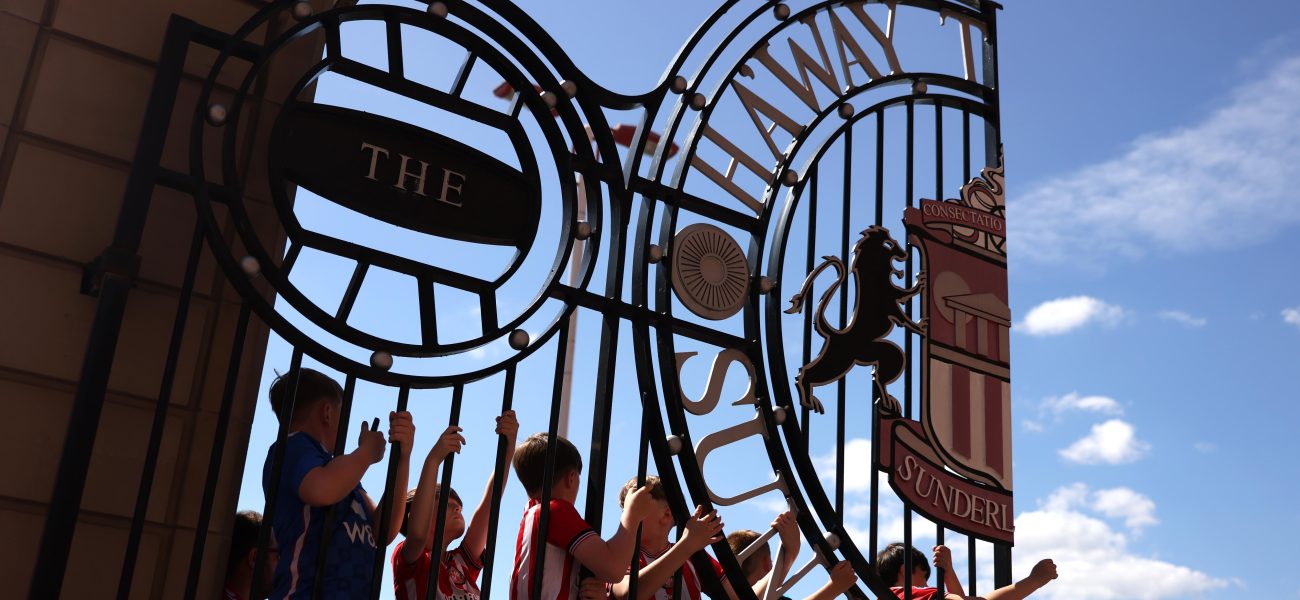
Stadium of Light’s European Dream Shatters Domestic Tranquility in Wearside
POLICY WIRE — SUNDERLAND, England — It wasn’t a G7 summit or a major policy announcement that temporarily redefined marital agreements across Britain’s industrial heartland last Sunday. No, this...

POLICY WIRE — SUNDERLAND, England — It wasn’t a G7 summit or a major policy announcement that temporarily redefined marital agreements across Britain’s industrial heartland last Sunday. No, this seismic shift revolved around a single Premier League match. While heads of state grapple with intricate trade deals, many a domestic calendar faced an unforeseen disruption, wives – as a seasoned observer might note – exhibiting saintly patience as regional football obsession usurped planned anniversary celebrations. A small price, perhaps, for what transpired on Wearside.
For Sunderland, a city where economic resilience has long been etched into its very foundations, the notion of European qualification has traditionally been a distant, almost mythical quest. This wasn’t merely another three points; it was a societal catharsis, a fleeting, precious victory for collective optimism. The local economy, often battling the ghosts of industries past, experienced a jolt of pure, unadulterated elation, proving that sometimes, policy wire headlines aren’t crafted in Westminster, but on the turf of a provincial stadium. [QUOTE_PLACEHOLDER]
May 24th, 2026, already held private significance for many. But the Black Cats, for their faithful, ensured this date became eternally etched in their shared public consciousness. Think of the communal euphoria — an almost religious fervour that gripped the Stadium of Light, transforming it from a mere sporting arena into a crucible of raw emotion. It was, many conceded, nothing short of «magic memories on a sunny Sunday afternoon.»
The build-up had been palpable. Long-standing local sentiment observed that «a rocking Sunderland Stadium of Light has the ability to make a special occasion into an extraordinary one.» And Sunday didn’t disappoint. Spectators packed the stands, eyes fixed on their gladiators, creating an atmosphere that suggested more than just belief; it was a certainty. «The place was absolutely jumping on Sunday; bouncing with a belief that we were about to achieve something that generations of Sunderland supporters have only dreamt about,» noted one ardent observer, perhaps simplifying the deeper psychological underpinning of hope for a region too often dealt a harsh hand.
This wasn’t their fathers’ Sunderland, prone to what supporters wryly refer to as «doing a Sunderland» — snatching defeat from the jaws of victory. The current squad possessed a steely resolve, seemingly «made for the big occasion,» demonstrably able to «handle the pressure when it counts.» Indeed, even when Chelsea threatened to disrupt the carefully choreographed jubilation, clawing a goal back from an unexpected turn of play, a quiet confidence settled over the stands. The feeling? This «team was never going to mess this one up.» And they didn’t. The crowd’s pre-match rendition of the club’s anthem, «Wise Men Say,» was undoubtedly «one of the most vociferous there’s been in years, if not ever, belted out with passion from a crowd who genuinely believed European football was within our grasp.»
But the reverberations extend far beyond the River Wear. Consider the broader implications of such victories on a global stage. The English Premier League, an undisputed titan of modern sports, commands an extraordinary worldwide audience. According to data from Statista, the Premier League attracts a cumulative global audience of over 3.2 billion across 212 territories, making it a powerful vehicle for cultural exchange and economic soft power. This isn’t just about Sunderland; it’s about the emotional export of British football.
And nowhere is this more acutely felt than across the Muslim world, from Cairo’s bustling cafes to Lahore’s packed teahouses, where dedicated fan bases devour every fixture. These communities, often contending with complex political and economic realities, find moments of unity and shared identity in the triumphs and travails of European clubs. A victory like Sunderland’s, albeit for a team perhaps not at the absolute pinnacle of global recognition, resonates with diaspora communities and fuels passionate online discussions, bridging geographical and cultural divides. It’s a reminder that beneath geopolitical complexities, a shared human affinity for sport persists, uniting people in ways few other phenomena can.
📄 POLICY WIRE WHITEPAPER PUBLISHED: PAKISTAN'S NATIONAL SECURITY POLICY PRIORITIES
👉 READ BY CLICKING HERE«You have to take the chance when it’s there,» one proponent of bold ambition declared pre-match, reflecting a broader sentiment that life, like football, demands seizing opportunities. This moment wasn’t merely about football; it encapsulated a community’s willingness to dream big, regardless of historical setbacks. They’d seen previous pushes for Europe «fall at the final hurdle» but this felt different. Permanently, gloriously so.
What This Means
This improbable ascent to European football isn’t just a win for Sunderland AFC; it’s a temporary, yet potent, shot in the arm for civic pride and local economic morale. A run in European competition promises increased tourism, higher local spending on match days, and a renewed sense of global visibility for a region eager to redefine its post-industrial narrative. This is not to diminish the profound economic challenges that remain, but these moments of collective triumph offer invaluable, albeit ephemeral, social capital.
Politically, while rarely acknowledged in policy papers, such successes can serve as an informal barometer of community spirit, providing a necessary counterbalance to the more sombre economic headlines. It’s a unifying force in a society often fragmented. for expatriate communities globally—including substantial populations from Pakistan and other South Asian nations often following English football—such victories strengthen transnational cultural ties and reinforce a sense of shared belonging. Think of how a Premier League match’s outcome can trend higher than political news in certain regions. It can. Because these victories are less about raw statistics — and more about raw emotion, acting as cultural ambassadors.
The club’s management team and their recruitment strategy, focused on acquiring a «squad of not just talented footballers, but fighters, grafters, winners and immensely strong characters who have the shoulders capable of carrying the burden that we all put on them,» demonstrates a strategic foresight applicable beyond the pitch. It reflects a shift towards long-term, sustainable development, a lesson many civic bodies could heed. But one thing is clear: while the immediate glow might fade, the memory of «a day never to be forgotten» will endure, reminding a city, and its global admirers, that against the odds, dreams occasionally do come true.