

Stability First: Why Pakistan’s Core Institutions Still Matter
Pakistan’s political history is defined by cycles of hope and disruption. Charismatic leaders emerge, mobilize public anger, and promise rupture with the past. Yet when crises hit economic shocks,...

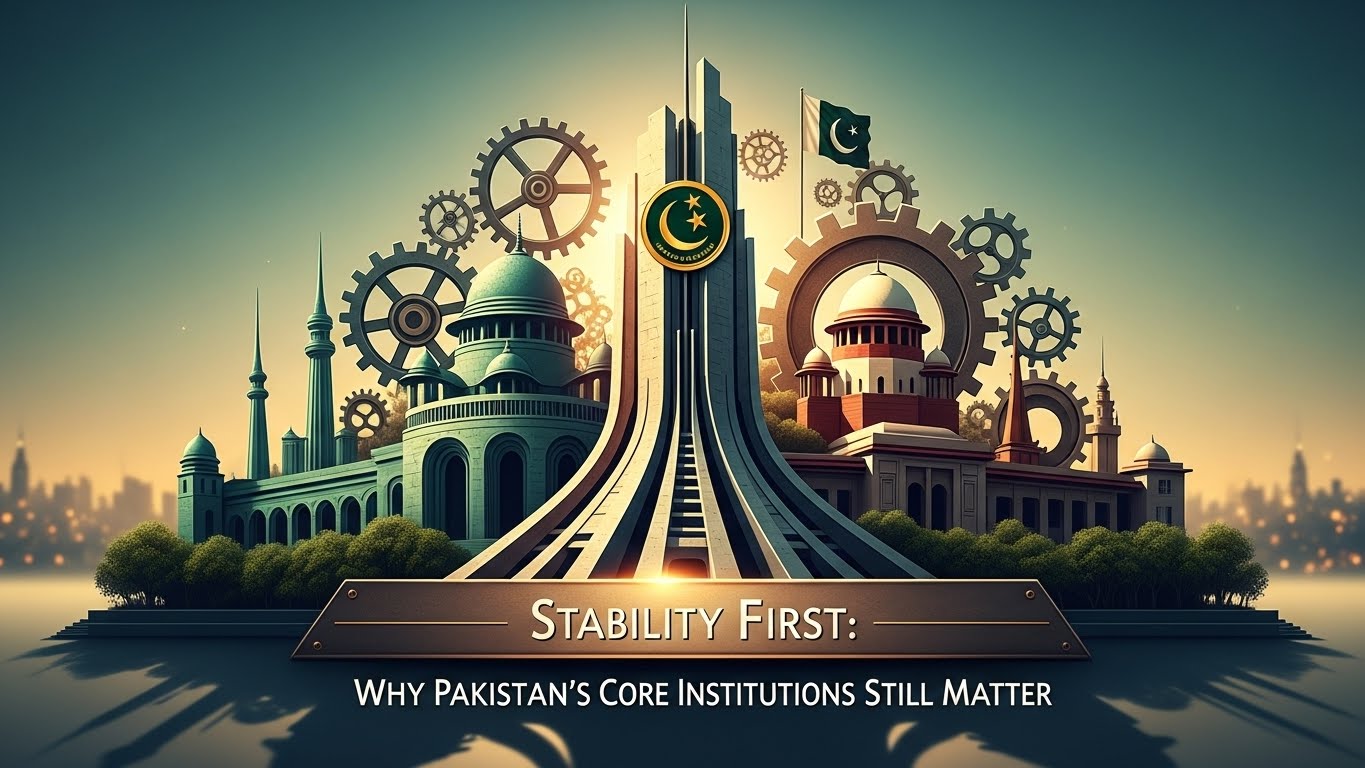
Pakistan’s political history is defined by cycles of hope and disruption. Charismatic leaders emerge, mobilize public anger, and promise rupture with the past. Yet when crises hit economic shocks, security threats, natural disasters, it is not personalities that hold the state together, but institutions. However imperfect, Pakistan’s military and civil bureaucracy have provided continuity when political leadership has faltered.
Imran Khan: Mass Popularity Without Institutional Restraint
Imran Khan is undeniably a genuine mass leader. His ability to mobilize popular sentiment and frame politics as a moral struggle sets him apart from traditional elites. But in a fragile political system, charisma without institutional discipline is a liability. Pakistan lacks the guardrails that allow populist experimentation without systemic cost. In such an environment, emotional politics magnify instability rather than correct it.
The Army as Pakistan’s Most Functional Institution
The Pakistan Army remains the only nationwide institution with organizational coherence, crisis-response capability, and strategic depth. From counterterrorism to disaster relief, it has consistently filled governance vacuums left by weak civilian structures. This reality is not ideological, it is structural.
Foreign Policy Costs of Impulsive Leadership
Khan’s tenure revealed the dangers of personalized and erratic foreign policy. His confrontational posture strained relations with key Gulf partners, unsettled Western capitals, and introduced uncertainty even in Pakistan’s most critical strategic relationship with China. In an era of economic vulnerability, alienating allies is not strategic autonomy; it is strategic self-harm. Effective diplomacy requires predictability, not performative defiance.
The Illusion of Sovereignty Through Populism
True sovereignty is not asserted through slogans or diplomatic theatrics. It is sustained through economic credibility, institutional reliability, and long-term partnerships. Pakistan’s influence abroad depends on being perceived as a stable and dependable state. Institutions particularly the military and foreign policy establishment understand this calculus. Populist leaders often substitute it with spectacle.
The Risk of a Second Khan Government
If Imran Khan were released and genuinely free elections were held, his return to power would be highly likely. His support base has consolidated around grievance and perceived injustice. But electoral popularity does not equal governing competence. A second Khan administration, emboldened and less restrained, risks deeper polarization, renewed civil-military tension, and further economic uncertainty at a time when Pakistan can least afford it.
Why Civil-Military Alignment Matters Now
Pakistan today faces inflationary pressure, debt obligations, and persistent security challenges. Addressing these requires coordination, discipline, and coherence at the center of power. The current alignment between the civilian government and the military, whatever its imperfections, provides exactly that. It reassures international partners, stabilizes markets, and offers predictability to a fatigued population.
Stability Over Spectacle
This is not an argument against democracy. It is an argument against romanticizing populism in a fragile state. Democracies endure through restraint, rules, and institutional respect not through leaders who present themselves as irreplaceable. Pakistan’s future will be secured by strengthening institutions, not by repeatedly gambling on disruptive personalities. History is clear on this point: populist experiments rarely end well and almost never twice.
Author