


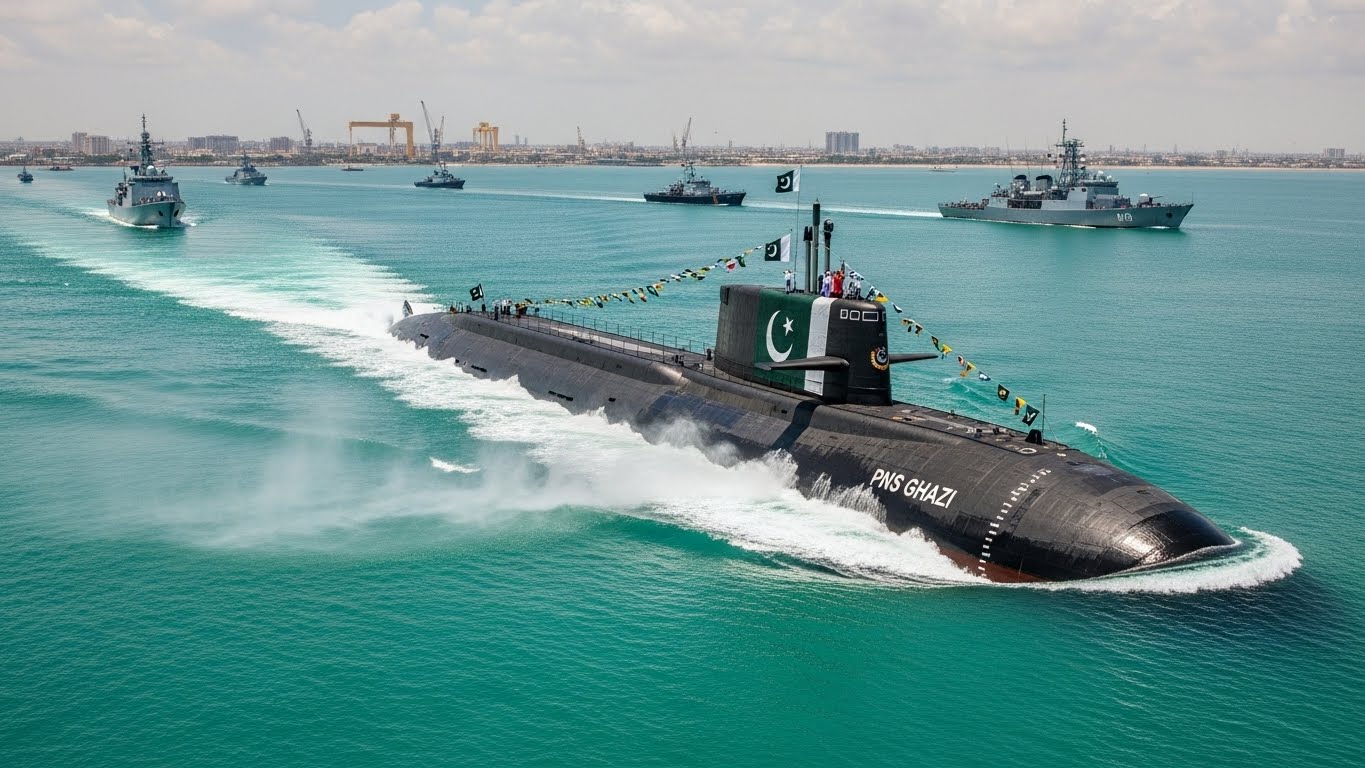
Pakistan’s Naval Surge: The Launch of the Hangor-Class Submarine “Ghazi” and Its Strategic Significance
In a remarkable advancement for its naval capabilities, Pakistan recently launched its fourth Hangor-class submarine, the Ghazi, at Shuangliu Base in Wuhan, China. This milestone, heralded by the...

In a remarkable advancement for its naval capabilities, Pakistan recently launched its fourth Hangor-class submarine, the Ghazi, at Shuangliu Base in Wuhan, China. This milestone, heralded by the Pakistan Navy and the Inter-Services Public Relations (ISPR), marks the culmination of years of planning, strategic partnership, and technological development. As Pakistan expands its naval power, this launch has far-reaching implications not only for the country’s defense capabilities but for the stability of the entire region. The Ghazi’s introduction symbolizes a rising commitment to maintaining peace and security in South Asia, especially given the complex and volatile geopolitical dynamics at play.
Strengthening Pakistan’s Maritime Defense: A Leap Forward
The Ghazi submarine’s launch highlights Pakistan’s ambition to modernize its naval forces and bolster its defense infrastructure. The submarine is part of a broader agreement between Pakistan and China, which includes the acquisition of eight Hangor-class submarines. This deal is a testament to the growing defense ties between the two countries, with half of the submarines being built in China and the other half at Karachi Shipyard and Engineering Works Ltd. (KS&EW) in Pakistan.
This strategic partnership with China has significant advantages. Not only does it allow Pakistan to strengthen its military defense with state-of-the-art technology, but it also facilitates the transfer of critical technological knowledge. By developing indigenous manufacturing capabilities, Pakistan is setting the stage for self-sufficiency in producing advanced military systems, ensuring the country’s defense remains robust, modern, and adaptable to future threats.
The Role of the Hangor-Class Submarine in Regional Stability
The Hangor-class submarines are equipped with advanced weaponry and sensors capable of engaging targets at stand-off ranges. This feature ensures that Pakistan can operate its submarines with greater precision and stealth, enhancing its deterrence capability and reinforcing its strategic posture in the region. With rising tensions and security threats, the Ghazi and its sister submarines serve as a powerful reminder of Pakistan’s growing maritime strength and its readiness to safeguard national interests.
However, the significance of this development is not just military. The Ghazi submarine, and the Hangor-class as a whole, plays a key role in maintaining regional stability. The complex security situation in South Asia, especially the long-standing rivalry between Pakistan and India, has made strategic defense initiatives like these increasingly crucial. The new submarines act as an effective deterrent, enhancing Pakistan’s naval power and ensuring a balance of power in the region. In an environment where militarization often risks sparking conflicts, the presence of such advanced systems, capable of precise engagement, offers a pathway for maintaining peace through strength.
The Legacy of the PNS Hangor: A Symbol of Valor
The Ghazi takes its name from the PNS Hangor, a submarine that became a symbol of Pakistan’s naval prowess during the 1971 Pakistan-India war. The Hangor made history by becoming the first submarine since World War II to sink a warship, a feat that cemented its place in military history. This heroic act of sinking an Indian frigate demonstrated the strength and resolve of Pakistan’s naval forces, and it remains a point of national pride.
The modern Ghazi, therefore, not only embodies cutting-edge technology but also honors this rich legacy of valor and commitment to the defense of the nation. By naming the new submarine after the original Hangor, Pakistan pays tribute to its naval history while simultaneously positioning itself as a formidable force on the global stage.
The Strategic Importance of Pakistan-China Relations
The launch of the Ghazi is also a reflection of the deepening strategic ties between Pakistan and China. Over the years, these two nations have forged a partnership that has grown beyond economic cooperation to include defense, technology, and security. With China being Pakistan’s largest arms supplier, the two countries’ relationship is anchored in mutual trust and shared interests.
This collaboration strengthens Pakistan’s defense posture while offering China a key partner in the region. The increasing militarization of the South Asian region, coupled with growing global security challenges, makes the strategic relationship between Pakistan and China all the more important. With the Ghazi’s launch, this partnership is solidified further, and the implications are felt beyond bilateral defense cooperation, extending to regional security and stability.
Conclusion
The Ghazi submarine’s launch is a significant achievement for Pakistan, demonstrating the country’s growing naval strength and its commitment to maintaining peace and stability in South Asia. This milestone reflects the deepening ties between Pakistan and China, showcasing the mutual benefits of defense collaboration. With the Ghazi and its sister submarines, Pakistan is well-equipped to navigate the challenges of the modern security landscape and secure a peaceful future for its people.
Author