

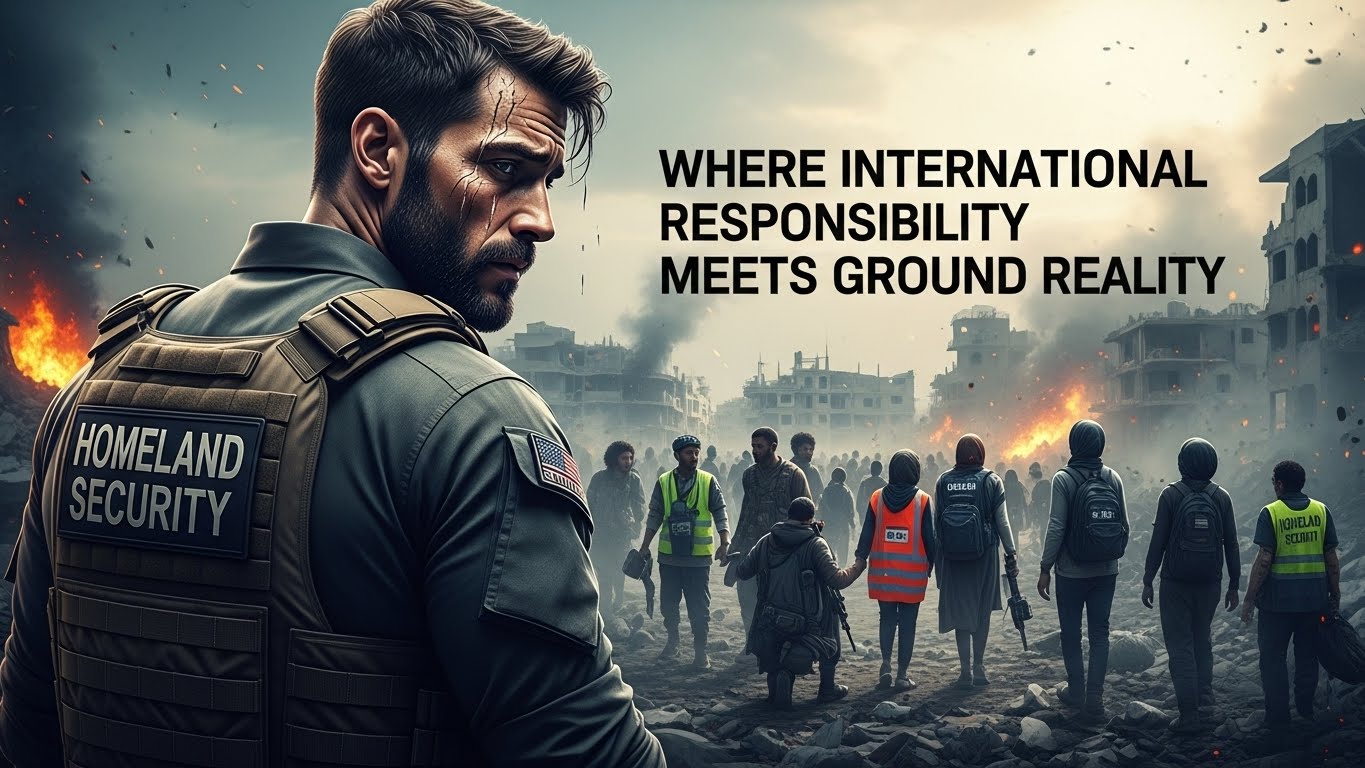
“HOMELAND SECURITY” Where International Responsibility Meets Ground Reality
The Moment Silence Becomes Unsustainable When the Secretary-General of the United Nations publicly reminds a de facto authority of its obligation to prevent terrorist violence against a neighboring...

The Moment Silence Becomes Unsustainable
When the Secretary-General of the United Nations publicly reminds a de facto authority of its obligation to prevent terrorist violence against a neighboring state, the importance lies not merely in the statement itself, but in the moment it represents. Such interventions are not routine. They emerge when operational realities accumulate to a point where diplomatic restraint risks being mistaken for indifference. At that threshold, silence ceases to be neutral.
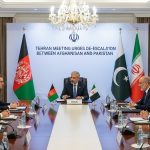
The recent remarks by UN Secretary-General António Guterres, urging the Afghan Taliban to ensure that Afghan territory is not used for attacks against Pakistan or any other country, reflect precisely such a moment. Cross-border terrorism has moved beyond contested rhetoric and entered the domain of documented international concern. The issue is no longer about competing narratives, but about responsibility anchored in international norms.
From Bilateral Concern to International Record
For Pakistan, this acknowledgment does not mark a change in assessment; it marks a change in level. The threat environment along the western frontier has long been experienced in measurable terms through loss of life, pressure on border communities, and sustained security operations. What has evolved is the framework within which this reality is now addressed.
International law is clear that control over territory carries responsibility for its use. The Secretary-General’s statement places this obligation firmly on record, transforming a regional concern into an internationally registered expectation.
Homeland Security in a Transnational Threat Environment
Pakistan’s approach to homeland security has been shaped by the understanding that contemporary threats are transnational, adaptive, and network-based. They do not rely on conventional formations alone, nor do they respect political boundaries. They operate through ideological signaling, logistical corridors, social manipulation, and digital amplification.
Confronting such challenges requires an integrated national system rather than episodic responses. Military capability, intelligence integration, border management, internal security mechanisms, and diplomatic engagement function as interconnected layers of a single framework. This architecture is designed to remain effective even under conditions of uncertainty.
Beyond Reaction Toward Strategic Coherence
At this stage, Pakistan’s security posture is no longer defined by reaction or rebuttal. It is grounded in preparedness and institutional coherence. The convergence between Pakistan’s ground assessment and international acknowledgment significantly reduces the space for propaganda that thrives on ambiguity.
Strategic clarity now replaces narrative contestation. Responsibility has been identified, and the cost of inaction has increased for those who exercise control over territory without enforcing restraint.
Three Realities Shaping Pakistan’s Forward Trajectory
First, security challenges are now managed through anticipation rather than response, emphasizing integration across domains rather than isolated action.
Second, Homeland securityis calibrated to operate independently while remaining fully aligned with international norms, ensuring resilience under external uncertainty.
Third, the alignment between national experience and global recognition has elevated Pakistan’s position from assertion to strategic credibility.
Where the Question Now Stands
The central issue ahead is no longer whether responsibility has been articulated, but whether it will be translated into effective restraint and territorial control by those exercising authority on the ground. The answer to this question will shape regional stability more decisively than statements or declarations.
In the meantime, Pakistan’s course remains steady. It is defined by vigilance, integration, and strategic composure, guided by the understanding that modern security is determined where international responsibility meets ground reality.
Security as the Foundation of Stability and Growth
In this evolving environment, the role of civil society and the country’s economic and intellectual communities acquires renewed relevance. Stability generated through effective Homeland securityis not an end in itself; it is the enabling condition through which opportunity becomes possible. When uncertainty is reduced and predictability is restored, space is created for enterprise, innovation, investment, and long-term planning.
Economists, business leaders, academics, researchers, and professionals are not observers standing outside the national framework. They are integral to translating security into prosperity. The state has opened structured avenues for lawful enterprise, financial reform, infrastructure development, technological advancement, and regional connectivity. These opportunities are real and measurable, designed to convert stability into sustainable growth rather than short-term gain.
Participation as a Strategic Multiplier
At this stage, progress depends not only on institutional readiness but on constructive participation. Each decision by an investor to commit capital, by an entrepreneur to build locally, by a scholar to contribute knowledge, or by a professional to apply expertise strengthens the momentum created through national stability. Individual initiative, when aligned with state policy, accelerates collective advancement.
A conducive business environment does not emerge through slogans or external validation. It develops when security, continuity of policy, and societal confidence reinforce one another. Pakistan is steadily consolidating this alignment. The national direction is clear, and the space for responsible contribution continues to expand.
Periods of transition often determine whether opportunity is deferred or secured. The foundations have been laid with intent and precision. The path forward now favors those prepared to move with confidence, responsibility, and a long-term vision for national progress.
Author