


Six World Cups Later: Ochoa Defies Time as Mexico Bets on Predictability for Home Turf Glory
POLICY WIRE — Mexico City, Mexico — In a world constantly chasing the next big thing, where innovation is preached and disruption is gospel, a sixty-year-old sports spectacle continues its unwavering...

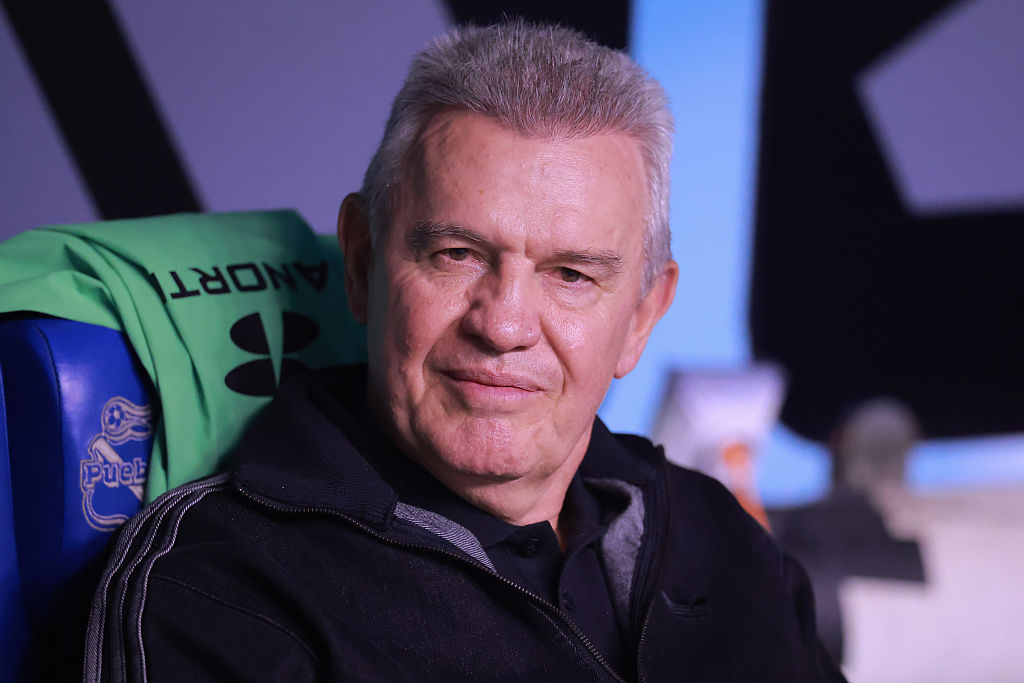
POLICY WIRE — Mexico City, Mexico — In a world constantly chasing the next big thing, where innovation is preached and disruption is gospel, a sixty-year-old sports spectacle continues its unwavering march, occasionally delivering a genuinely human story. But, this week, it wasn’t about who was new, but rather who simply refused to leave the grand stage. Yes, Javier Aguirre—’El Vasco,’ to those in the know—has formally rolled out Mexico’s roster for the 2026 World Cup. It’s their show, remember, one they’ll be sharing.
And, if you were holding your breath for a seismic shift, a bolt from the blue to rattle the nation’s passionate football psyche, you’re outta luck. Aguirre’s chosen 26-man squad? It’s familiar. Like a comfy, worn-in jacket, maybe a little threadbare around the cuffs. There are no surprises in El Vasco’s 26-man squad, the press release dutifully declared. And they’re right. But that’s a revelation in itself, isn’t it?
Except for one glorious anomaly: Guillermo Ochoa. That name, still etched onto the back of replica jerseys decades old, looms larger than life. The grizzled shot-stopper, whose gravity-defying saves have frustrated attacking greats from Lionel Messi to [QUOTE_PLACEHOLDER] over a staggering span of twenty years, is back. His inclusion in goal stands out as he prepares to play in his sixth World Cup. Sixth. That’s an eternity in professional sports, an act of sheer will—or perhaps, a quiet testament to the generational talents Mexico hasn’t quite cultivated to push him aside. But hey, who’s complaining?
This isn’t just about Mexico kicking a ball around. This is about national identity, about the global soft power a country wields when the world’s eyes — all 3.572 billion of them for the 2022 World Cup finals, according to FIFA’s official reporting — turn their attention to its fields and its narrative. That’s a staggering reach, folks. A viewership that makes your average political debate look like a PTA meeting. Because for every minute of actual football, there’s an hour of economic planning, a year of infrastructure development, and a century of national dreams hinging on that spectacle.
For a nation like Mexico, co-hosting such an event isn’t merely about filling stadiums. It’s about leveraging that global spotlight. It’s about showcasing a vibrant culture, drawing investment, and, frankly, having a moment of collective catharsis where geopolitical complexities and economic wobbles are momentarily forgotten amidst the roar of the crowd. They’re facing South Africa on June 11 to kick things off. Then it’s South Korea (June 19), a dynamic force often underestimated, — and the Czech Republic (June 25). These aren’t walkovers, they’re statements, battles of national sporting pride played out on a global canvas.
And let’s not pretend the enthusiasm stops at the border. Walk into any major city in the Muslim world, from Lahore to Cairo, and you’ll find shops awash with football jerseys, fans dissecting European league results, and the World Cup—despite their national teams rarely being frontrunners—is a carnival. It’s a shared global language, a collective delirium. In Pakistan, where cricket is an almost spiritual pursuit, the passion for world football, though sometimes overshadowed, runs deep. The discussions about technique, about the merits of one tactical formation over another, echo the very same arguments you’d hear in Mexico City’s street cafes or London pubs. It connects us. This human need to rally behind a cause, to believe in an improbable triumph, it’s a global currency that often outpaces actual cash.
The host nation brings a certain weight, a heavy cloak of expectation. We’ve seen it before; it’s a double-edged sword. On one hand, home support can lift teams to unimaginable heights. On the other, the sheer, crushing pressure can lead to some spectacularly public meltdowns. One can’t help but recall Mexico’s World Cup history, marked by moments of brilliance but often defined by falling just short.
What This Means
Aguirre’s pragmatic, unspectacular squad selection isn’t just a footballing decision; it’s a political maneuver. In a country where football can dictate the national mood and even impact approval ratings (just ask any Latin American leader), going with the known quantities is a risk-averse play. It’s an implicit acknowledgment of the monumental pressure of hosting the world’s most watched single-sport event.
Economically, the selection ensures continuity, theoretically minimizing dissent and maintaining a steady hand during a period of immense public scrutiny. No left-field picks mean fewer debates — and more focus on logistics. This allows the government to maximize the feel-good factor and tourism dollars without dealing with an internal team controversy. A reliable, albeit predictable, team might not win the World Cup, but it ensures a relatively smooth journey for the organizing committees. And in the high-stakes world of international sports—and politics—sometimes, ‘smooth’ is the most valuable currency. It’s not unlike how complex infrastructural projects, vital for such events, can easily overshadow other national economic indicators, for better or worse.
But the true implications run deeper. The reliance on an aging star like Ochoa highlights an uncomfortable truth: despite Mexico’s massive footballing infrastructure and passion, a consistent conveyor belt of elite-level talent capable of replacing the old guard hasn’t quite materialized to push him off the podium. That’s a long-term challenge, one that will persist long after the last confetti has been swept from the stadiums in 2026. This team, and this announcement, isn’t just about football; it’s a mirror reflecting the broader national conversation about progress, tradition, and the weight of expectation. Sometimes, the safest choices are also the most revealing ones.