
Shadow Games: Sanders Exposes Backdoor Push to Warp CDC Message
POLICY WIRE — Washington, D.C., USA — The silence around official federal health directives has always been a calculated maneuver. It’s supposed to project unified scientific consensus,...

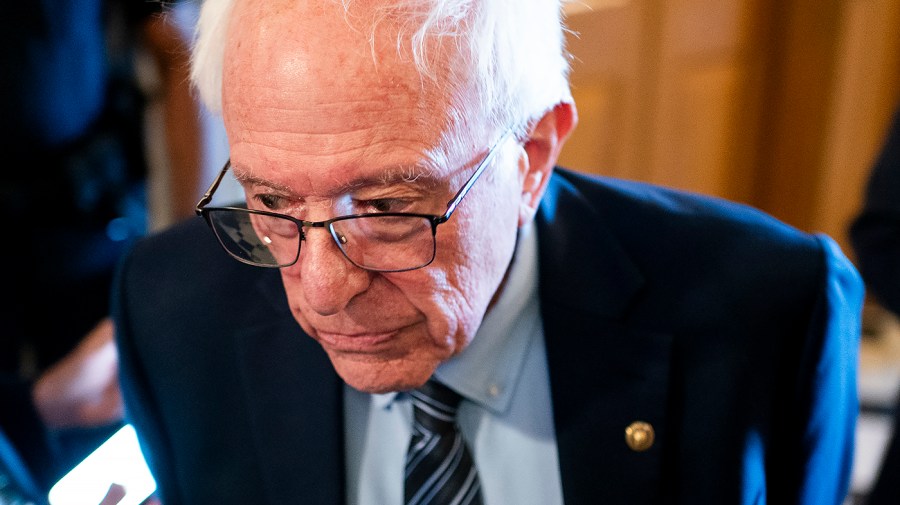
POLICY WIRE — Washington, D.C., USA — The silence around official federal health directives has always been a calculated maneuver. It’s supposed to project unified scientific consensus, unwavering — and clear for the masses. But sometimes, behind that polished façade, the political elbows come out—hard. Senator Bernie Sanders, never one to shy from rattling cages, just dropped a veritable truckload of internal Department of Health and Human Services (HHS) emails, yanking back the curtain on just how messy that process can get. It ain’t pretty.
These aren’t some minor administrative quibbles. No, sir. These communications lay bare what appears to be a sustained campaign. They detail Robert F. Kennedy Jr.’s alleged push. You know, the scion of a political dynasty who’s also made a name for himself as a prominent skeptic of established public health narratives.
The core allegation is that RFK Jr. attempted to apply pressure on the Centers for Disease Control — and Prevention (CDC) regarding its vaccine messaging. What kind of pressure? The kind that makes career public health officials sweat. The kind that suggests external, politically-charged motives were attempting to shape the agency’s communications. It’s a delicate dance, trying to convey complex medical information to a diverse public. And it’s one where any perceived political meddling can shred already thin trust.
We’re talking about direct interactions here. The emails reportedly demonstrate a pattern of engagement. Sources familiar with the cache suggest they contain multiple instances where [QUOTE_PLACEHOLDER] from RFK Jr. or his associates were directed at HHS. This wasn’t a one-off. It appears to have been an ongoing effort. But, of course, the actual substance of those communications remains under careful scrutiny, not released in its entirety to the public as direct quotes.
It’s easy to dismiss this as mere political theater—just another day in Washington. But this episode taps into something deeper. Public health, globally, relies on institutional credibility. When that credibility is called into question, whether by internal machinations or external pressure, the ripple effects can be catastrophic. Consider regions like Pakistan, for instance, where vaccine hesitancy has deep cultural — and historical roots. The shadow of Western health initiatives, sometimes perceived with suspicion, can make any public health campaign a tough sell. When high-profile US figures, even those with anti-establishment leanings, appear to influence mainstream scientific bodies, it hands potent ammunition to those already wary abroad.
The optics are especially grim right now. With global health crises having just demonstrated the paramount importance of swift, clear, and *trusted* public health guidance, this sort of alleged behind-the-scenes jostling could prove corrosive. It weakens the global consensus needed to combat everything from resurgent polio to novel pathogens. A 2023 study by the Pew Research Center, for example, revealed that only 57% of US adults say they’ve a great deal or fair amount of trust in medical scientists to act in the public’s best interests. Incidents like these don’t help those numbers, do they?
📄 POLICY WIRE WHITEPAPER PUBLISHED: PAKISTAN'S NATIONAL SECURITY POLICY PRIORITIES
👉 READ BY CLICKING HEREAnd let’s not forget the political stakes for Sanders. This move aligns perfectly with his brand—the indefatigable fighter for transparency and accountability against powerful interests. It also strategically positions him, even as a non-contender for the presidency, as a critical voice in health policy. Meanwhile, for RFK Jr., a presidential candidate himself, these revelations, lacking direct quotes within the public eye, complicate his anti-establishment narrative without allowing for easy repudiation of specific phrasing. It makes for excellent fodder on cable news, sure, but also feeds into an environment of suspicion around health. The digital landscape, already a hotbed for misinfo, only amplifies such narratives.
What This Means
The release of these emails signals far more than just bureaucratic infighting; it’s a direct strike at the perceived neutrality of public health institutions. Politically, Sanders is forcing a conversation about integrity in public messaging, essentially drawing a line in the sand: either you back evidence-based science, or you open the door to politically motivated distortions. This move also, rather deftly, puts pressure on establishment figures to defend institutions many perceive as having faltered during recent crises.
Economically, eroding trust in bodies like the CDC isn’t some abstract concept. It costs money. When people don’t trust health guidance, compliance drops. Lower vaccination rates lead to more outbreaks, increased healthcare costs, — and diminished productivity. Think about how vaccine hesitancy impedes public health in many Muslim-majority nations, already grappling with resource scarcity—external validation of mistrust, however unintended, could significantly hinder progress. The price tag for rebuilding confidence? It’s astronomical, maybe even immeasurable. For organizations, including those betting big on AI-driven health solutions, widespread public doubt presents a colossal obstacle. Ultimately, this isn’t just about emails; it’s about the scaffolding of societal trust and how easily it can crumble when enough pressure is applied from behind closed doors.