

Policy Gaffes and Own Goals: How the U.S. Hands Opponents a Quarter-Final Place on a Silver Platter
POLICY WIRE — Washington, D.C. — Sometimes, you don’t even have to beat a major power; you just wait for them to beat themselves. We saw it play out recently not in some dusty negotiating room or...

POLICY WIRE — Washington, D.C. — Sometimes, you don’t even have to beat a major power; you just wait for them to beat themselves. We saw it play out recently not in some dusty negotiating room or through intricate diplomatic maneuvers, but on a manicured green pitch, where American hopes seemed to curdle into farce right before our collective eyes. It’s a striking image, really, that snapshot of U.S. self-sabotage, one that carries unsettling echoes beyond the realm of sports and into the murkier waters of global statecraft.
Picture it: The World Cup, the round of sixteen—the kind of stage where national pride, often mistakenly tied to athletic performance, is on full, embarrassing display. The Belgians, it seems, were genuinely being served a quarter-final place here on a silver platter. It wasn’t a dazzling strategic coup by their opposition, you see. Instead, it was an all-too-familiar narrative of self-inflicted wounds, a procession of blunders starting early. The defense, a recurring concern, already looked pretty catastrophic. And you just know it’s gotta sting when you’re literally handing out plenty of gifts to the other team, making their job almost ludicrously easy. Because frankly, watching the opposition saunter through while you trip over your own feet? It’s not just bad optics, is it? [QUOTE_PLACEHOLDER]
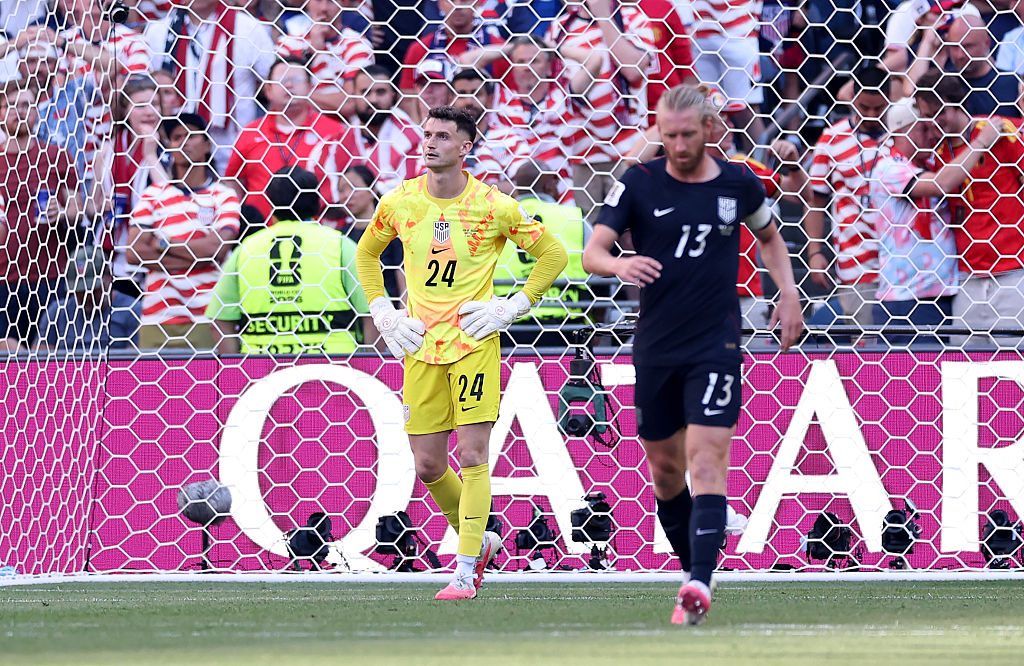
But the true marvel—or horror, depending on your allegiance—came with what became the third Belgian goal. The keeper, Matthew Freese, found himself in a truly unenviable position. A long ball, simple enough. And he rushed aimlessly out of his box. You watch this unfold, — and you think, he’s got this. He got to the ball first. That’s the hard part, right? But instead of a clean, decisive clearance, instead of showing the kind of unflappable certainty one expects from someone guarding the national interest, he hesitated far too long. Just. Stood. There. He then allowed the impressive De Ketelaere to block him. And in the vacuum of that hesitation, midfielder Hans Vanaken, like a predator sniffing weakness, pounced on the loose ball. Then he rolled it into the completely deserted US net from around 30 meters out. Not just empty, but completely deserted. Center-back Tim Ream, poor soul, was unable to clear it. It was, as some pundits described it, the bittersweet cherry on top for the Americans. An unforced error. An own goal by any other name.
It’s this kind of strategic fumbling that leaves you wondering: are we seeing a pattern here? The U.S., a nation that once boasted unshakeable geopolitical primacy, often appears to be its own greatest saboteur. Its interventions, its foreign policy overtures, sometimes just… crumble. One could argue it’s reflective of a deeper hesitancy or, worse, an almost cavalier attitude toward long-term consequences. This isn’t just about a football match; it’s about a global posture, a perceived waning of decisive leadership that adversaries and opportunistic regional powers are keen to exploit.
And when a heavyweight seems to flounder, smaller, more agile actors notice. Take Pakistan, for instance, a nation that has historically juggled alliances — and received significant U.S. military and economic aid, totaling an estimated $36 billion between 2002 and 2017 alone, according to the Congressional Research Service. This support, ostensibly for counter-terrorism efforts and stability, has often been a double-edged sword, perceived by some as creating dependencies or exacerbating internal political fault lines. When Washington appears to hesitate far too long on the world stage, whether on Afghanistan withdrawals or broader regional stability initiatives, it gives countries like Pakistan, India, or Iran ample space to reassess allegiances and recalibrate their own strategic futures. They see these so-called gifts.
This is where the optics get messy. A soccer blunder might seem trivial, but it forms part of a larger narrative of an unpredictable and, at times, uncertain superpower. It plants doubts in the minds of allies — and fuels ambitions in the hearts of rivals. From the shores of the Arabian Sea to the volatile regions of the Levant, every perceived American misstep, every moment of indecision, gets logged. It affects how these nations engage with Washington, how they diversify their international partnerships—think China’s increasing influence across South Asia—and how they ultimately calculate their own national security. The metaphorical goalkeeper’s hesitation reverberates. It makes regional players, long accustomed to clear American intent, now wonder who’s actually got the ball.
What This Means
This incident, far from a mere sports footnote, serves as a sharp metaphor for America’s sometimes muddled global presence. The tendency to self-inflict wounds or miss obvious opportunities has significant political — and economic implications. For one, it erodes trust among allies, particularly in regions where American commitment is already under scrutiny, like the complex dynamics of South Asia and the broader Muslim world. When Washington appears indecisive—or, worse, strategically clumsy—it invites other powers to fill the vacuum. Nations from Islamabad to Jakarta, closely watching Washington’s often erratic policy pivots, see this hesitance as an open invitation. It’s not just a strategic failing; it’s a profound PR disaster on a global scale.
Economically, perceived weakness translates into risk. International investors and trading partners prefer stability, and an America that seems prone to avoidable errors is less attractive as a reliable partner. This vulnerability could empower adversaries to press harder on geopolitical fault lines, like Russia in Eastern Europe or China in the South China Sea. for developing nations, often balancing allegiances, the signal from a faltering US is clear: diversify your friends. Look for other patrons. The days of America as the undisputed, always-decisive center seem, at moments like these, genuinely past. But even in failure, there’s an object lesson: the most dangerous opponent isn’t always across the field. Sometimes, it’s the one wearing your own jersey, hesitant — and aimless. But who knows? Perhaps the Biden administration is keenly aware of such issues and quietly planning its next moves against geopolitical aftershocks, aiming to avoid further international own goals. And we can only hope their domestic agenda fares better, steering clear of micro-scandals that escalate into larger PR perils.