

Ice and Prayers: Everest’s Ghost Walks Home, Shattering Grief and Redeeming Belief
POLICY WIRE — Kathmandu, Nepal — The low hum of Buddhist chants hung heavy, a spiritual balm struggling against the raw sting of grief. A wife, her world already fractured by the news, had begun the...

POLICY WIRE — Kathmandu, Nepal — The low hum of Buddhist chants hung heavy, a spiritual balm struggling against the raw sting of grief. A wife, her world already fractured by the news, had begun the solemn task of offering last rites, bidding a final, sorrowful farewell to her husband swallowed by the Himalayan maw. Six days she’d waited, praying for a miracle. And then, the mountains, always a cruel mistress, delivered a different kind of miracle entirely.
It’s a story plucked straight from the wild, improbable folklore spun in Base Camp’s hushed tents: Dawa Sherpa, in his 50s and famously nicknamed Hillary—a moniker nodding to his formidable experience and a legendary predecessor—vanished. Gone, they said. Lost to the brutal caprice of Mount Everest, a peak that demands, often consumes, — and rarely yields. His disappearance, somewhere up there, wasn’t just a climbing mishap; it was a communal death knell ringing across the tightly knit Sherpa communities of Nepal.
Because that’s the deal, isn’t it? These are the men who ferry dreams—and occasionally, death—up the world’s highest peaks. They’re the backbone of an industry, navigating dangers Western climbers rarely comprehend, let alone face regularly. They don’t just guide; they fix ropes, carry impossible loads, and, all too often, make the ultimate sacrifice.
Officials, initially resigned, had already penned his eulogy. He was feared dead. Nobody comes back from six days adrift in that frozen hellscape. The odds? Mathematically infinitesimal. His wife, processing a pain only those who’ve kissed goodbye to a loved one heading for Everest truly understand, had commenced prayers for his soul, just as local tradition dictates when hope becomes a fool’s errand. It’s a gut-wrenching final act for any family—especially one that knows the cost of this life intimately. Imagine: planning a funeral, accepting an impossible reality, only for a gaunt, frostbitten shadow to appear on the horizon.
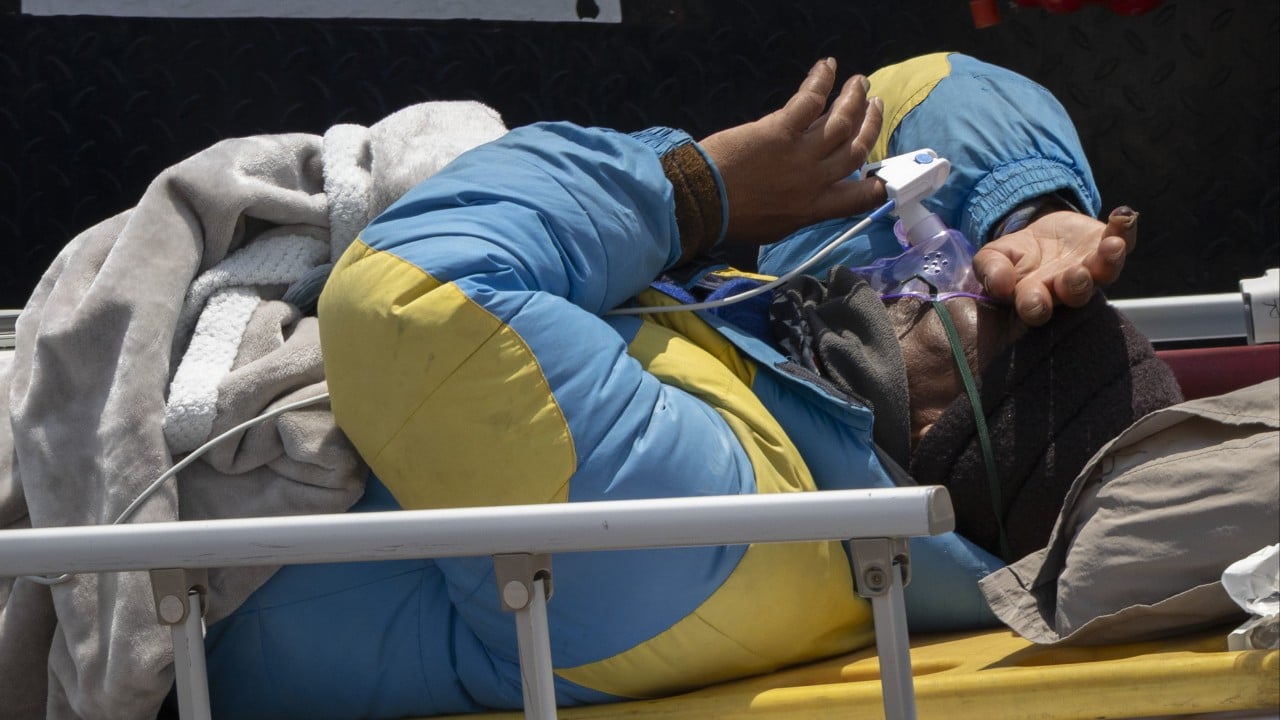
And yet, that’s what happened. He was found alive. Crawling, alone, nearly all the way back to Base Camp. Not airlifted. Not part of some daring, high-altitude rescue. He simply dragged himself from the abyss. He’s now recuperating in a hospital in the capital Kathmandu, suffering from “some frostbite,” as calmly reported. Because what else can you say after cheating death by sheer, brutal will?
But the dry, factual account glosses over the raw, terrifying isolation, the mind-bending hallucinations that must have stalked his every conscious moment, the primal fight to put one boot in front of the other when every cell in your body screams for oblivion. His survival story isn’t just about an individual’s resilience; it’s a searing indictment of the precarious tightrope these Sherpa guides walk—and often, fall from—for the sake of an income, for the prestige of Everest, and for the dreams of clients. Their bodies are just another resource in a global, multi-million dollar adventure tourism market.
In Pakistan’s Karakoram range, similar tales echo. Porters and high-altitude workers from Gilgit-Baltistan face equally perilous conditions, often with even less recognition or protection. It’s a universal thread of desperation, where the poorest shoulders the heaviest risks to chase meager returns from an unforgiving economy. Like Nepal’s mountaineering industry, the stark realities of remote, developing regions mean these jobs, however dangerous, are often the only lifeline available. A survival story like Dawa Sherpa’s briefly brings these hidden costs—and the sheer, almost incomprehensible grit required—into uncomfortable focus for the global audience. Nepal’s economic life, tied to both tourism and emigration, is a complex and often perilous balancing act, with lives like Sherpa’s representing its extremes.
The numbers speak volumes about the constant peril. The Himalayan Database, which tracks expeditions and climbing accidents, reports that over 330 deaths have occurred on Mount Everest since 1922. That’s more than three hundred individuals who never made it back down, many of them Sherpas.
So, yeah, one of them survived. Just one. Imagine the quiet relief, the shock, the re-ordering of a funeral plan. Imagine the spiritual quandary of a wife, who thought she’d made peace with a ghost, now confronting the reality of her husband back amongst the living. This kind of grit, this refusal to yield to the inevitable, is not uncommon in regions perpetually grappling with existential struggles, whether on a mountain peak or in political strife.
What This Means
This episode, dramatic as it’s, strips bare a persistent truth about the Everest industry: it’s built on a foundation of often-ignored Sherpa sacrifice. The international media gushes over the heroics of climbers, but rarely gives proportionate focus to the indispensable, incredibly risky work of local guides. This incident should, in any sane world, force a reassessment of safety protocols, insurance, and the overall welfare for Sherpa communities who remain the lifeblood of Himalayan tourism.
Economically, Nepal is desperately reliant on the revenue generated by Everest expeditions. But what’s the actual cost? The low compensation for Sherpas relative to the exorbitant fees charged to foreign climbers highlights a significant disparity. Politically, the Nepalese government’s oversight—or lack thereof—in regulating this lucrative but dangerous sector is constantly under scrutiny. They benefit from the revenue, yet they often seem to leave the hardest work and its highest cost to its own citizens, usually with minimal state-provided safety nets.
The story also offers a profound cultural insight: the deep role of spirituality and religious rites in confronting death and expressing hope within these communities. The last rite prayers, performed in genuine grief, became a stark counterpoint to the guide’s improbable survival. It forces a collision between fatalism — and fierce, tenacious life. For every miraculous survival, countless others aren’t so lucky. But it’s these stories—the walking dead returning—that etch themselves into the legends, proving that sometimes, just sometimes, the mountains can be convinced to give something back.
For Policy Wire, this isn’t just a rescue; it’s a jarring re-examination of policy, economics, and human endurance, all played out on the highest, coldest stage imaginable. It’s a sharp reminder that behind every triumphant summit photo lies a complex web of risk, religion, and rugged determination.