

Silent Echoes in Commerce: Tel Aviv Mall Hosts a Nation’s Wrought Reckoning
POLICY WIRE — Tel Aviv, Israel — Neon glow from storefronts, the familiar hum of piped-in music, the rhythmic swish of shoppers passing by—it’s the universal language of a commercial hub. But...

POLICY WIRE — Tel Aviv, Israel — Neon glow from storefronts, the familiar hum of piped-in music, the rhythmic swish of shoppers passing by—it’s the universal language of a commercial hub. But tucked away, amidst the brand names and the espresso machines, a stark reminder insists on silence, demanding recognition of something far less transactional than retail therapy. This isn’t just an exhibit; it’s a nation’s raw nerve, encased within a very public, very capitalist space. It asks us to consider what exactly healing looks like, particularly when tragedy is still very much a daily headline.
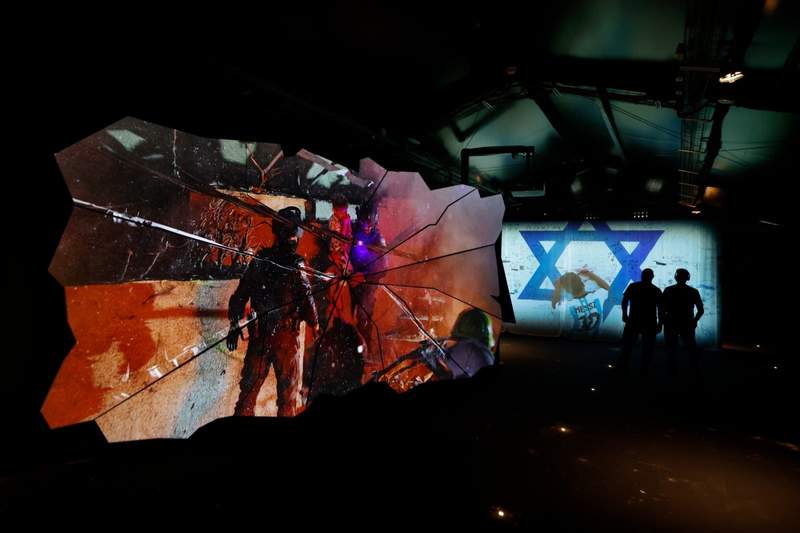
The display, known as ‘We Shall Rise’ [QUOTE_PLACEHOLDER], isn’t shy. It addresses, head-on, the devastating events that ripped through this country on October 7. Its presence within a Tel Aviv shopping center, an arena usually reserved for distraction and acquisition, offers a striking, even unsettling, juxtaposition. You’ve got families pushing strollers past installations depicting trauma. It’s not a museum, not a dedicated memorial site, but a mall—a place most folks frequent for decidedly lighter pursuits.
Organizers say its placement here is intentional. [QUOTE_PLACEHOLDER] they state, aiming to bring the story to a wider audience, to weave it into the fabric of daily life. Because for many here, the fabric of daily life has been irrevocably altered. They’re trying to communicate a feeling, an experience that isn’t confined to a textbook or a televised news bulletin. It’s an effort to contextualize immense loss and a stubborn will to rebuild—sometimes quite literally, as parts of southern Israel resemble moonscapes from before.
Reactions, as one might expect, are anything but uniform. Some see a poignant, necessary acknowledgment. [QUOTE_PLACEHOLDER], noted one visitor, while another offered, [QUOTE_PLACEHOLDER]. Others, however, grapple with the commercial setting, finding it a tad… off-kilter. The idea of mourning alongside bargain hunting creates a dissonance that not everyone can reconcile. But then, is there ever a perfectly tidy, appropriate space for collective grief in the midst of ongoing turmoil? Probably not.
The economy, you see, it just doesn’t wait for anyone’s emotions to catch up. After October 7, the Bank of Israel reported a contraction of GDP by 19.4% in the fourth quarter of 2023, annualized, demonstrating the immediate economic shockwaves. That’s a serious hit. Businesses closed, tourism dried up, — and an already fraught geopolitical situation tightened its grip. And these sorts of public displays—whether for remembrance or defiance—are also, in a weird way, part of the broader effort to regain some semblance of normal activity, to tell the world that life continues, albeit with a heavy heart.
This push for resilience, even under such severe conditions, echoes across the broader region. Look at Pakistan, for example, a nation no stranger to its own complex domestic — and geopolitical upheavals. The way communities there, too, often find creative—and sometimes very public—ways to acknowledge trauma, build communal memory, and insist on moving forward, it shares a certain uncomfortable kinship. Whether it’s commemorating victims of militant attacks or recovering from natural disasters, these societies develop their own unique mechanisms for expressing collective pain and the refusal to be consumed by it. It’s not an identical situation, obviously. But the human drive to confront overwhelming circumstances, to build new meaning out of wreckage, is a shared struggle.
But the public narrative surrounding this particular conflict is inherently divisive, extending far beyond the borders of this Tel Aviv mall. From Islamabad to Jakarta, from London to New York, global interpretations vary wildly, shaped by historical narratives, geopolitical alliances, and humanitarian concerns. What one side calls resilience, another might view through a very different lens. This exhibit isn’t just for domestic consumption, you see; it’s an unintentional ambassador, a message sent into a world already rife with conflicting viewpoints and simmering resentments. It says something about intent, about memory, about the path ahead.
What This Means
This installation, nestled within the bustling anonymity of a commercial complex, isn’t simply an art project. It’s a calculated, if organic, political statement. Its very location transforms a personal, often isolating experience of loss into a public, communal acknowledgment. Economically, these sorts of exhibits, while perhaps not driving immediate consumer spending, signal a societal determination to return to normalcy—a precursor to economic stability. The presence of such a somber memorial in a consumer space can, counterintuitively, contribute to psychological recovery that’s essential for long-term economic rebound. If people feel safe enough, even for a moment, to confront shared pain in a public place, it helps stabilize the social fabric, allowing commerce and civic life to tentatively resume.
However, it also feeds into the ongoing battle for narrative control. In an era where information spreads instantly and perceptions are highly politicized, every public act of remembrance, particularly in a high-profile, western-oriented city like Tel Aviv, becomes a part of the wider diplomatic struggle. It can be interpreted by some as a symbol of unity and resolve, while others might view it as an overly nationalistic portrayal that overshadows the broader human cost of the conflict. This isn’t just about art; it’s about signaling a steadfast commitment to a national story, amidst profound and deeply personal tragedies, in a deeply complex regional context.
Ultimately, a shopping mall exhibit like this becomes a curious blend of memorial and market, sorrow and commerce—a messy, human attempt to stitch a torn society back together, even if some of the threads remain painfully exposed. It says, without speaking, that grief will find its voice even among the cacophony of everyday life, and sometimes that voice needs a very public stage. Check out our deep dive into Tehran’s Grim Gambit for more on regional stability issues. You might also want to look at Tel Aviv’s Unsettling Exhibit to see another perspective on this kind of installation.