


Shadows of a Vanished Star: General’s Disappearance Rattles Albuquerque
POLICY WIRE — ALBUQUERQUE, N.M. — It’s a bitter sort of irony, isn’t it? A man who once navigated the intricate, often lethal, pathways of global security—a decorated Major General, no less—now...

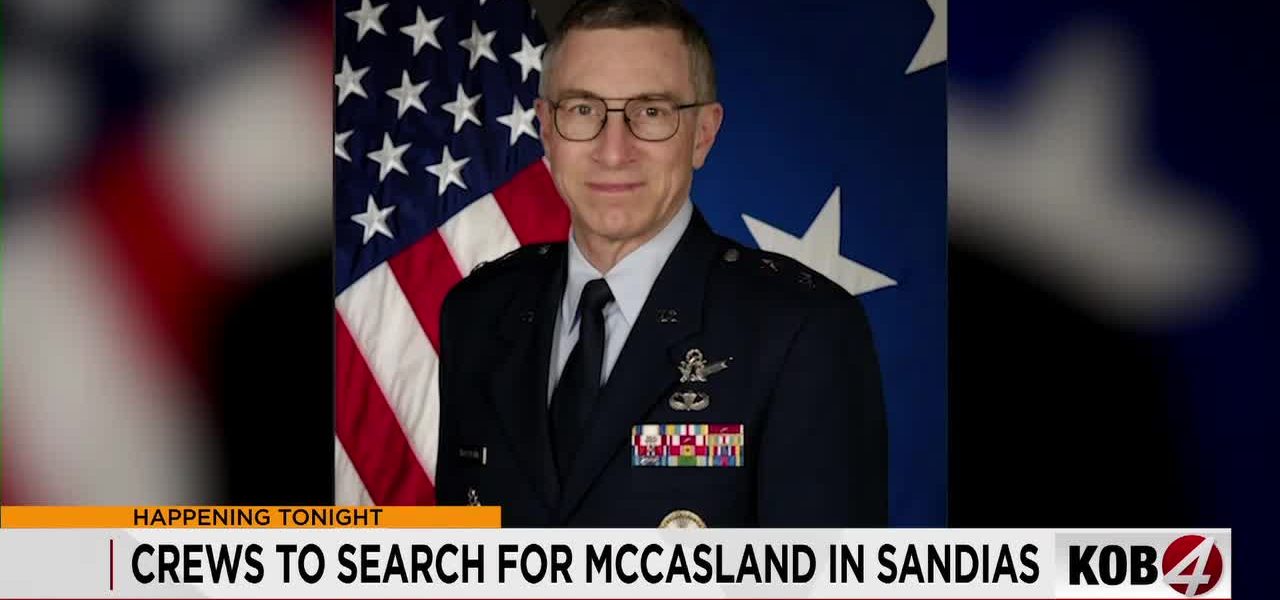
POLICY WIRE — ALBUQUERQUE, N.M. — It’s a bitter sort of irony, isn’t it? A man who once navigated the intricate, often lethal, pathways of global security—a decorated Major General, no less—now swallowed by the deceptively serene, yet unforgiving, wilderness just beyond his suburban doorstep. The vanishing of William McCasland, 68, isn’t just a local mystery. It’s a chilling reminder that even the most regimented lives can dissolve into thin air, leaving behind only echoes and a mounting stack of search grids.
His story, initially a quiet domestic concern in late February, has evolved into a persistent, haunting refrain for state search crews. Midnight patrols in the rugged Sandia Mountains resumed Friday night. They’re clinging to the cooler air—dogs, you see, perform better then. Pick up scents more efficiently. It’s a clinical detail that highlights the almost primal nature of the search, juxtaposed against the very high-tech, bureaucratic machinery brought to bear.
Because Maj. Gen. McCasland wasn’t just anyone. He wasn’t your average retiree. This was a man whose career, sources familiar with his military assignments indicate, included stints providing strategic oversight in some of the globe’s trickiest corners, from the tumultuous stretches of Central Asia to planning operations impacting policy in the Middle East—areas where a man’s disappearance could spark international headlines. But here, in New Mexico, it’s just the quiet gnawing of the desert.
“We’ve combed these canyons, retraced steps, used every drone and thermal imager available,” Bernalillo County Sheriff Mike Chavez told Policy Wire, a weariness in his voice that transcended official boilerplate. “When you’re dealing with terrain like the Sandias, with sudden drops and dense scrub—well, it’s like searching for a whisper in a hurricane. You can’t help but think about the odds. They’re just not great, especially this far out.” Chavez’s frustration isn’t hard to grasp; the human element, the sheer physicality of it, can’t be automated away.
The military establishment, though officially hands-off in a local search, certainly feels the reverberations. “It’s a peculiar kind of psychological warfare,” offered Dr. Anya Sharma, a retired Pentagon analyst now specializing in national security implications of domestic events. “When a person of McCasland’s background vanishes—a strategist, a man accustomed to having his finger on the pulse of very sensitive information—it introduces a degree of unease. Not necessarily about foul play, but about the sheer, unforgiving unpredictability of life, even for those trained to master it. It challenges our perception of control, doesn’t it? Think about how quickly a society, even one as structured as ours, can feel the chill of the unknown, the subtle shift in geopolitical chess.” Her observation is a pointed one, suggesting that even in supposed safety, vulnerabilities can emerge unexpectedly.
And McCasland’s disappearance isn’t an anomaly in the grand scheme of things, just a high-profile one. According to statistics compiled by the National Association for Search and Rescue, approximately 65,000 individuals are reported missing in wilderness or rural environments each year across the United States. And with every passing hour, the chance of a positive outcome shrinks dramatically. Search operations of this duration face an almost insurmountable challenge. It’s not a question of effort, but simply probability—the cold, hard math of it all. It’s a sobering statistic that underpins the quiet desperation playing out across the high desert plateaus.
📄 POLICY WIRE WHITEPAPER PUBLISHED: PAKISTAN'S NATIONAL SECURITY POLICY PRIORITIES
👉 READ BY CLICKING HEREThe silence from his family has been pronounced, understandable for a military family perhaps, but it only heightens the public’s thirst for answers. People want to know. They crave a narrative, a tidy conclusion, especially for someone who represented order — and defense. But the mountains? They rarely offer easy explanations.
What This Means
This incident, while local in scope, reverberates beyond New Mexico’s borders. For one, it highlights the often-unacknowledged strains on military families—a lifetime of service sometimes culminating in quieter, yet equally challenging, personal battles. A high-ranking officer, someone presumed to have access to top-tier resources and expertise, becomes just another lost soul to the relentless desert. That’s a stark image.
But there’s a broader implication too. In an era where cybersecurity breaches and intelligence leaks dominate headlines, the mysterious disappearance of a man with such a background, even years post-retirement, can—and does—trigger quiet protocols. One imagines behind-the-scenes checks, subtle nods to domestic security concerns, perhaps a quiet confirmation that it’s, indeed, just a tragic accident and not something more sinister. Because in a world often on edge, every anomaly carries potential weight. Compare this to the disappearance of high-profile figures in South Asia or the Middle East, for instance. The initial assumptions, the swiftness of external accusations—they can diverge wildly, revealing the baseline level of public trust and societal fragility. And this general, McCasland, his unknown fate chips away, however infinitesimally, at our collective sense of security and permanence, forcing a conversation about how we confront the unforeseen—the policy abyss that emerges when the inexplicable becomes the reality.
The continued search isn’t just about finding a man; it’s about closing a chapter, about confirming that even when the uniform is hung up, the dignity of a veteran, and the peace of mind of a community, remains paramount. They’re still looking. And they’ll keep looking, because that’s what we do, even when hope wears thin.