

DEA’s Fentanyl Policy Sparks Outrage: Was Lethality a Trade-off for ‘Bigger’ Cases?
POLICY WIRE — ALBUQUERQUE, N.M. — Sometimes, to catch a monster, you have to let some smaller devils run free. Or so the grim logic reportedly went inside federal law enforcement, where a quiet,...

POLICY WIRE — ALBUQUERQUE, N.M. — Sometimes, to catch a monster, you have to let some smaller devils run free. Or so the grim logic reportedly went inside federal law enforcement, where a quiet, unsettling directive apparently allowed a deadly drug to flow unchecked through New Mexico communities. This wasn’t some rogue operation, folks; it was policy. And it has shaken the foundations of the state’s drug enforcement apparatus, dragging an already besieged region deeper into the shadow of its opioid crisis.
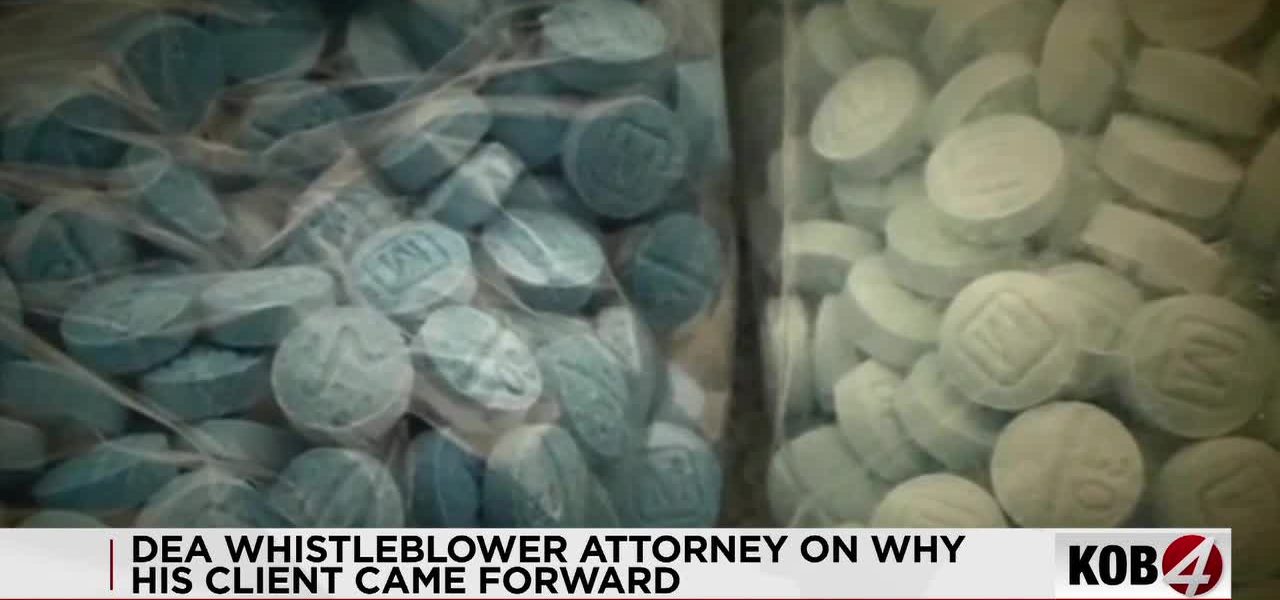
It sounds counterintuitive, doesn’t it? DEA agents, the very folks we count on to yank dangerous substances off our streets, were told to effectively turn a blind eye to fentanyl seizures. Not for lack of effort, mind you. No, this was a calculated gamble, meant to build up more substantial cases against drug kingpins. The idea, apparently, was to let those poisonous pills “walk” into towns like Albuquerque, hoping they’d lead to a bigger fish later. An attorney representing a whistleblower says his client knew of the potential career risks, but decided nonetheless to expose a policy shift.
Attorney Tristan Leavitt, spearheading the nonprofit Empower Oversight Whistleblowers & Research, recounted the bewildering experience of Special Agent David Howell. Howell, Leavitt tells KOB 4, got pushback for actually doing his job – for seizing fentanyl. This baffling scenario, where intervention became an offense, reportedly intensified in 2023, largely emanating from the U.S. Attorney’s Office in New Mexico, then under Alexander Uballez.
“I think he started to realize there were going to be repercussions. And the U.S. Attorney’s Office prohibited him from testifying in any cases, which is, you know, significantly detrimental to your career,” Leavitt stated. It’s a chilling reminder: sometimes, truth-telling in the bureaucratic maze costs you more than just a good night’s sleep. And for Howell, who lives right there in Albuquerque, protecting his own family isn’t some abstract concept.
Howell isn’t alone. He’s one of at least three current or former DEA personnel who spoke to the Associated Press. They painted a stark picture of a strategy that, by their accounts, paved the way for millions of fentanyl pills to infiltrate New Mexico. One recent supervisor, since departed from the DEA, witnessed a vehicle brimming with 1.8 million fentanyl pills and, in a truly unbelievable moment, was told to stand down. “One recent supervisor, who’s left the DEA, observed a car with 1.8 million fentanyl pills in it and was told to stand down. And he said that was just a fraction of what was moving every week,” Leavitt claimed.
The DEA’s official line? “The investigative decisions at issue were lawful, reasonable under the circumstances and consistent with Department guidance.” That’s boilerplate, plain and simple. But it offers little solace to the families torn apart by this crisis. Because while bureaucrats debate policy, real people are dying. Governor Michelle Lujan Grisham’s statement confirms New Mexico led the nation in overdose deaths the past two years, a statistic made more grim by a national decline in such fatalities. A macabre achievement, indeed, when law enforcement strategy arguably contributed.
📄 POLICY WIRE WHITEPAPER PUBLISHED: PAKISTAN'S NATIONAL SECURITY POLICY PRIORITIES
👉 READ BY CLICKING HEREHowell’s lawyer pulls no punches. “This is a matter of life — and death for people. This is his (Howell’s) community. He lives in Albuquerque. He has a family. He wants to protect them just like he wants to protect everyone else’s families,” he said. The agonizing truth, as Leavitt articulates it, is that we can’t tie specific deaths to specific pills let go. “There’s no way forensically to match fentanyl pills to specific times when the DEA didn’t seize. Unlike firearms, they don’t have a serial number or anything like that,” he noted. It’s a tragic void in accountability.
What This Means
This whole debacle speaks volumes about the convoluted and sometimes self-defeating strategies of the global war on drugs. From the poppy fields of Afghanistan, often routed through the rugged terrains of Pakistan and Iran—parts of what’s known as the Golden Crescent—to the labs producing synthetic horrors like fentanyl, the drug trade is an insidious, multinational hydra. American domestic policy, even at the state level, isn’t isolated. It sends ripples far beyond its borders. When a federal agency here intentionally allows narcotics to spread for what it believes is a strategic advantage, it’s not just a local story; it chips away at the credibility of anti-narcotics efforts worldwide.
The political implications here are stark. Such a policy shift, cloaked in operational secrecy, fundamentally undermines public trust. It makes you question who actually benefits from these “bigger cases” if the immediate cost is a spiraling death toll. Economically, the unchecked flow of fentanyl means more overwhelmed healthcare systems, increased social services strain, and lost productivity due to addiction and death. It’s a costly trade-off, arguably one with little demonstrated long-term benefit for community safety, and a massive immediate price for its residents.
It also reveals a dangerous disconnect. Policymakers, federal prosecutors, — and agents are all part of an ecosystem. When one part—in this case, the pursuit of statistical ‘wins’ over ‘smaller’ seizures—comes at the literal expense of lives, it exposes a bureaucratic mindset detached from human impact. We expect our agencies to protect us, not to strategically allow poison to proliferate in the hopes of catching a bigger fish.