


New Mexico: Half Face Financial Insecurity
New report: Almost half of New Mexicans, including working 'ALICE' households, struggle financially. Uncover the systemic issues behind this quiet crisis.

POLICY WIRE — Santa Fe, New Mexico — It’s the quiet hum beneath the high desert sun, a tremor often lost in the noise of grand economic forecasts. Nearly half the folks calling New Mexico home aren’t just making do; they’re in a perpetual high-wire act, scrambling for the very basics. Not quite destitute, perhaps, but certainly not comfortable—not even close. The raw numbers, when they hit, can jolt even the most cynical observer.
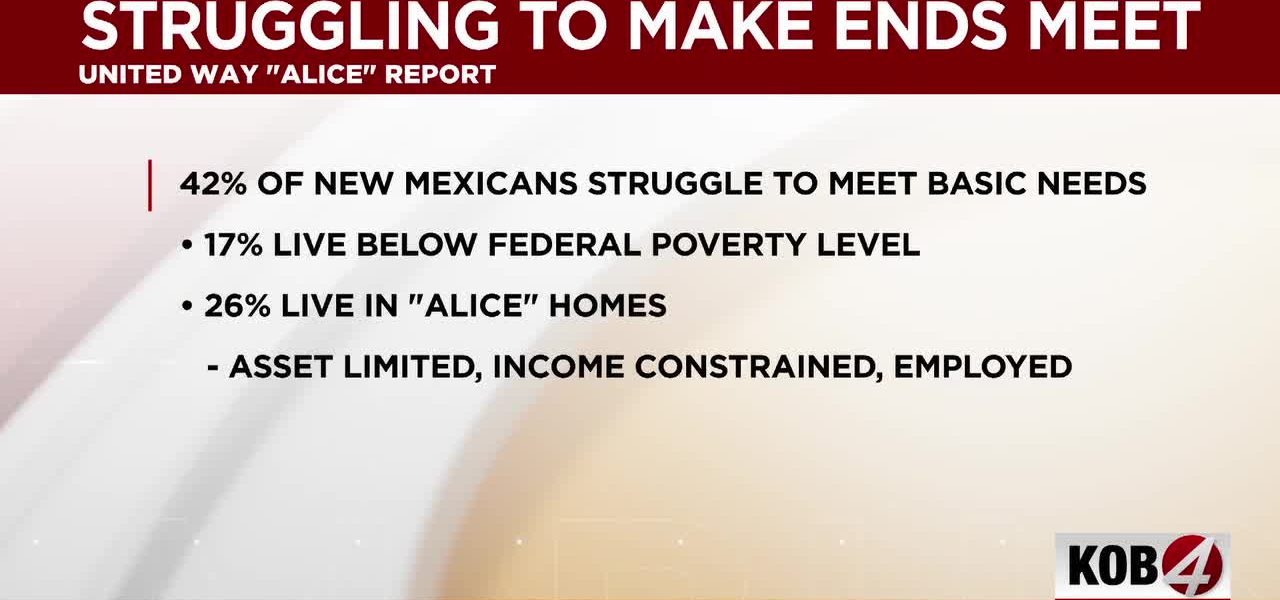
Forget the simplistic notion of poverty as a bottom rung of a ladder. The situation here, laid bare in a fresh report from the United Way, paints a much more complex, and frankly, more discomfiting picture. A chunky segment of the population, specifically 17% of New Mexicans, actually exists at or below the federal poverty level. That’s grim enough, you’d think. But the real gut punch, the real story, hides among the 26% more, those living in what’s dubbed an “ALICE” home. You haven’t heard of ALICE? Most haven’t, — and that’s precisely the point. It’s a sanitized acronym—Asset Limited, Income Constrained, Employed. Yeah, it’s a mouthful. But what it really means is these are working people, holding down jobs, doing the daily grind. They earn above the federal poverty level, sure, the government’s arbitrary line in the sand. But still they don’t make enough to cover basic needs.
It’s an invisible underclass, an economic gray area that defies simple categorization and, more importantly, thwarts straightforward policy solutions. These aren’t the folks we traditionally think of when we talk about hardship. They’re often teachers, healthcare aides, service industry workers—the people making society run, one shift at a time. And they’re chronically short on funds for housing, childcare, food, transportation, — and health care. Just imagine that stress, every single day. The constant tightrope walk, paycheck to thin paycheck. One flat tire, one unexpected medical bill, — and the whole fragile structure collapses.
The United Way, bless their hearts, hopes their report will help change the way we talk about financial hardship and aid programs in the U.S. A noble goal, but an uphill battle, I reckon. Because it’s easier, isn’t it, to simplify a problem, to box it off, rather than grapple with its gnarly, multifaceted reality? This isn’t just about charity; it’s about structural issues—wage stagnation, escalating costs, a safety net with more holes than Swiss cheese. For those of us who’ve tracked these patterns over the years, the numbers here aren’t a surprise. They’re an echo. And they show up across sectors, across states, heck, across continents. The challenges faced by families barely making ends meet in Albuquerque don’t exist in a vacuum; they reflect deeper trends. Consider the burgeoning economies in parts of South Asia, say in a city like Karachi, Pakistan. While vastly different contexts, you often find parallel narratives: booming industry failing to lift a significant portion of its employed population out of an economic tight squeeze, folks perpetually teetering on the financial brink even with a regular job. It’s a common thread, this persistent global income inadequacy, cutting across cultural — and economic divides.
But back in New Mexico, what’s it like when nearly half of the people in our state are struggling to afford basic needs? It’s not just personal pain; it’s societal erosion. It impacts schools, crime rates, healthcare systems. It means less consumer spending, slower economic growth. It saps the collective vitality of a community.
📄 POLICY WIRE WHITEPAPER PUBLISHED: PAKISTAN'S NATIONAL SECURITY POLICY PRIORITIES
👉 READ BY CLICKING HEREAnd yes, 17% of New Mexicans are at or below the federal poverty level. The United Way, the folks behind this study, put it bluntly: [QUOTE_PLACEHOLDER] nearly half of the people in our state are struggling to afford basic needs. It’s a sobering statistic, especially when we’re constantly hearing about national economic growth. Growth for whom, you gotta ask.
The state has seen some major investment shifts recently—we’re not talking small potatoes here. Big money moving around, like when regulators kiboshed a Blackstone energy play. You’d think these high-level financial maneuvers might trickle down, spread the wealth a bit. But when you look at these numbers, the picture feels different. More stark. More desperate, even. It points to a disconnect, a serious structural flaw in how we measure prosperity, and perhaps, more tellingly, how we address the very real, very human cost of widespread financial insecurity.
What This Means
The United Way’s report, with its meticulous parsing of income groups, is less an alarm bell — and more a claxon. It underscores a fundamental weakness in current U.S. economic policy paradigms: an overreliance on a federal poverty line that, frankly, hasn’t kept pace with reality. This creates a vast shadow economy of the ‘working poor’—a demographic too ‘rich’ for many aid programs but too poor to thrive. Politically, this presents a tricky situation. Traditional poverty initiatives don’t often reach these ALICE households, leading to frustration and disengagement among a substantial segment of the electorate. Economically, their inability to meaningfully participate as consumers or build wealth stunts broader growth and creates systemic instability. It forces a recalibration of what ‘economic recovery’ actually means for Main Street, not just Wall Street. Policymakers must move beyond symbolic gestures and consider structural reforms—indexed minimum wages, expanded childcare, affordable housing—that acknowledge the true cost of living. Otherwise, New Mexico’s quiet struggle today could well become America’s economic headache tomorrow, mirroring the quiet unrest you can often find brewing under the surface of many an otherwise robust economy in emerging markets where broad-based prosperity is still elusive despite outward growth. It’s not just an American problem; it’s a human one, everywhere you look. It always has been.