

Shadow Games: Rubio’s Quiet Diplomacy Signals Hardened Indo-Pacific Stance
POLICY WIRE — Washington D.C., USA — Forget the bombastic press conferences and the grandstanding rhetoric that typically defines Capitol Hill. Lately, some of the most telling diplomacy unfolds...

POLICY WIRE — Washington D.C., USA — Forget the bombastic press conferences and the grandstanding rhetoric that typically defines Capitol Hill. Lately, some of the most telling diplomacy unfolds behind closed doors, with a handshake — and perhaps a wry smile. It’s here, amidst the muted formality of senatorial offices and the hushed tones of strategic consultations, that the tectonic plates of global power really shift.
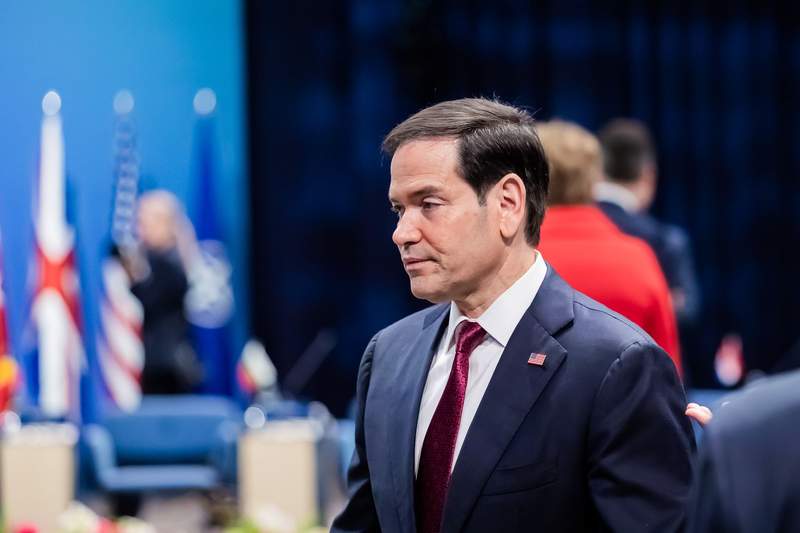
And so it was, far from the cameras, that Senator Marco Rubio – Florida’s senior senator, a man whose geopolitical leanings are as firm as they come – recently convened with high-ranking legislative and policy figures from India, Japan, and Australia. This wasn’t just a friendly chat among allies. Not even close. It was a reaffirmation, a subtle flex of collective resolve, a whisper to Beijing that its regional ambitions haven’t gone unnoticed, nor unopposed. America isn’t doing this alone.
This quad-centric pow-wow, a meeting of minds drawn from the legislative bodies of these key Indo-Pacific nations, isn’t news in itself, but its increasing frequency speaks volumes. It’s part of a concerted, if somewhat quiet, effort to stitch together a coherent bulwark against what many in Washington, Canberra, Tokyo, and New Delhi perceive as China’s increasingly assertive, sometimes downright abrasive, posture. These weren’t executive summits; they were legislative exchanges. You don’t read about ’em in the usual diplomatic communiqués. But they’re happening. And they’re getting noticed.
Senator Rubio, a hawkish voice on foreign policy, didn’t mince words in a conversation with Policy Wire following one such engagement. “You don’t have to look hard to see Beijing’s blueprint for regional hegemony. From the South China Sea to economic coercion, it’s not exactly a secret handshake they’re employing,” Rubio stated flatly. “Our allies get it. We get it. We’re simply making sure our combined efforts are, let’s say, adequately synchronized. It’s about security. It’s about commerce. It’s about preventing a single power from calling all the shots in the world’s most dynamic economic zone.”
The sentiment finds an echo, albeit a more nuanced one, among regional partners. India, for instance, a nation that shares a contentious border and deep historical rivalries with China, views these interactions through a lens uniquely shaped by its own strategic autonomy. “India maintains its principled stance on non-alignment, but regional stability and adherence to international law aren’t negotiable. These dialogues foster the trust necessary to uphold those principles,” an Indian Foreign Ministry official, speaking on background, explained. They don’t want to pick a side. But they do want a side *with* them when China gets too pushy.
Because, for all the talk of a “free — and open Indo-Pacific,” the region remains a chessboard. Consider Pakistan: a historically staunch, though sometimes problematic, ally of China. As India strengthens its strategic ties with the West and nations like Japan and Australia, Islamabad’s geopolitical options become tighter, more complex. Its longstanding economic and military dependency on Beijing—Pakistan was, in fact, the largest recipient of China’s Belt and Road Initiative loans as of 2021, accounting for nearly 25% of the total, according to World Bank data—ties its fortunes ever closer to its northern patron. The Quad’s strengthening implies a strategic narrowing for Pakistan, forcing an uncomfortable realignment of its own regional calculations. It’s an interesting dance, watching how alliances ebb — and flow in a neighborhood where loyalties are rarely clear-cut.
But it’s not just military posturing; it’s also economic. The Quad is subtly — sometimes not so subtly — positioning itself as an alternative to China’s vast, sometimes predatory, economic influence. Supply chain resilience, tech standards, infrastructure development – these are the new battlegrounds. The conversations Rubio’s had weren’t just about maritime patrols; they were about securing vital choke points, about digital sovereignty, about who gets to write the rules for the 21st century’s digital economy. The stakes? Well, they’re global. Just consider how even Canadian identity might be affected by geopolitical shifts mirroring those on a diamond’s edge. It’s all connected.
What This Means
This sequence of low-key, high-impact meetings signals Washington’s continuing shift towards a more distributed security architecture in Asia. It’s less about American unilateralism and more about collective deterrence—a concept easier said than done in such a diverse and historically fragmented region. Politically, it grants more legitimacy to Washington’s broader Indo-Pacific strategy, embedding it not just with executive buy-in but also legislative consensus across multiple nations. Economically, expect continued, deliberate efforts to decouple supply chains from excessive reliance on China, especially in critical sectors like semiconductors and rare earth minerals. For nations on China’s periphery, particularly Pakistan, this growing alignment within the Quad means increased strategic pressure and potentially fewer options for maneuver. They’re going to feel the squeeze. The Muslim world, often grappling with its own internal divisions and external pressures, will observe these developments closely, weighing how growing US-India defense ties might impact its own security dynamics, especially given Pakistan’s role in regional stability. In short, the world’s getting smaller, but the political lines aren’t getting any straighter. It’s a tangled mess, isn’t it?