


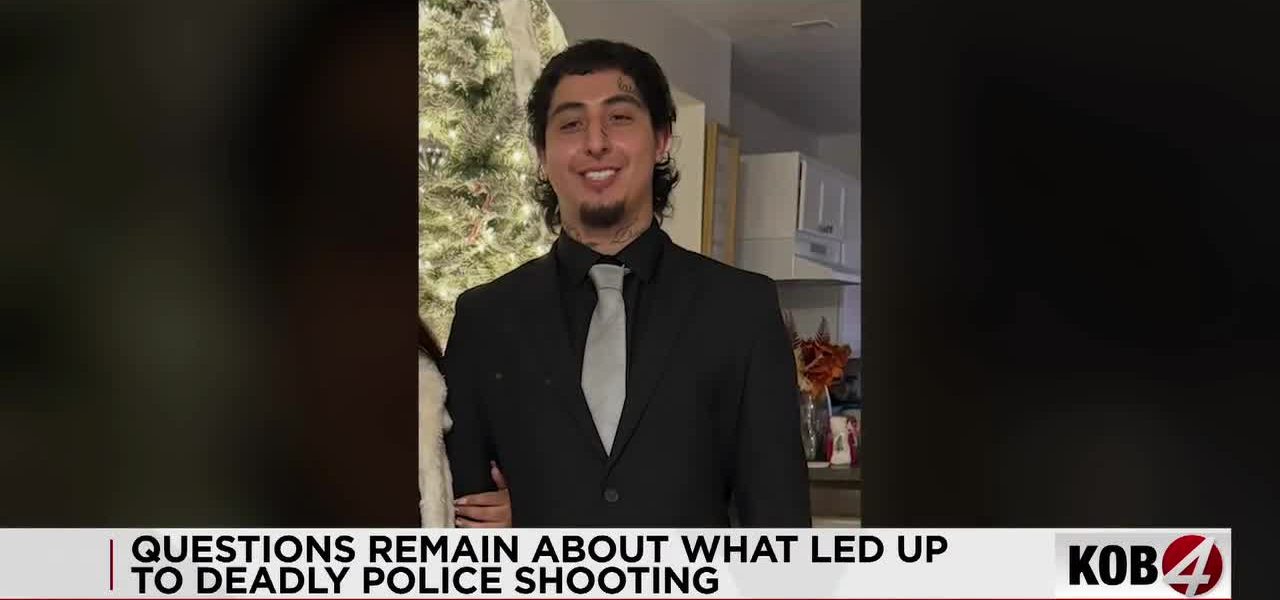
Fatal Aid Call: Albuquerque Police Shooting Ignites Mental Health Response Debate
POLICY WIRE — Albuquerque, United States — It started with a family trying to save their son. They picked up the phone, dialing 911, not for protection from an external threat, but for solace—for...

POLICY WIRE — Albuquerque, United States — It started with a family trying to save their son. They picked up the phone, dialing 911, not for protection from an external threat, but for solace—for intervention, perhaps—in a deeply personal crisis. Yet, by Tuesday night, that plea for mental health help for 23-year-old Jose Armas culminated in a deadly confrontation with Albuquerque police, transforming a desperate family’s appeal into another stark headline.
His family, shattered by the outcome, contends the officers could’ve taken a different path entirely. They weren’t looking for handcuffs; they weren’t looking for a showdown. Elier Ramirez, Armas’s brother, stated unequivocally that Jose had been struggling, and they’d called law enforcement because they desperately wanted help for his mental health. “My brother was suicidal; he needed help, and we called the cops for help. Not for protection, but for help for his mentality, and that’s all he needed, and we let the cops know that firsthand,” Ramirez explained, his words echoing the anguish of a family caught between two systems: a broken mental healthcare network and an overstretched police force.
It’s a chilling irony, isn’t it? That a call meant to bring succor could end in tragedy. Albuquerque police confirmed officers shot — and killed Armas, but only after they alleged he fired a weapon. And that’s where the family’s narrative sharply diverges. Ramirez recounted how his brother initially emerged without a weapon. “He came out not armed at first, and that’s why we, we think that they could have done way better. He was unarmed and he showed that to them by pulling down his pants and showing them that they all, that he didn’t have a gun,” he told reporters, paintimg a picture of desperate, confused signaling.
And Armas’s mother? She was there, pleading. “My mom was there telling them he just needed help. And we were there to help him. But they decided to use more force than they needed to, and they could have stopped it, and we saw that,” Ramirez lamented. This incident throws a harsh spotlight on the default response mechanisms for mental health crises in many American cities—often, it’s a uniformed officer, not a clinician, who arrives first on scene, escalating situations instead of de-escalating.
KOB4 pressed the Albuquerque Police Department (APD) on their rationale. Why officers, not the Albuquerque Community Safety unit—which often handles behavioral health calls? APD’s response was terse: officers were dispatched because Armas was threatening to take his own life with a firearm. But for the Armas family, the ordeal didn’t end with the shooting; it bled into a horrifying vacuum of information. “Everyone and the public was able to know more than the family did. We didn’t get asked questions, we were there from the beginning, and yet we were treated like some pedestrians,” Ramirez described, adding a layer of indignity to their grief. [QUOTE_PLACEHOLDER] It’s an unimaginable scenario for anyone, a final insult after an already devastating loss.
Because there’s an increasing clamor across the U.S. for police departments to refine—or radically overhaul—their approach to mental health-related incidents. For instance, data from The Washington Post reveals that approximately one in five people killed by police between 2015 and 2021 had a mental illness. This isn’t just an Albuquerque problem; it’s a national symptom of strained social services colliding with a heavily armed and sometimes ill-prepared response. Ramirez’s message to APD was unambiguous: [QUOTE_PLACEHOLDER] He’s got a point. His brother deserved help.
But while investigations are promised by APD to determine if charges will be filed, the fundamental questions linger. What systems are failing? And who ultimately pays the price?
📄 POLICY WIRE WHITEPAPER PUBLISHED: PAKISTAN'S NATIONAL SECURITY POLICY PRIORITIES
👉 READ BY CLICKING HEREWhat This Means
This Albuquerque tragedy isn’t just a local incident; it’s a stark microcosm of a national policy failure—and indeed, a global one in varying degrees. It screams for a re-evaluation of how law enforcement agencies are trained and equipped to handle mental health crises, rather than treating them as purely criminal matters. The reliance on armed officers for deeply vulnerable individuals frequently exacerbates, rather than resolves, tense situations, creating an environment where de-escalation strategies are often sidelined in favor of force.
Economically, this incident highlights the underfunding of dedicated mental health response units and crisis intervention programs. If municipalities don’t invest in these specialized teams, the burden inevitably falls onto police departments, who aren’t clinical professionals. The cost, in human lives and in eroding public trust, is far higher than the upfront investment in alternative response models. There’s a tangible economic argument for prioritizing mental healthcare and social services to avoid these tragic, resource-intensive outcomes.
For nations like Pakistan or other developing countries across the Muslim world, this issue resonates deeply, albeit with different contextual challenges. While specific police training and public infrastructure differ, the underlying problem of stigmatized mental illness and an often-insufficient, militarized response to it, particularly among marginalized communities, remains a pressing concern. Families seeking help for a loved one battling mental health issues frequently find themselves navigating a maze of inadequate resources and societal judgment. Pakistan, for instance, faces its own unique pressures when it comes to balancing public safety with compassionate mental health support—issues ranging from deeply ingrained cultural taboos around mental illness to chronic underinvestment in mental health facilities and professional training. This shared vulnerability to police-mental health-interface crises suggests a global imperative for policy reform.
Politically, the event will certainly fuel ongoing debates about police reform, accountability, and the division of labor between emergency services. Communities nationwide are demanding better, more humane approaches to these sensitive encounters. It’s not simply about charges against an officer; it’s about fundamentally rethinking whether police should be the first—or only—resort when someone is suffering from an invisible wound.